
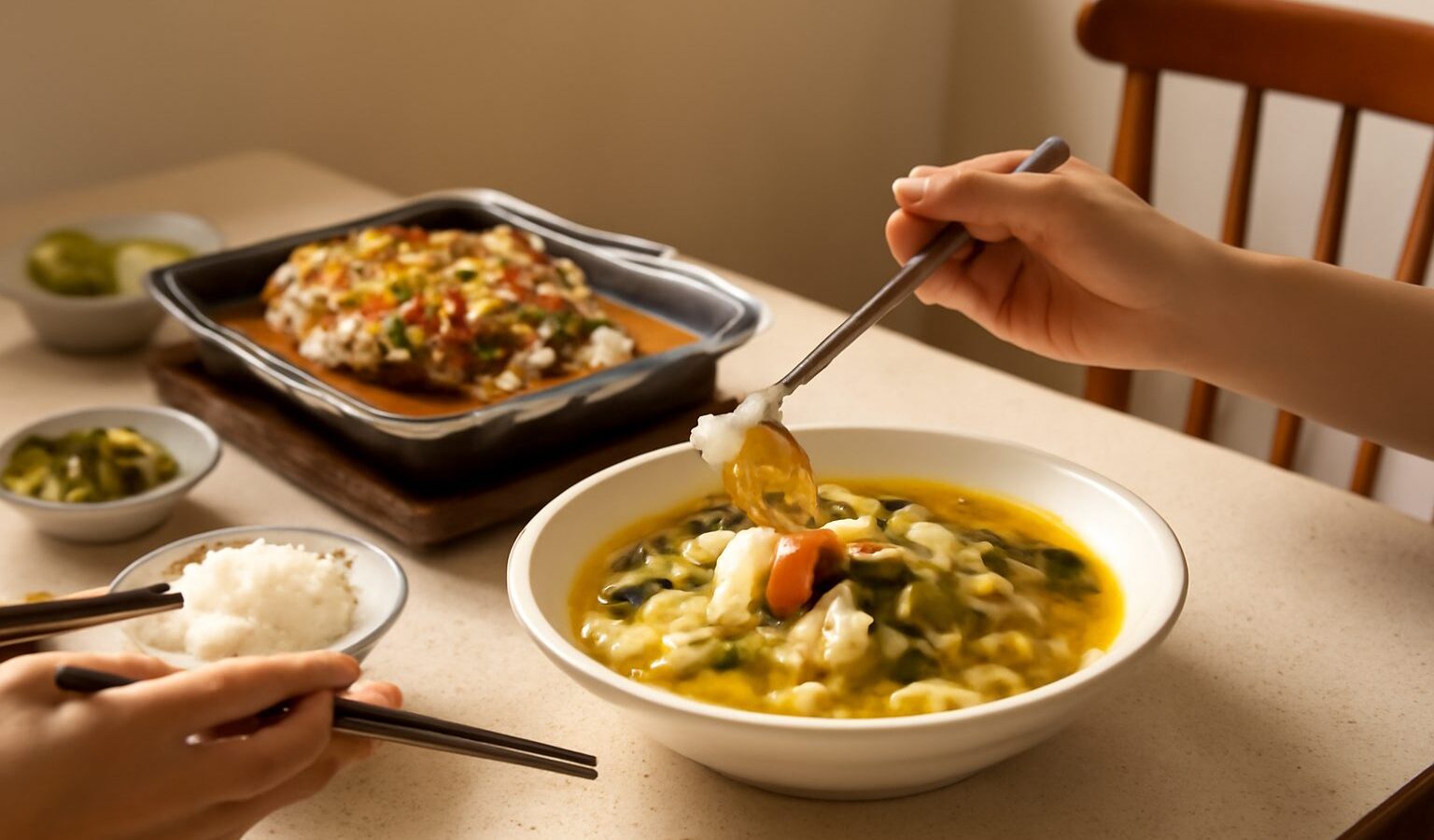
For many diners from mainland China, two fish dishes taste like a night out with friends back home: a big bowl of sour, gently spicy pickled fish, and a sizzling metal tray of grilled fish buried in chillies. The good news is that suan cai yu in Singapore is easy to find, and Chongqing-style kao yu has also become a familiar sight. This guide explains what each dish is, where to look for it, how ordering usually works here, and how to adjust the spice for friends who are new to Sichuan flavours.

What Suan Cai Yu and Kao Yu Are
Suan cai yu (酸菜鱼) is a Sichuan and Chongqing dish of thin, tender fish slices poached in a sour broth made with pickled mustard greens. The broth is usually tangy, savoury and warming, with chilli, garlic and sometimes Sichuan pepper. Many versions are finished with hot oil poured over dried chillies at the table. There are also milder “golden soup” (金汤) styles, where the broth gets its yellow colour and flavour from pickled chillies and is less fiery.
Kao yu (烤鱼) is grilled fish, strongly associated with Chongqing and Wanzhou. A whole fish is split, grilled until the skin is crisp, then served in a large metal tray over a burner, swimming in a sauce of your choice, with vegetables and other ingredients cooking underneath. Popular sauces include mala (麻辣, numbing and spicy), garlic, black bean, and pickled pepper.
Both dishes are made for sharing, which is why they are so popular for group dinners, birthdays and gatherings with colleagues.
Where to Look in Singapore
You do not need to know specific restaurant names to find good versions. Look in these places:
- Chinatown, especially around People’s Park and the streets near Chinatown MRT: this area has a dense cluster of mainland Chinese restaurants, including Sichuan, Chongqing and Hunan specialists. Pickled fish and grilled fish appear on many menus.
- Geylang and nearby lorongs: known for late-night Chinese eateries, including grilled fish and barbecue spots that stay open after midnight.
- Shopping malls: dedicated pickled fish chains, many originally from China, have opened outlets in malls across the island. They often specialise in only one or two dishes and offer set meals for one, which is useful for a quick lunch.
- Bugis, Clementi, Serangoon and other neighbourhoods with many students and young professionals: smaller Sichuan restaurants and zi char style places often have suan cai yu.
- Food courts and coffee shops: some Chinese stalls sell individual bowls of pickled fish noodles or rice, a cheaper everyday version.
Good search terms on food delivery apps and map apps include “酸菜鱼”, “烤鱼”, “pickled fish”, “sauerkraut fish” and “grilled fish”. Many menus here translate suan cai yu as “sauerkraut fish”, which can be confusing at first, since it is not German sauerkraut.
If you enjoy these flavours, you may also like our guides to Chinese barbecue (shaokao) and northern Chinese food in Singapore.
Pickled Fish and Grilled Fish Compared
If you are deciding which to order for a group, this comparison helps.
| Feature | Suan cai yu (pickled fish) | Kao yu (grilled fish) |
|---|---|---|
| How it is served | Large bowl of fish slices in soup | Whole fish in a heated tray of sauce |
| Texture | Soft, silky slices | Crisp skin, flaky flesh |
| Flavour | Sour and savoury, spice adjustable | Bold sauce, often mala or garlic |
| Best for | Lunch, solo set meals, small groups | Dinners and groups of three or more |
| Bones | Slices are usually mostly boneless | Whole fish, so watch for bones |
How Ordering Usually Works Here
Ordering is similar to China, with a few local differences.
- Choose the fish: common choices include basa (巴沙鱼), sea bass (鲈鱼), grass carp (草鱼) or other freshwater fish, and sometimes premium options. Basa is usually boneless and mild, which suits children and newcomers to the dish. For kao yu, menus may list the fish by weight or size.
- Choose the size: many restaurants offer small, medium and large portions, or price by weight. Ask staff how many people each size feeds.
- Choose the spice level: usually not spicy, mild, medium or very spicy (不辣, 微辣, 中辣, 特辣). Spice levels in Singapore restaurants can be toned down for local tastes, but some places cook very authentically, so start one level lower than you would in China if you are unsure.
- Choose the sauce (for kao yu): mala is the classic, but garlic and black bean are good choices for groups with mixed spice tolerance.
- Add-ons: popular extras include enoki mushrooms, potato slices, lotus root, tofu skin, glass noodles, luncheon meat, bean sprouts and wood ear fungus. These soak up the broth and are often the best part.
- Rice: steamed rice is often charged separately, and some places offer free refills. Ask first.
Many restaurants use QR code ordering on your phone. Menus often have Chinese and English side by side, so you can show the Chinese name to staff if you are not sure. Prices for dishes, add-ons and rice vary widely between a food court stall and a full-service restaurant, so check the menu before ordering. Most restaurants add service charge and GST to the bill; food courts and coffee shops usually do not.
Tips for Sharing With Local Friends
Suan cai yu and kao yu are great dishes to introduce to Singaporean colleagues and friends. A few tips help everyone enjoy the meal:
- Order one mild and one spicy dish if your group has mixed spice tolerance. A garlic kao yu and a mild suan cai yu make a good pair.
- Warn friends about Sichuan pepper. The numbing tingle (麻) surprises people who are used to chilli heat but not this sensation.
- Explain the bones. Many locals are used to boneless fish slices in fish soup, so a whole grilled fish needs a little care.
- Order cooling drinks. Herbal teas, soy milk, sour plum drinks and iced lemon tea all help with the heat.
- Go early on weekends. Popular places get busy at peak dinner hours, and some take reservations online.
Making It at Home
If you prefer to cook, you can find most ingredients in Singapore. Packets of pickled mustard greens and ready-made suan cai yu or kao yu sauce bases are sold at Chinese supermarkets and some larger supermarket chains, especially those near Chinatown and areas with many mainland residents. They are also available online.
For fish, wet markets and supermarkets sell fillets, and some fishmongers will slice fish thinly for you if you ask. Our guides to buying live and freshwater fish, Chinese style and asking for Chinese-style meat and fish cuts explain what to say at the stall and which fish are easy to find.
A simple home version of suan cai yu needs pickled mustard greens, fish slices coated lightly with egg white and starch, garlic, ginger, dried chillies and Sichuan pepper. Fry the pickles and aromatics, add water or stock, simmer, then gently poach the fish and finish with hot oil. Home cooking lets you control the salt and oil, and it is a comforting taste of home on a rainy evening.
A Familiar Taste, Easy to Find
Whether you want a quick bowl of pickled fish rice for lunch near the office or a big tray of mala grilled fish for a weekend dinner, these dishes are well established in Singapore. Start in Chinatown or your nearest mall, search in Chinese on your apps, and do not be shy about asking staff to adjust the spice. With a little practice, ordering will feel just like home.
Frequently Asked Questions
Why is suan cai yu called sauerkraut fish on Singapore menus? Many menus translate the dish that way because it uses pickled mustard greens, but it is not German sauerkraut. If the English name confuses you, show the Chinese name 酸菜鱼 to staff, since menus often list Chinese and English side by side.
Which fish is best for children or people new to suan cai yu? Basa is usually boneless and mild, which suits children and newcomers to the dish. Suan cai yu slices are usually mostly boneless, whereas a whole grilled fish needs care around the bones. Ask staff which fish they recommend for the group.
How many people does one grilled fish tray feed? It depends on the restaurant, since many offer small, medium and large portions or price by weight. Ask staff how many people each size feeds before ordering. Grilled fish suits dinners with three or more people, while pickled fish also works for solo set meals.
What can I order to cool down if the Sichuan pepper numbs my mouth? Cooling drinks help, such as herbal tea, soy milk, sour plum drink or iced lemon tea. Warn friends about the numbing tingle beforehand, because people used to chilli heat are often surprised by it. Ordering a milder sauce for part of the table also helps.
Where can I buy suan cai yu sauce bases to cook at home? Packets of pickled mustard greens and ready-made sauce bases are sold at Chinese supermarkets and some larger supermarket chains, especially near Chinatown and areas with many mainland residents. They are also available online. Wet markets and supermarkets sell fish fillets, and some fishmongers will slice thinly on request.