
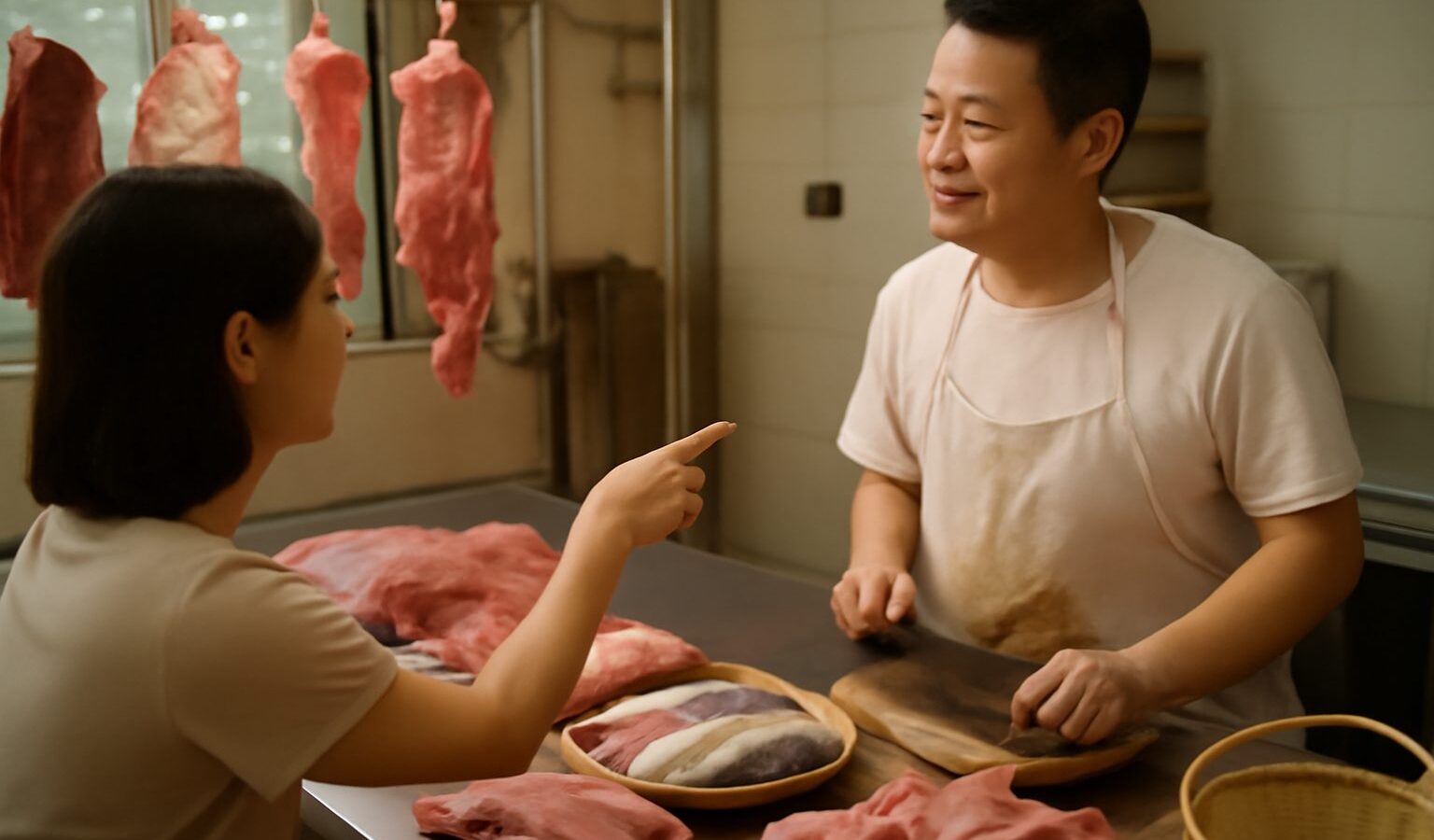
Cooking the dishes you grew up with starts at the butcher and the fishmonger, and knowing how to ask for chinese meat cuts in Singapore makes all the difference between a good stew and a disappointing one. The wet market here works differently from a supermarket back home, and different again from the neat plastic trays of a Western grocery. The good news is that wet market butchers and fishmongers are used to precise requests and will happily cut, trim, scale and gut to order, once you know how to ask. This guide gives you the practical language and the freshness know-how to shop with confidence.
Why the Wet Market Is Worth It
Supermarket meat is convenient, but it comes pre-portioned in ways that do not always suit Chinese home cooking. A packet labelled simply pork may not tell you which part of the pig it came from, and the cut you need for a slow-braised dish is quite different from the one for a quick stir-fry. At the wet market, you speak directly to the person cutting the meat, so you get exactly the part, thickness and preparation you want, often at a better price and always fresher. It is worth an early morning trip, since wet markets are busiest and best stocked in the morning and many stalls wind down by early afternoon.
Talking to the Butcher
Most butchers in Singapore’s wet markets understand a mix of English, Mandarin, and Malay, so you have several ways to make yourself clear. Below are the cuts newcomers ask for most, with the practical words to use.
For pork belly, the layered cut essential for hong shao rou and braises, ask for pork belly in English or wu hua rou in Mandarin. Say whether you want it with skin on, which most braises need, and specify the thickness, for example thick pieces for braising or thin slices for hotpot.
For ribs, be clear about the purpose. Ask for pork ribs for soup if you want the meatier, chunkier pieces suited to long simmering, or spare ribs cut small if you want them for steaming or frying. The butcher can chop ribs into bite-sized lengths on request, which saves you the hard work at home.
For minced pork, ask the butcher to mince it fresh in front of you rather than taking a pre-minced tub, and tell them the fat ratio you prefer. A little fat, roughly two parts lean to one part fat, keeps dumplings and meatballs juicy, so you can say more lean or a bit more fat as needed.
For pork used in stir-fries, ask for pork shoulder or collar, sometimes called mei tou, which stays tender, or lean loin if you want a leaner result. Say if you want it sliced, shredded into strips for stir-frying, or left whole for you to cut at home.
A useful all-purpose Malay word is potong, meaning cut, so potong kecil means cut small. Kilo is understood everywhere, and you can ask for half a kilo or point to the amount you want. There is no shame in pointing, gesturing thickness with your fingers, and confirming with a nod, since the butchers do this all day and are patient with newcomers.
Handy Phrases at a Glance
Keep this table on your phone for your first few market trips.
| What You Want | English | Malay Helper |
|---|---|---|
| Pork belly, skin on | Pork belly, keep the skin | Kulit (skin) |
| Ribs for soup | Ribs for soup, chopped | Potong (cut) |
| Freshly minced pork | Mince this fresh, please | Kisar (mince) |
| Cut into small pieces | Cut it small | Potong kecil |
| Whole fish, cleaned | Scale and gut it | Buang sisik (remove scales) |
Buying and Preparing Fish
The fishmonger is where a little language goes a long way, because a good stall will do all the messy work for you. When you choose a whole fish, ask the fishmonger to scale it, gut it and remove the gills, which you can sum up as clean it for me or the Malay buang sisik dan perut, meaning remove scales and innards. If you plan to steam the fish whole, a Cantonese and mainland favourite, say you want it kept whole and simply cleaned. If you want fillets or steaks, ask for it to be cut into slices or filleted, and ask them to keep the bones and head, which make excellent stock.
Do not be shy about inspecting the fish first. Fresh fish has clear, bright eyes, red gills, firm flesh that springs back, and a clean sea smell rather than a strong fishy odour. The same freshness cues apply whether you are buying for steaming or for soup, and a trustworthy fishmonger will not mind you looking closely.
Freshness and Food Safety Basics
Because wet market produce is fresh rather than chilled for display, handling it well at home matters. Bring a cool bag or ask for extra ice if you have a long journey, and get your meat and fish into the fridge or freezer promptly. Buy only what you will use within a day or two for fresh meat, and freeze the rest in portioned amounts so you defrost only what you need.
Keep raw meat and fish separate from ready-to-eat food, use a dedicated chopping board for raw items, and wash your hands and boards well after handling. When in doubt about smell, colour or texture, trust your senses and do not use it. These simple habits, familiar to any careful home cook, keep your kitchen safe while you enjoy the real reward of the wet market, which is food that tastes the way it should.
A Confident Start
The first market trip can feel daunting when the language and layout are unfamiliar, but butchers and fishmongers here are used to a diverse crowd and respond well to a clear, friendly request. Learn a few of the phrases above, shop in the morning, and you will soon be cooking the dishes of home with ingredients cut exactly the way you like.
Explore more
Chinese Cold Dishes, Liangpi and Liangfen
Where to Find Hakka Food and Lei Cha
Where to Find Hunan Food
Vegetarian Food in Singapore