
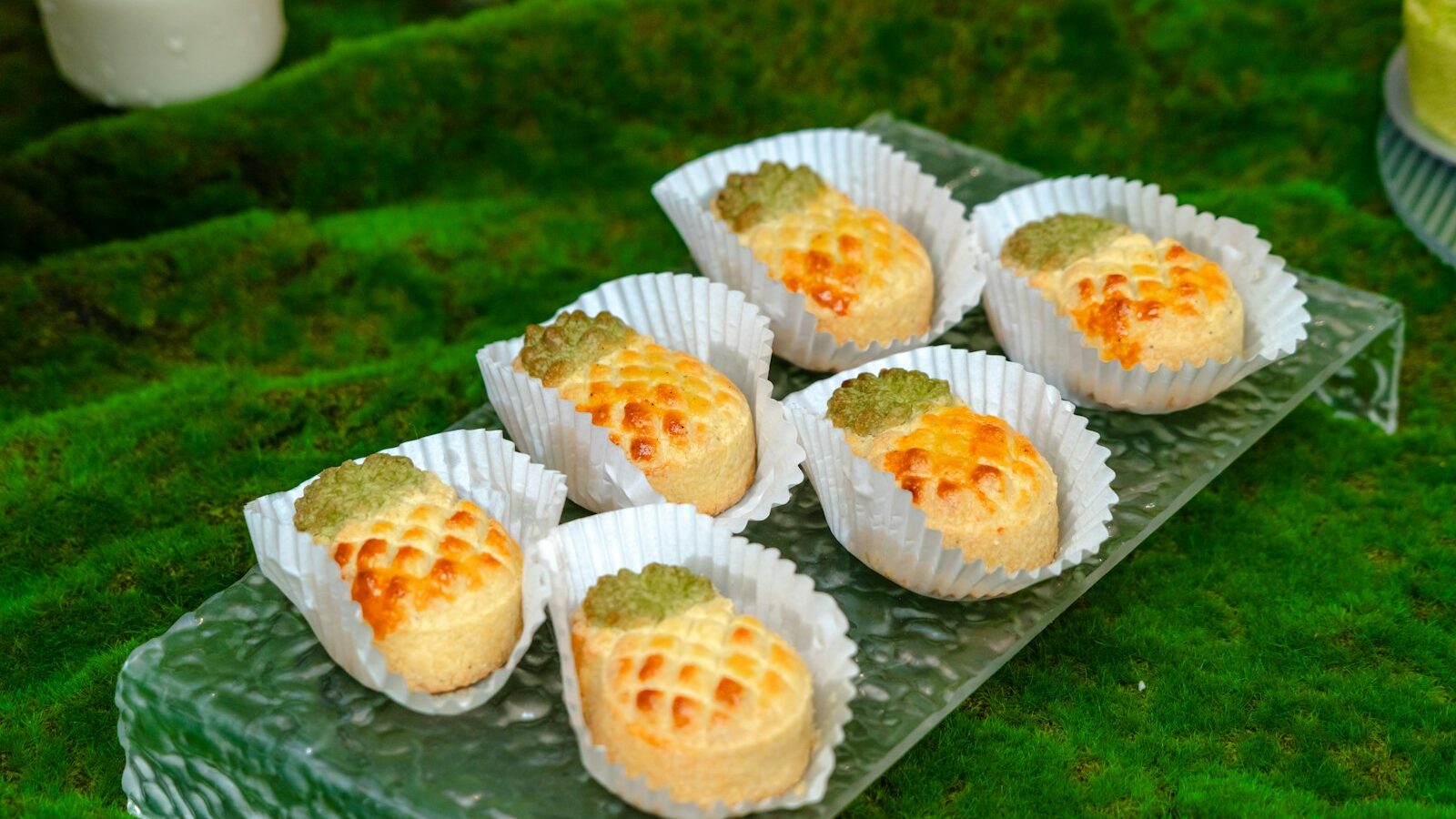
Come Chinese New Year, few things signal the season quite like a tin of pineapple tarts singapore households treasure, that golden pastry giving way to a sweet, tangy pineapple jam that tastes of celebration itself. Buttery, melt-in-the-mouth and gently fragrant, these little tarts are baked and shared in enormous quantities during festive periods, and one is never enough. This guide explores the beloved pineapple tart in its many forms, its origins, how it is made, and how to enjoy this cherished treat at its best.
Pineapple tarts hold a special place in the Peranakan and wider local baking tradition, appearing most prominently during Chinese New Year but enjoyed at other celebrations too, including Hari Raya and Deepavali in some homes. They are sold at bakeries, Nonya confectioneries and home-based bakers during festive seasons, and the making of them is a beloved ritual in many families. Behind their small size lies real craft and a great deal of affection.
What Are Pineapple Tarts
At their heart, pineapple tarts are a marriage of two things, a rich, buttery pastry and a thick, sweet-tart pineapple jam. The pastry is short and crumbly, made with plenty of butter and often egg yolk, so it practically dissolves on the tongue. The jam is the soul of the tart, made by slowly cooking down grated fresh pineapple with sugar and warm spices such as cinnamon and cloves until it turns into a dense, deeply flavoured, golden-brown paste.
Making the jam is the most demanding part. Grated pineapple must be simmered patiently for a long time, stirred often, until nearly all the moisture has evaporated and the fruit concentrates into a thick, sticky, intensely flavoured jam. This slow reduction is what gives good pineapple tarts their signature balance of sweetness and gentle tang, the fruit’s acidity cutting through the richness of the buttery pastry.
The contrast is everything. A well-made tart offers crisp yet tender pastry against soft, fragrant jam, sweetness against tartness, richness against brightness. It is this harmony, in such a small package, that makes pineapple tarts so quietly addictive and so eagerly awaited each festive season.
The Different Styles
One of the pleasures of pineapple tarts is their variety of forms, and enthusiasts often have strong preferences. There are three main styles to know, each with its own character and following.
The open tart is perhaps the most classic. Here a round or oval base of pastry cradles a dollop or coil of pineapple jam on top, fully exposed, often decorated with a lattice or a crosshatch pattern pressed into the pastry around it. The jam takes centre stage, glistening golden against the pale pastry.
The enclosed or rolled tart, sometimes shaped like a little log or ball, wraps the pastry fully around the jam so the filling is hidden inside. These are neat, poppable and travel well, with each bite revealing the jam at its centre. A common variation is the pineapple ball, a small sphere of pastry enclosing the jam.
The closed or covered tart sits between the two, with a pastry base holding jam and a decorative pastry top or partial covering. Some are shaped and stamped into pretty designs. Whichever style you prefer, the balance of pastry to jam is what matters most, and every baker has their own ideal ratio.
Origins and Cultural Notes
Pineapple tarts carry a rich, layered history. They are widely associated with Peranakan baking, where the influences of Malay, Chinese and European traditions met, and the use of pineapple, a fruit brought to the region long ago, reflects that cross-cultural heritage. The word for pineapple in some dialects sounds like a phrase for prosperity and good fortune arriving, which is part of why the tarts became such an auspicious festive treat, symbolising wealth and good luck for the year ahead.
The making of pineapple tarts is often a communal, family affair, with relatives gathering to grate pineapple, stir the jam and shape the pastry together in the run-up to the new year. This shared labour is part of their meaning. To respect pineapple tarts is to appreciate not just their taste but the tradition, symbolism and togetherness they represent across the communities that bake them.
Ingredients and Allergen Notes
Pineapple tarts are rich in butter and typically contain egg, particularly egg yolk in the pastry and sometimes an egg wash for glaze, so they contain dairy and egg and are not suitable for vegans. The pastry is made with wheat flour, meaning gluten is present. The jam itself is essentially fruit, sugar and spices, and is generally plant-based, but the tart as a whole is not.
For those with allergies, the main considerations are dairy, egg and gluten. Some recipes may include ground nuts or be prepared in kitchens handling nuts, so anyone with a nut allergy should check carefully. As pineapple tarts are often made by many different bakers, home-based and commercial alike, recipes vary considerably, so it is always wise to check current information for any specific source if you have particular dietary needs.
Here is a comparison of the main pineapple tart styles.
| Style | Form | Jam placement | Character |
|---|---|---|---|
| Open tart | Flat base with exposed jam | On top, visible | Classic, jam-forward |
| Enclosed tart | Rolled log or ball | Hidden inside | Neat, poppable, travels well |
| Closed tart | Base with pastry cover | Sealed within | Decorative, balanced |
| Pineapple ball | Small sphere | Fully enclosed | Bite-sized, buttery |
How To Enjoy Pineapple Tarts
Pineapple tarts are best enjoyed fresh, when the pastry is at its most tender and the jam most fragrant. They are made for sharing, so a tin set out during festive visiting is a familiar and welcome sight, offered to guests alongside a cup of tea or coffee. The warm drink balances the buttery richness beautifully and makes for a comforting pause amid the festivities.
Store them in an airtight container to keep the pastry from softening, and enjoy them within their best window, as their fresh-baked quality is part of the pleasure. Try the different styles side by side if you can, an open tart for its generous jam, an enclosed ball for its neat bite, and see which you prefer, as this is a friendly debate in many households.
More than a biscuit, pineapple tarts are a small edible symbol of good fortune, togetherness and celebration. Whether you bake them yourself in the time-honoured way or seek out a favourite from a trusted bakery, they bring a taste of festivity that is hard to resist. That golden pastry and glowing, tangy jam have earned their place at the heart of the season, one melt-in-the-mouth tart at a time.