
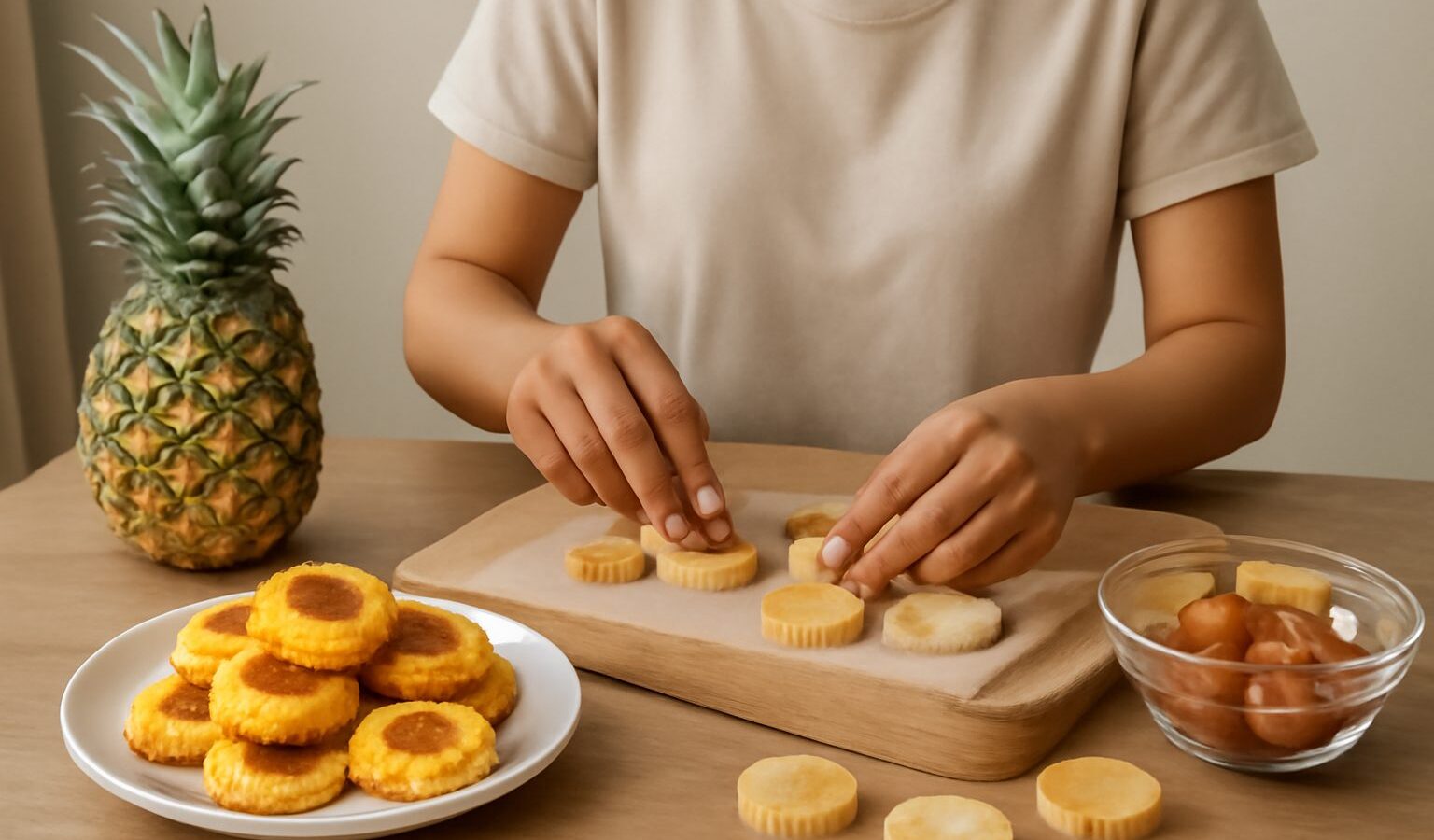
No festive table in Singapore feels complete without a jar of pineapple tarts. Those buttery, melt in the mouth pastries topped or filled with sweet, tangy jam are a Chinese New Year classic, though they are welcome all year round. Making pineapple tarts in Singapore at home is a labour of love, but it is a satisfying one, and the results taste noticeably fresher and less sweet than many shop bought versions. This guide takes a relaxed home baker’s approach so you can enjoy the process.
There are a few well loved styles. Open faced tarts have a dollop of jam sitting on a round of pastry. Enclosed or ball tarts hide the jam inside a pastry shell. Rolled or pineapple roll tarts wrap a thin sheet of pastry around a log of jam. The pastry and jam are the same across all of them, so once you master those two elements you can choose whichever shape you like.
Ingredients and What They Do
The pastry is essentially a rich shortcrust. It relies on plenty of butter for flavour and that signature crumbly, melting texture, along with flour, a little sugar, egg yolk to bind and enrich, and sometimes a spoonful of milk powder or cornflour for extra tenderness. The high proportion of butter is what makes these tarts so short and delicate, so do not be tempted to skimp on it.
The filling is a thick pineapple jam. This is simply fresh pineapple cooked down slowly with sugar and warm spices such as cloves or cinnamon until it becomes a deep golden, sticky paste that holds its shape. The long, gentle cooking drives off moisture, which is essential, because a wet jam will make the pastry soggy and spread in the oven.
On allergens, these tarts contain gluten, dairy and egg, so keep that in mind for anyone you are baking for. Handle eggs safely by keeping them chilled until use, wash your hands and equipment well, and bake the tarts through fully. If you are just starting out, baking basics for complete beginners covers the groundwork, and our pineapple tarts guide for Singapore offers more background on the different regional styles.
Making the Jam and the Pastry
Start with the jam, since it needs time to cool and thicken. Blend or grate fresh pineapple, then cook it in a wide pan over low to medium heat with sugar and your chosen spices. Stir often, especially towards the end, as it thickens and can catch and burn. You are looking for a stiff, dry paste that pulls away from the pan and holds together when rolled into a ball. This can take a while, so be patient. Let it cool completely before shaping, and store it chilled if you make it ahead.
For the pastry, beat the softened butter with the sugar until creamy, then mix in the egg yolk. Add the sifted flour and any milk powder or cornflour, and bring it together into a soft dough. Handle it as little as possible, because overworking develops the gluten and makes the pastry tough rather than tender. If the dough feels very soft in our warm kitchens, chill it briefly so it firms up and becomes easier to shape.
Shaping, Baking and Storage
For open faced tarts, roll the dough out and cut rounds with a fluted cutter, then top each with a small ball of jam. For enclosed tarts, flatten a piece of dough, place a little jam in the centre, and seal it into a neat ball. For rolled tarts, wrap a thin strip of pastry around a log of jam. Keep the jam quantity modest, as too much will overflow, and keep your pieces evenly sized so they bake at the same rate.
Brush the tops lightly with a little beaten egg for a golden shine if you like, then bake in a moderate oven until the pastry is set and just lightly golden at the edges. The pastry should not brown heavily, since these tarts are meant to stay pale and delicate. Bake them through so the base is cooked, but watch closely near the end, because the high butter content means they can colour quickly.
Now for the most common pitfalls. If your pastry spreads and loses its shape, the dough was probably too warm or too soft, so chill it before baking. If the tarts crack or crumble apart, the dough may have been too dry, so a touch more binding helps next time. If the base turns soggy, the jam was likely too wet, which points back to cooking it down further. A tough, hard tart usually means the dough was overworked. Each batch teaches you a little more.
Let the tarts cool completely on the tray before moving them, as they are fragile while warm and firm up as they cool. Once fully cooled, store them in an airtight container at room temperature, where they keep well for a couple of weeks thanks to the sugar in the jam and the low moisture pastry. Make sure they are truly cold before sealing the jar, because trapped warmth creates condensation that softens the pastry and shortens their life.
Home made pineapple tarts fill the house with the smell of caramelising pineapple and warm butter, and they make a heartfelt gift. Take your time with the jam, keep a gentle hand with the pastry, and you will be rewarded with tarts that vanish far too quickly.