

Plant-based eating has grown in popularity as more people embrace vegetables, grains and plant foods. This guide explores what it means, its appeal, how to get started, and its place in the food scene.
What is plant-based eating?
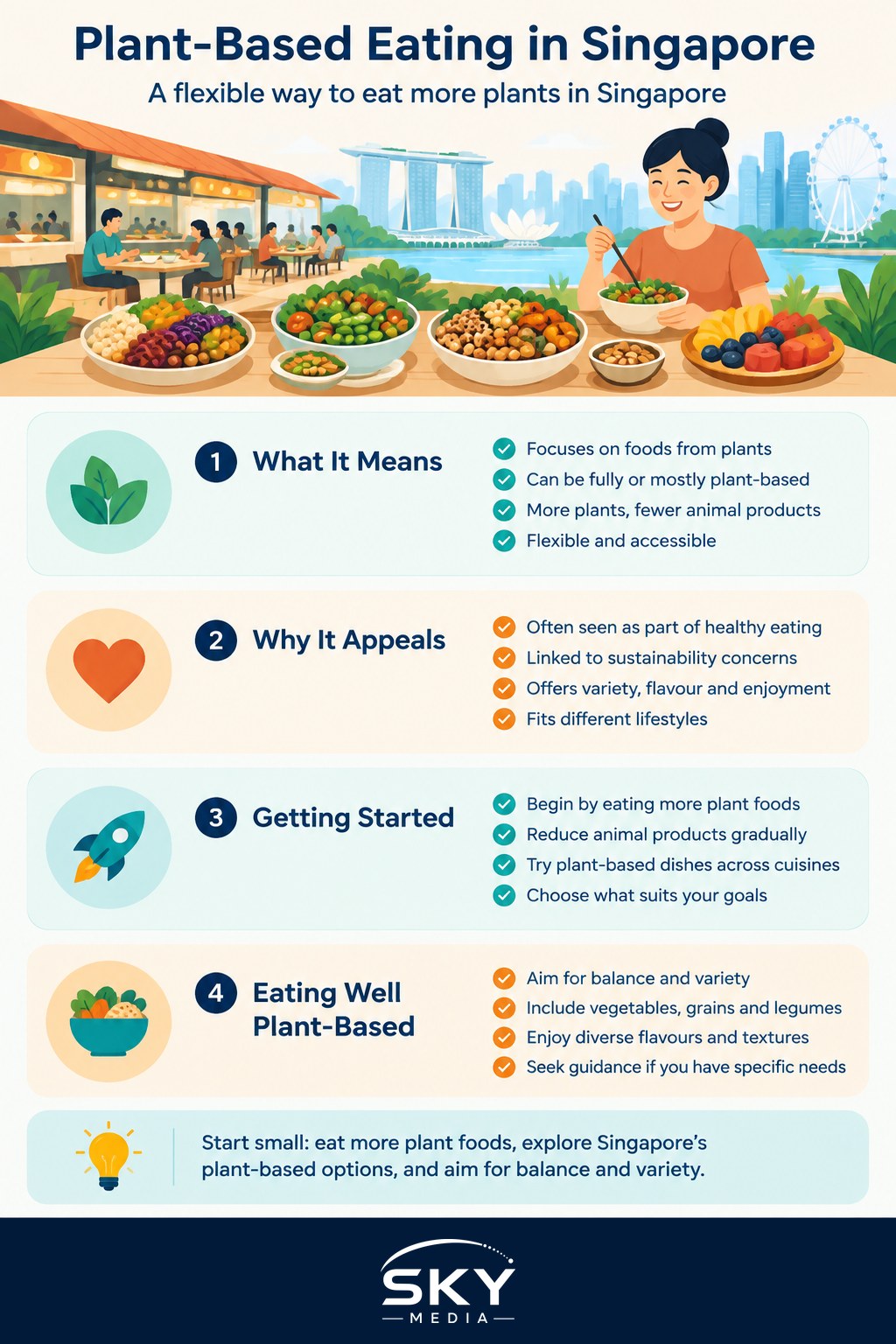
Plant-based eating refers to a way of eating that emphasises foods derived from plants, vegetables, fruits, grains, legumes, nuts and other plant foods, whether entirely (as in veganism) or predominantly, with reduced animal products. Unlike strict veganism, plant-based eating can range from fully plant-based to simply eating more plants and fewer animal products, making it a flexible, accessible approach that many people are embracing. Driven by interest in health, sustainability, ethics and variety, plant-based eating has grown in popularity, and Singapore’s diverse food scene offers a wealth of plant-based and plant-forward options to support it. Understanding what plant-based eating is, a flexible approach emphasising plant foods, whether fully or predominantly, helps you appreciate its accessible, adaptable nature, so you can approach plant-based eating in Singapore as a flexible way of eating more plants, whether fully plant-based or simply plant-forward, supported by the wealth of plant-based options in the nation’s diverse food scene, and driven by growing interest in health, sustainability and variety.
A strong local tradition of eating plants
In Singapore, eating more plants does not have to feel foreign or forced. Long before the term became popular, families were already enjoying vegetarian bee hoon, dal and thosai, along with mock-meat feasts on the first and fifteenth of the lunar month. Plant-based eating is already woven through local food culture.
That tradition runs deep across different communities. Buddhist vegetarian cuisine brings familiar zhai dishes and dedicated vegetarian stalls, often marked in green, with tofu, gluten and mushrooms used in satisfying versions of everyday favourites. Indian vegetarian food, from South Indian banana-leaf meals to North Indian dals and paneer dishes, adds another rich strand of meat-free eating, while Chinese, Malay and Peranakan kitchens all have their own vegetable-forward dishes.
This heritage matters because it means going plant-based here can feel comforting and deeply Singaporean. You are not giving up local food so much as exploring a part of it that has always been there, whether that is a simple economy rice plate with three vegetables or a full vegetarian zi char spread.
Benefits and appeal
| Aspect | Broadly |
|---|---|
| Health | A focus on nutritious plant foods |
| Sustainability | Environmental considerations |
| Variety | Diverse, flavourful plant foods |
| Flexibility | An adaptable approach |
Plant-based eating appeals to many for several reasons. For health, an emphasis on nutritious plant foods, vegetables, fruits, grains and legumes, is often seen as beneficial as part of a balanced diet, appealing to the health-conscious. For sustainability, plant-based eating is associated with environmental considerations, appealing to those mindful of sustainability. For variety and enjoyment, plant foods offer a wonderful diversity of flavours, textures and dishes, showing that plant-based eating can be varied and delicious. And its flexibility, ranging from fully plant-based to simply plant-forward, makes it accessible and adaptable to different people and lifestyles. These benefits and appeals have driven its growing popularity. Understanding the benefits and appeal of plant-based eating, health, sustainability, variety and flexibility, helps you appreciate why it has grown popular, so you can consider plant-based eating for its potential health benefits, sustainability considerations, delicious variety and flexible, adaptable nature, appreciating why more people are embracing this accessible way of eating more plants within Singapore’s diverse, food-loving culture.
How to get started
Getting started with plant-based eating is flexible and accessible, and can be approached at whatever level suits you. You might start by simply eating more plant foods, vegetables, fruits, grains and legumes, and reducing animal products, rather than making a strict or sudden change, an approachable way to begin. Explore the wealth of plant-based and plant-forward options in Singapore’s food scene, from dedicated offerings to naturally plant-based dishes across cuisines. Aim for balance and variety to ensure enjoyable, nutritious eating. Approach it in a way that fits your goals, preferences and lifestyle, whether occasional, predominant or full plant-based eating. Being flexible, exploratory and balanced makes getting started easy and enjoyable. Understanding how to get started with plant-based eating, flexibly and at your own level, by eating more plants, exploring options, and aiming for balance and variety, helps you begin easily, so you can approach plant-based eating in a way that suits you, starting by simply eating more plant foods and exploring the wealth of options available, and building a flexible, balanced and enjoyable plant-based or plant-forward way of eating within Singapore’s diverse food scene.
Easy swaps and a flexitarian approach
You do not have to label yourself anything to eat more plants. Many people find a flexitarian approach, with plants as the default and meat eaten occasionally, is the most sustainable way to keep it up over time. The key is to make swaps that feel like an upgrade, not a loss.
- Swap chicken rice for vegetarian “chicken” rice or tofu rice from vegetarian stalls and food courts.
- Choose mushroom or vegetarian minced “meat” noodles instead of bak chor mee at vegetarian hawker stalls.
- Try dal, chickpea or vegetable curry in place of fish or chicken curry at Indian stalls and restaurants.
- Pick a plant-based patty burger instead of a beef or pork burger at cafes and supermarkets.
- Go for braised tofu, tempeh or mock meat instead of char siew or braised meat at zi char or at home.
Small changes like these add up. You might begin with one meat-free day a week, make your default cai png plate mostly vegetables, or simply halve the meat portion and bulk it out with beans. There is no wrong entry point, and every plant-forward meal counts.
Eating well plant-based
To eat well on a plant-based or plant-forward diet, aim for balance, variety and enjoyment. Include a variety of plant foods, vegetables, fruits, grains, legumes, nuts and more, to enjoy diverse flavours, textures and nutrients, ensuring your eating is both enjoyable and nutritious. Explore the many plant-based dishes and options across cuisines, both dedicated vegan or vegetarian offerings and naturally plant-based dishes, to keep meals varied and satisfying. As with any way of eating, balance and variety support enjoyable, healthy eating. For those with specific dietary or nutritional needs or questions, seeking guidance from appropriate professionals is sensible. Approaching plant-based eating with balance, variety and enjoyment makes it sustainable and rewarding. Understanding how to eat well plant-based, with balance, variety and enjoyment across diverse plant foods and dishes, helps you make plant-based eating nutritious and satisfying, so you can enjoy a varied, balanced and delicious plant-based or plant-forward way of eating, exploring the diverse plant foods and options available, and, where relevant, seeking professional guidance for specific dietary needs, making plant-based eating a rewarding and sustainable choice.
A growing part of the food scene
Plant-based eating has become a growing part of Singapore’s diverse, food-loving culture, reflecting rising interest in health, sustainability and plant-forward eating, and adding a healthy, varied and flexible dimension to the food scene. As interest grows, so does the availability of plant-based and plant-forward options across the nation’s cuisines, making plant-based eating more accessible, varied and enjoyable than ever. This growth reflects both changing tastes and Singapore’s adaptable, food-loving culture. For anyone interested, whether fully plant-based or simply eating more plants, the growing plant-based scene offers a rich, accessible and flexible realm to explore. It is a growing, health-conscious thread in the rich tapestry of Singapore’s food culture. Understanding plant-based eating’s place as a growing part of the food scene, reflecting rising interest in health and sustainability and adding variety and flexibility, helps you appreciate its role, so you can embrace plant-based eating as an increasingly accessible, varied and flexible part of Singapore’s diverse, food-loving culture, one that reflects growing interest in health and plant-forward eating and enriches the nation’s food scene with abundant, delicious plant-based options.
Finding plant-based food at hawkers and beyond
One of the pleasures of eating in Singapore is how easy it can be to eat more plants without cooking. Most hawker centres have at least one vegetarian stall, and even at ordinary stalls you can often choose naturally plant-based dishes or ask for a meat-free version.
- Vegetarian bee hoon, economy rice and mixed vegetable rice at dedicated vegetarian stalls.
- Thosai, idli, dal, sambar and vegetable curries at Indian stalls.
- Chap chye, braised tofu, sang choy and stir-fried greens at zi char.
- Roti prata, chwee kueh, soya bean curd and plain kaya toast for lighter meals.
- Salad bowls, grain bowls and plant-based cafes for a more modern option.
Beyond hawkers, supermarkets and restaurants now carry a wider range of plant-based products. Meat alternatives, from familiar mock meats made with soy and gluten to newer patties, mince and “chicken”, can make swapping easier. Still, these are often best treated as convenient options rather than daily essentials, since whole foods like beans, tofu, tempeh and lentils are usually simpler and cheaper.
Making it affordable and sustainable
Eating more plants can also be gentler on your budget. Some of the cheapest and most filling supermarket and wet market staples are plant-based, including rice, noodles, tofu, eggs if you eat them, beans, lentils and local leafy vegetables. Cooking from these ingredients usually costs less than relying on premium meat alternatives every day.
To keep things easy and inclusive, meet yourself where you are. Cook a big pot of dal or vegetable curry and stretch it across a few meals, keep tins of beans and blocks of tofu on hand for quick dinners, and lean on hawker food when you do not feel like cooking. It can also help to bring family and friends along without preaching, since a shared delicious meal often does more than a lecture. In Singapore, plant-based eating works best when it feels generous, unfussy and like a natural extension of how people already enjoy food.
The takeaway
Plant-based eating, a flexible approach emphasising plant foods whether fully or predominantly, has grown in popularity in Singapore, driven by interest in health, sustainability, variety and its accessible, adaptable nature. Its appeal lies in potential health benefits, sustainability considerations, delicious variety and flexibility, ranging from fully plant-based to simply plant-forward. Getting started is easy and flexible, beginning by eating more plants, exploring the wealth of options across cuisines, and aiming for balance and variety. Eating well plant-based means embracing diverse plant foods for enjoyable, nutritious meals, with professional guidance for specific needs. A growing, accessible and flexible part of Singapore’s diverse food scene, plant-based eating is more supported and enjoyable than ever, whatever level you choose to embrace. This is a general food guide.
Explore more: Vegan dining in Singapore · Vegetarian food in Singapore · Sustainable living in Singapore
Frequently Asked Questions
Is plant-based eating the same as being vegan? Not exactly. Plant-based eating emphasises foods from plants but may still allow small amounts of animal products, while veganism excludes them completely. The terms are sometimes used loosely, so check what a menu or product means.
Is plant-based eating expensive? It does not have to be. Staples like vegetables, beans, rice and tofu can be affordable, while specialty products may cost more. Prices vary, so compare options.
How do I get enough protein on a plant-based diet? Include a variety of beans, lentils, tofu, tempeh, nuts and whole grains through the day. Eating a range helps cover your needs. If you have special needs, such as being an athlete, seek advice from a dietitian.
Further reading: Reducing Dairy in Your Diet