
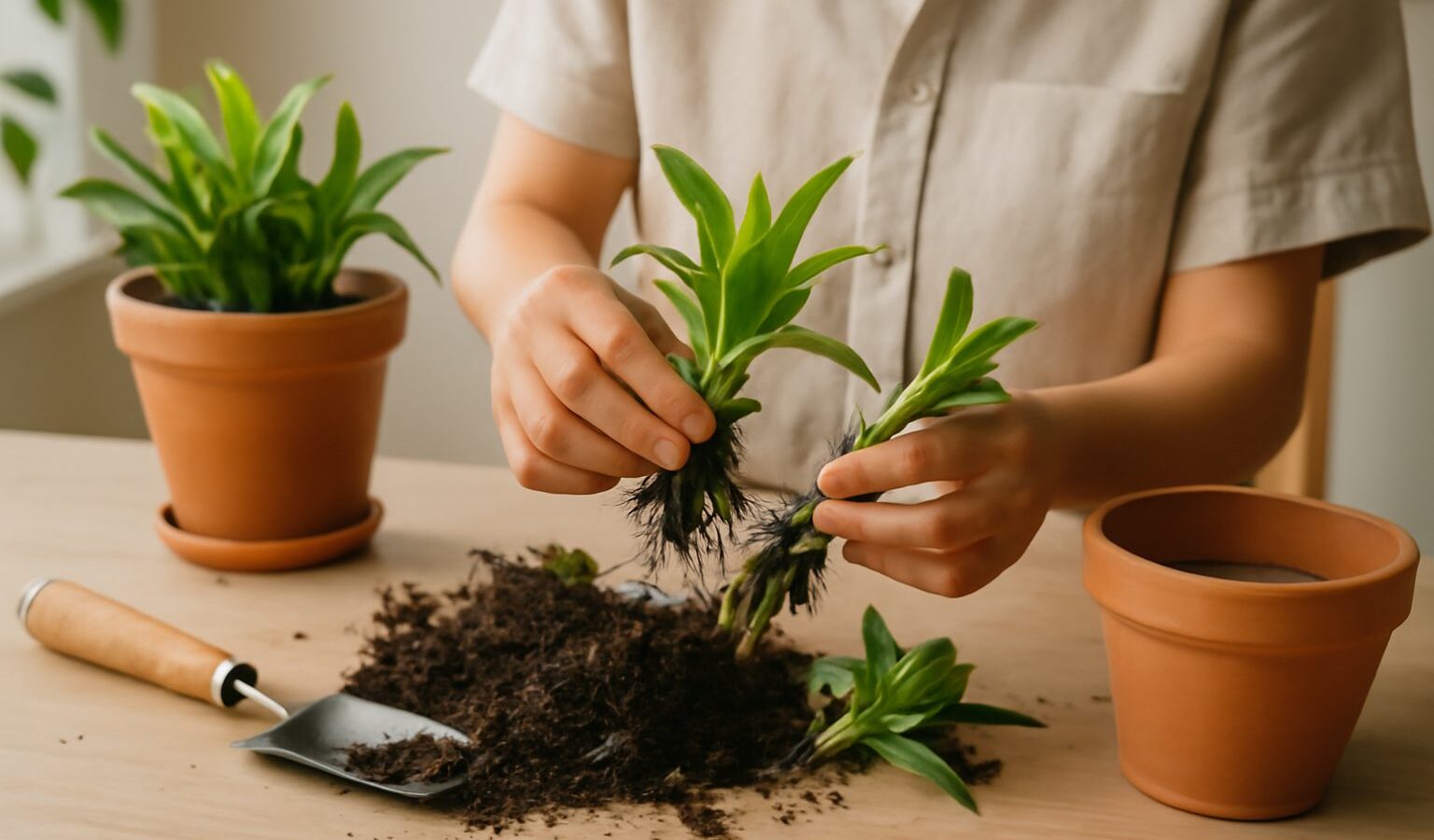
If you have a pot that has grown into a crowded, bulging clump, you already have everything you need to make several new plants for free. Plant division is the simple technique of splitting one mature, clumping plant into two or more smaller ones, each with its own roots and shoots. It is one of the most reliable ways to propagate, because you are not coaxing a cutting to grow new roots; you are separating pieces that already have them. For beginners in Singapore, division is fast, forgiving and perfectly suited to a shelf of maturing balcony plants that have outgrown their pots.
What Plant Division Is and When to Use It
Plant division works on plants that grow as clumps of separate stems or crowns rising from the soil, rather than a single main stem. Over time these plants spread outward, sending up more and more shoots from the base until the pot is packed. When you tip the plant out, you can see it is really a colony of smaller plants sharing one root ball, and each of those can live on its own.
Because Singapore is warm all year, there is no strict dividing season the way there is in cooler countries. That said, the best moment is when a plant is healthy, actively growing and clearly crowded, ideally when you were going to repot it anyway. Dividing at repotting time saves the plant a second disturbance and lets you refresh the mix at the same time. Avoid dividing a plant that is stressed, sick or newly bought, since it needs to be strong to recover well.
Which Plants Divide Well
The easiest candidates are plants that naturally form clumps, offsets or spreading crowns.
- Snake plant (sansevieria) spreads by underground rhizomes and divides cleanly.
- Peace lily, calathea and many ferns form tight crowns that pull apart into sections.
- Spider plant, bird’s nest fern and clumping palms divide readily.
- ZZ plant grows from rhizomes that can be separated.
- Aroids like alocasia produce offset bulbs and pups around the base.
- Clumping herbs such as lemongrass, chives and mint split easily into rooted pieces.
Plants that grow from a single stem or trunk, like a rubber plant or a young monstera, are not suited to division and are better propagated by cuttings or layering. As a rule, if you can see several separate shoots coming out of the soil, the plant can probably be divided.
One safety note: several popular clumping plants, including peace lily, snake plant, ZZ plant and alocasia, are not edible and their sap can irritate skin, mouth and eyes. Wear gloves while you work, keep the pieces away from young children and pets, and wash your hands afterwards. Only eat herbs you can positively identify, and wash them well before use.
How to Divide a Plant Step by Step
Water the plant lightly a day before, so the root ball holds together and slides out easily. Gather a clean, sharp knife or secateurs, fresh potting mix and enough clean pots with drainage holes for your new divisions.
Ease the plant out of its pot and shake or tease away loose soil so you can see the roots and where natural clumps separate. Many plants pull apart by hand into sections; for tougher root balls, use a clean knife to cut down through the crown. The key is that every division must have both healthy roots and at least one growing shoot or crown; a piece with roots but no shoot, or a shoot with no roots, will struggle.
Aim for a small number of good-sized divisions rather than many tiny scraps, since larger pieces recover far faster. Trim off any mushy, brown or dead roots with your clean blade. Pot each division into fresh, free-draining mix at the same depth it grew before, firm it in gently, and water it through until the excess drains away. Tip out whatever collects in the saucer rather than letting it sit.
Aftercare and Avoiding Standing Water
Fresh divisions have had their roots disturbed, so treat them gently for the first couple of weeks. Keep them somewhere warm and bright but out of harsh midday sun, which can scorch a plant that cannot yet drink normally. Hold off on fertiliser until you see new growth, then feed lightly, because damaged roots are easily burned by feed. Water when the top of the mix feels dry rather than on a fixed schedule, since an under-rooted division sitting in soggy mix rots quickly.
Watch your saucers here. Never let a saucer or tray sit full of water beneath your pots, both to protect the recovering roots and because standing water breeds Aedes mosquitoes, which spread dengue in Singapore. Empty saucers after watering, keep an eye on any water that collects during monsoon downpours on a balcony, and follow current NEA and NParks guidance on preventing mosquito breeding. Secure your pots against wind on high floors, and follow your HDB, town council or condo rules on balconies and shared corridors.
Division Compared with Other Propagation Methods
Division is not the only way to make more plants, and it helps to know when it is the right choice. The table below compares it with two other beginner-friendly methods so you can pick the best one for the plant in front of you.
| Method | Best for | Speed to a usable plant | Difficulty |
|---|---|---|---|
| Division | Clumping plants with several shoots | Fast, ready-grown plants at once | Easy |
| Water propagation | Soft-stemmed cuttings from vining plants | Moderate, weeks to root | Easy |
| Air layering | Single-stem or woody plants | Slow, but high success | Moderate |
For a clumping plant that has filled its pot, division wins every time, since you get full-sized plants immediately instead of waiting for roots to form. For a vining plant like pothos, a cutting in water is simpler, and for a woody or single-stemmed plant, layering is the safer bet.
Building Your Collection for Free
The real joy of plant division is how quickly it grows your collection at no cost. One crowded snake plant can become three gifts for friends; a clump of lemongrass can seed a whole herb corner. Start with a healthy, clearly clumping plant, divide it into a few strong pieces rather than many weak ones, and give each new plant gentle aftercare while it settles. Watch how each division responds on your particular balcony, and before long you will have doubled your greenery without spending a cent.
Explore more
If your plant is a single stem rather than a clump, learn air layering plants or try water propagation for beginners instead. Once your divisions are potted, our guide to making your own potting mix will help you give them the free-draining home they need to thrive.