

For many Singaporean men, the prostate is something they never think about until it starts to make itself known, usually somewhere in their fifties, sixties or beyond. Understanding prostate health singapore matters because changes in this small gland are extremely common with age, and yet they are rarely talked about over kopi at the void deck. This article is general information to help you understand what is going on and when to seek help. It is not medical advice, and it is not a way to diagnose yourself. If something worries you, please see a doctor.
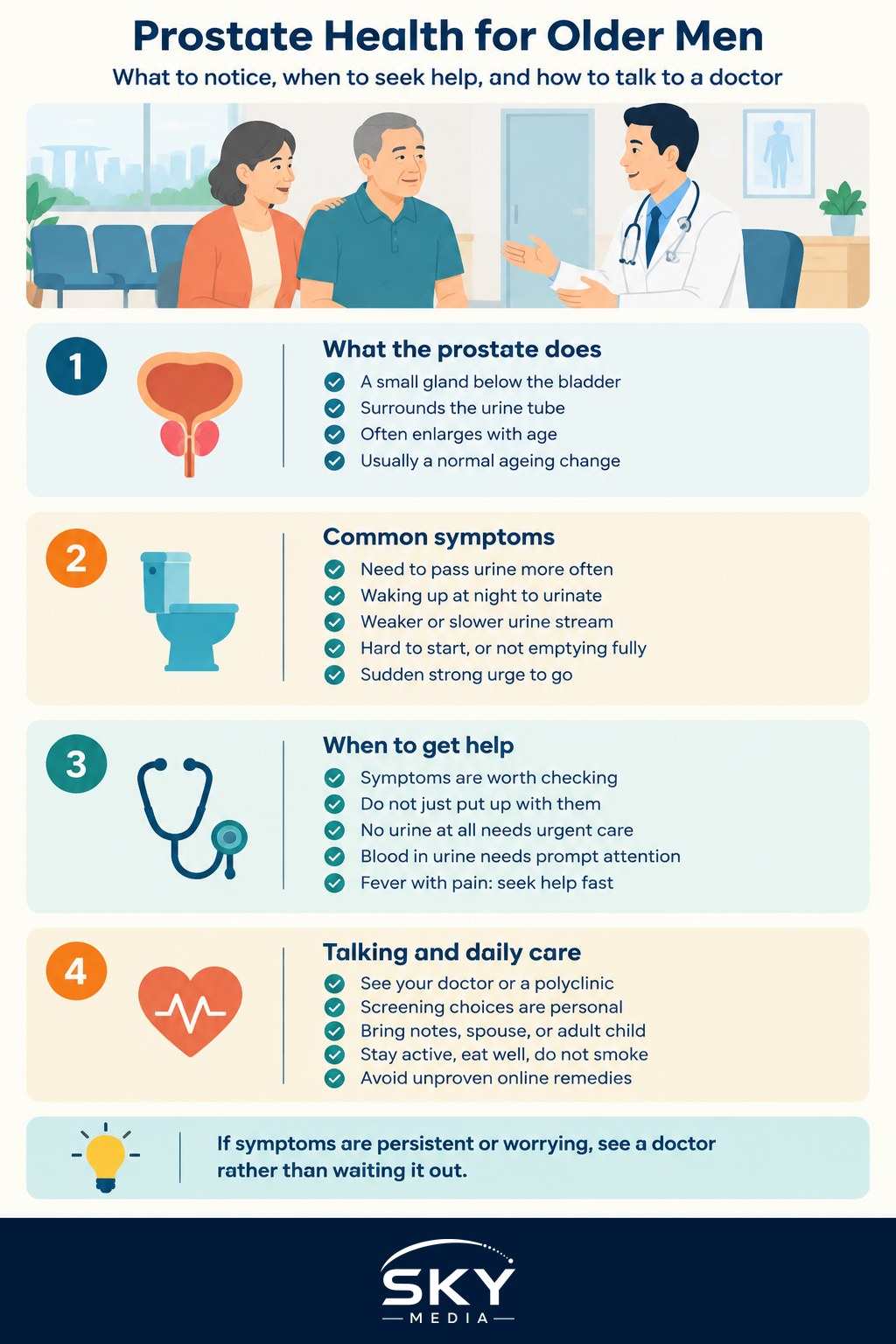
The prostate is a small gland that sits below the bladder and surrounds the tube that carries urine out of the body. As men grow older, it commonly enlarges. This is often a normal part of ageing rather than a sign of anything sinister, but because the prostate wraps around that tube, even gentle changes can affect how you pass urine. That is why so many older men notice bathroom habits shifting over the years.
Common Changes Older Men Notice
Many men in their later years experience urinary symptoms linked to the prostate. These can include needing to pass urine more often, especially at night, a weaker or slower stream, difficulty starting, a feeling that the bladder is not fully empty, or a sudden strong urge to go. These changes can be a real nuisance, disturbing sleep and making outings stressful when you are always scouting for the nearest toilet.
It is important to know that these symptoms are common and often caused by a non-cancerous enlargement of the prostate. However, similar symptoms can sometimes point to other conditions, so they are worth checking rather than simply putting up with. Please do not assume the worst, and equally, please do not brush persistent changes aside. A doctor can help work out what is happening and what, if anything, needs to be done.
Some symptoms deserve prompt attention. If you cannot pass urine at all, if you see blood in your urine, or if you have fever with pain, seek medical care without delay, and treat an inability to pass urine as an urgent problem. For any sudden, severe or frightening symptom, go to A and E or call 995.
Screening and Seeing a Doctor
Whether and how to screen for prostate conditions is a personal decision best made with a doctor who knows your history. Screening choices involve weighing benefits and downsides, and the right approach differs from man to man. Rather than following advice from friends or the internet, have an honest conversation with your own doctor or at a polyclinic. They can explain your options in plain language and help you decide what suits you.
We are deliberately not listing specific tests, target numbers, or how often to be checked, because those decisions belong with a professional who has assessed you personally. For trustworthy, Singapore-specific general guidance, HealthHub and the Health Promotion Board are good places to start reading, and you can bring any questions to your next appointment.
If you are already managing other conditions as you age, prostate concerns can be folded into your regular reviews. Our guide to managing chronic conditions in older age explains how to keep on top of several health issues at once without feeling overwhelmed, and health screening for seniors covers how routine checks fit into later life.
Talking About It Without Embarrassment
Many older men stay silent about urinary or prostate symptoms out of embarrassment, or a sense that complaining is not manly. This silence can delay useful care. Doctors and nurses hear about these issues every single day, and there is nothing shameful in raising them. Bringing along a spouse or adult child for support, or simply writing your symptoms on your phone before the visit, can make the conversation easier.
For families, gently opening the door helps. A caring question from an adult child, framed with respect rather than fuss, can give an older father permission to seek help he has been quietly avoiding. If you are supporting an ageing parent through appointments, our article on navigating the healthcare system for an ageing parent offers practical pointers.
Everyday Habits That Support Wellbeing
While no lifestyle habit replaces proper medical care, general good health supports your body as a whole. Staying physically active, eating well, keeping a healthy weight, not smoking, and managing conditions like blood pressure and diabetes all contribute to overall wellbeing as you age. These are the same sensible habits that help your heart, your bones and your energy levels, so the effort is never wasted. You may find our guide to eating well in your senior years a useful companion.
Do speak to a doctor before making big changes, especially if you already have symptoms or other conditions, and never rely on unproven supplements or remedies you see advertised online. If a product promises to shrink your prostate or guarantee a cure, treat it with healthy suspicion and ask a professional first.
A Reassuring Note
Prostate changes are one of the most ordinary parts of ageing for men, and most concerns can be managed well once you understand them. The kindest thing you can do for yourself is to notice changes, resist the urge to feel embarrassed, and let a doctor guide you. Your later years are meant to be enjoyed, and good, unfussy attention to your health helps keep them that way. When in doubt, book that appointment. It is a small, sensible step that your future self will thank you for.
Frequently Asked Questions
Is an enlarged prostate the same as prostate cancer? No. Enlargement with age is very common and usually non-cancerous. However, similar urinary symptoms can sometimes point to other conditions, so persistent changes are worth having checked by a doctor rather than assumed to be harmless.
Why do I keep waking up at night to pass urine? Needing to pass urine more often at night is a common sign of prostate changes in older men, but it can have other causes too. If it is disturbing your sleep, see a doctor or polyclinic so the cause can be worked out.
Should I have a prostate screening test? That is a personal decision to make with a doctor who knows your history, since screening involves weighing benefits and downsides. Speak to your own doctor or a polyclinic, who can explain the options in plain language.
Can supplements shrink the prostate? Be sceptical of any product that promises to shrink your prostate or guarantee a cure. Unproven supplements and remedies are no substitute for proper medical care. Ask a doctor before buying anything, especially if you already take other medicines.
How can I bring up urinary problems with my father? Open the conversation gently and with respect, rather than making a fuss. Many older men stay silent from embarrassment. Offering to go along to the appointment, or suggesting he jot down symptoms on his phone first, can make it easier.
Official sources: HealthHub
Further reading: Prostate Health in Singapore