
The first few months with a puppy shape the dog you will live with for years. Puppy training in Singapore has its own flavour: most puppies grow up in flats, meet lift lobbies and void decks before they meet grass, and deal with heat, thunderstorms and busy neighbours from day one. This guide covers what to teach first, how puppy classes usually work, and what to expect from the process, so you can start well without feeling overwhelmed.
Why the First Few Months Matter So Much
Puppies go through a sensitive period for socialisation, roughly in their first few months of life, when new sights, sounds, people and surfaces are absorbed easily. Experiences during this window tend to stick. A puppy that calmly meets a lift, a bicycle, a child, an umbrella and a vacuum cleaner now is far less likely to be fearful of them later.
That is why good puppy training is less about tricks and more about building confidence, manners and trust.
There is a balancing act here. Your vet will advise on the vaccination schedule and when it is sensible for your puppy to walk on public ground or mix with unfamiliar dogs. Until then, you can still socialise by carrying your puppy around the estate, inviting calm visitors home, and introducing household noises. Ask your vet for guidance specific to your puppy rather than relying on general rules online.
What to Teach Your Puppy First
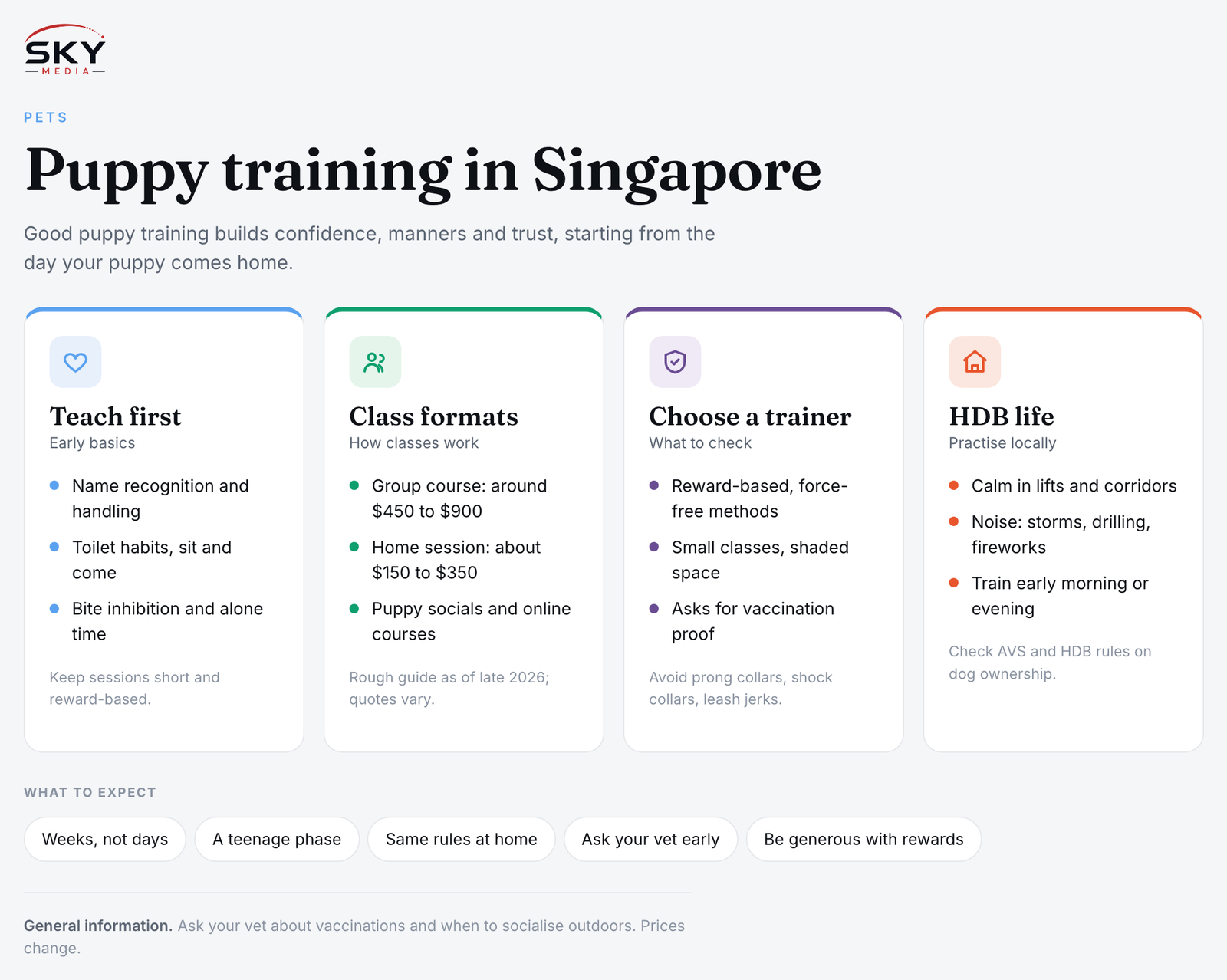
Keep early sessions short, a few minutes at a time, several times a day. Puppies learn fastest when training feels like a game and ends before they lose interest. Reward-based methods, using food, toys or praise to mark the behaviour you want, are the approach most modern trainers recommend.
A sensible starting list:
- Name recognition. Say your puppy’s name once, reward when they look at you. This becomes the foundation of everything else.
- Toilet habits. Consistency matters more than anything here. Our guide to toilet training a puppy in Singapore homes covers pee pads, balcony trays and routines in detail.
- Handling. Gently touch paws, ears and mouth, then reward. This makes grooming, nail trims and vet visits far easier later.
- Sit and come. Simple cues that help in lift lobbies, at crossings and when guests arrive.
- Bite inhibition. Puppies explore with their mouths. When teeth touch skin, pause play briefly, then redirect to a chew toy. Avoid rough wrestling games that reward biting.
- Alone time. Practise short, calm separations from early on so your puppy learns that being alone is normal. This helps prevent barking and distress when you return to the office.
- Crate or pen comfort. A crate or playpen, introduced kindly with treats and toys, gives your puppy a safe resting spot and helps with toilet routines.
If you are still setting up food, sleep and vet care, start with puppy care basics in Singapore and come back to training once the routine settles.
Puppy Classes in Singapore: How They Usually Work
Puppy classes, sometimes called puppy kindergarten or puppy preschool, are group sessions for young dogs and their owners. Formats vary between trainers, but you will commonly see:
- Group puppy classes. A handful of puppies of similar age, with structured play, basic cues and owner education on topics such as biting, toileting and handling.
- Private home sessions. A trainer visits your flat to work on household issues such as crying at night, chewing furniture or reacting to lift noises.
- Puppy socials. Supervised, off-lead play sessions focused on dog-to-dog manners rather than commands.
- Online courses. Video lessons for the basics, without hands-on feedback.
Many owners combine formats, for example a group class for socialisation plus one or two home visits for specific problems. Prices, class sizes and course lengths differ widely, so compare what is included rather than assuming. As a rough guide, as of late 2026, a multi-week group puppy course in Singapore typically costs around $450 to $900, while a private home session usually runs about $150 to $350, with packages of several sessions working out cheaper per visit. Quotes vary with the trainer’s experience, session length and whether travel is included.
| Format | Best for | Things to keep in mind |
|---|---|---|
| Group puppy class | Socialisation and basic manners in a controlled setting | Check age limits and vaccination requirements before enrolling |
| Private home session | HDB-specific issues like crying, chewing or lift fear | Usually costs more per session, but advice is tailored to your home |
| Supervised puppy social | Confident play with other young dogs | Watch that play stays balanced and shy puppies are not overwhelmed |
| Online course | Busy owners covering the basics at their own pace | No live feedback, so harder to spot handling mistakes |
How to Choose a Puppy Trainer or Class
The dog training industry in Singapore is not tightly regulated in the way vets are, so it is worth asking questions before you pay. Things to check:
- Methods. Ask how the trainer handles mistakes. Look for reward-based, force-free approaches. Be cautious of anyone who relies on prong collars, shock collars, leash jerks or intimidation, especially for a young puppy.
- Experience and education. Ask about their training background and whether they keep learning through recognised courses or professional bodies.
- Class size and setting. Smaller groups give more attention. A shaded, air-conditioned or covered space helps in Singapore’s heat.
- Health requirements. A responsible class will ask for proof of vaccinations suitable for your puppy’s age.
- Observing first. Ask to watch a session and see whether the puppies look relaxed.
- Clear terms. Check rescheduling and cancellation policies, since puppies fall sick and Singapore weather can disrupt outdoor sessions.
If your puppy has graduated from basic classes and you want to go further with obedience work, our guide to dog training and obedience in Singapore covers the next stage, and clicker training your dog explains a precise marker technique many owners enjoy.
Puppy Training Around HDB and Condo Life
Apartment living shapes what your puppy needs to learn. A few local situations worth practising:
- Lifts. Start with empty lifts, reward calm behaviour, and pick up your puppy or step aside when neighbours are uncomfortable with dogs. Not everyone is at ease around them, and courtesy goes a long way.
- Corridors and void decks. Teach your puppy to walk calmly past doors, shoes, potted plants and other dogs.
- Noise. Thunderstorms, renovation drilling and festive fireworks can frighten puppies. Play recordings at low volume while giving treats, raising the volume gradually over days.
- Heat. Train and walk in the early morning or evening. Puppies overheat easily, so keep sessions short and carry water.
- Barking. Neighbours notice. Reward quiet behaviour and avoid leaving your puppy bored and alone for long stretches.
Remember the paperwork too. Dog ownership in Singapore comes with licensing requirements, and HDB flats have rules on which dogs are allowed. These are managed by the Animal & Veterinary Service (AVS) under NParks and by HDB. Check the current requirements on their official websites, as rules can change.
What to Expect From Puppy Training
Progress is rarely a straight line. Expect good days, setbacks, and a “teenage” phase somewhere between around six months and a year old, when a previously reliable puppy seems to forget everything. This is normal. Keep sessions consistent and rewards generous.
Realistic expectations:
- Weeks, not days. Toilet habits and calm alone time often take weeks of consistent practice.
- Everyone at home must agree. If one family member allows jumping on the sofa and another scolds it, your puppy gets confused. Agree on rules and cue words.
- Ask for help early. If you notice growling over food, persistent fear or biting that is getting worse, speak to your vet first to rule out pain or illness, then consult a qualified behaviour professional.
Frequently Asked Questions
When should I start puppy training in Singapore?
From the day your puppy comes home. Gentle handling, name recognition and toilet routines can begin immediately, while group classes depend on age and vaccinations, so ask your vet.
Are puppy classes worth it?
For most owners, yes. They provide safe socialisation and teach you how to train, which matters as much as teaching the puppy.
Start small, stay consistent, and enjoy the process. The patience you put in during puppyhood pays off in a calm, confident companion for years to come.