
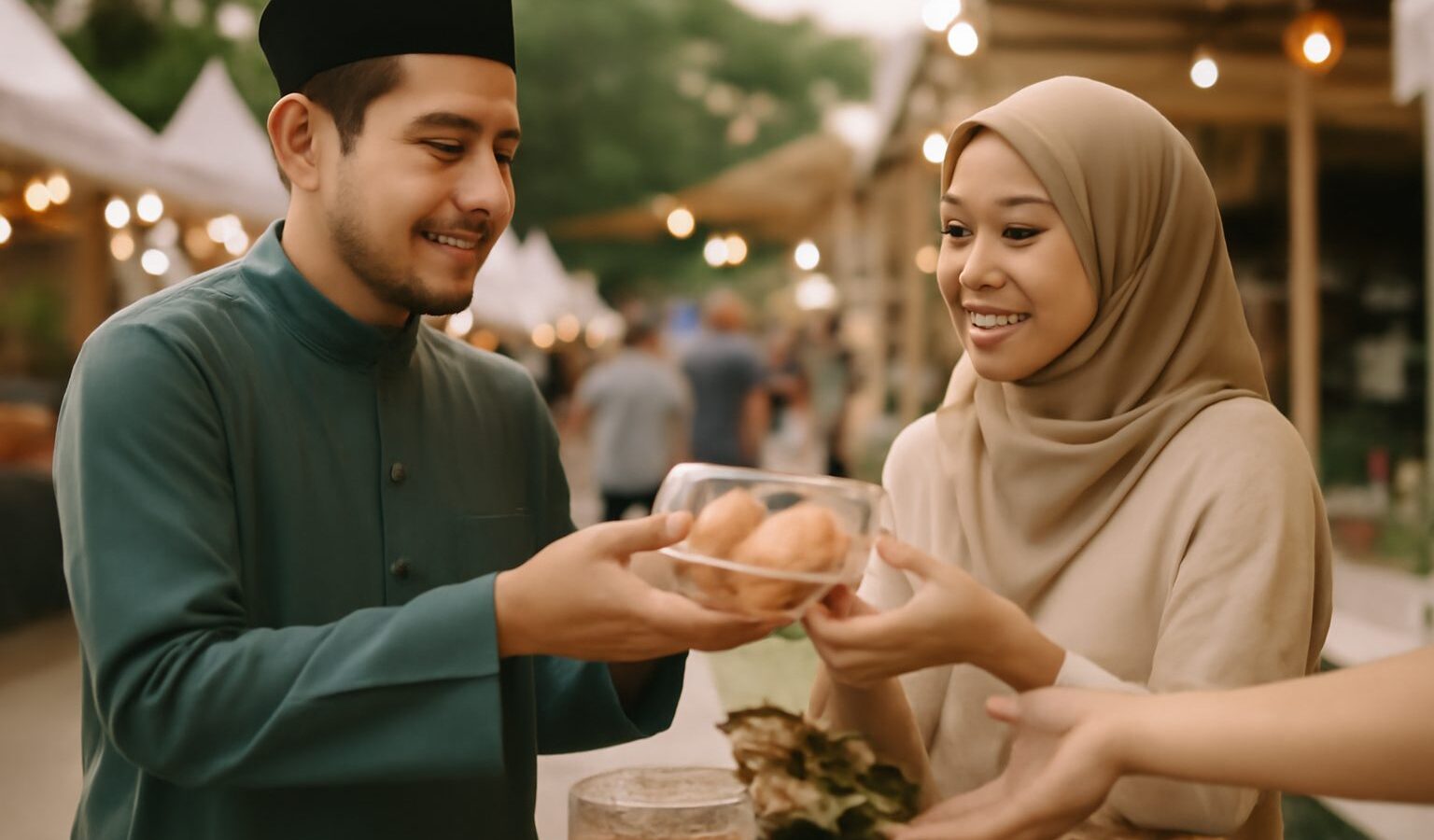
Every year during the fasting month, Singapore’s Ramadan bazaars fill with stalls selling drinks, kuih, grilled meats, festive clothing and Hari Raya decorations. The best known is in the Geylang Serai area, and smaller bazaars pop up near mosques and in heartland neighbourhoods. Visitors of every background are welcome, and many locals treat a bazaar trip as a highlight of the season.
If it is your first time, a little ramadan bazaar etiquette goes a long way. The bazaar is not just a food fair. For many shoppers it is part of preparing to break their fast after a full day without food or water. Knowing how the rhythm of the evening works helps you enjoy it while being a considerate guest.

Why a Ramadan Bazaar Is Different From Other Night Markets
Ramadan is the month when many Muslims fast from dawn to sunset. The evening meal that breaks the fast is called iftar, or buka puasa in Malay. A large share of the people at the bazaar in the late afternoon are buying food to take home or to a mosque for that meal. They may be tired, thirsty and short on time.
This shapes the mood in ways a newcomer might not expect:
- The busiest period is often the hour or two before sunset, when people buy food for breaking fast.
- Crowds may thin right at the breaking fast time as shoppers sit down to eat or head to pray, then build again later in the evening.
- Many stallholders are fasting too, working long hours in the heat without eating or drinking.
If you want a general background on the fasting month itself, our guide to Ramadan and fasting in Singapore explains the basics in plain language.
Timing Your Visit Around Prayer and Breaking Fast
The daily breaking fast time follows the Maghrib (sunset) prayer and shifts slightly through the month. MUIS, the Islamic Religious Council of Singapore, publishes the timings, and mosques and apps share them.
Practical timing tips:
- Go in the late evening or after breaking fast if you want a more relaxed stroll. Many stalls stay open well after sunset, but hours vary, so check the organiser’s announcements.
- If you go before sunset, keep it brisk. Buy what you want and let people who need to get home move quickly.
- At the moment of breaking fast, you may hear the call to prayer (azan) from a nearby mosque. Shoppers around you may stop to eat dates or have a drink. It is a quiet, meaningful moment for many; there is no need to do anything special, just be patient if a queue pauses.
- Friday evenings and weekends are usually the most crowded, especially in the final week before Hari Raya Puasa.
Queue Norms and Stall Etiquette
Singaporeans take queues seriously, and bazaar queues are no different, even when they look informal. The table below sums up common situations.
| Situation | Considerate approach | Best to avoid |
|---|---|---|
| Joining a stall queue | Ask “Is this the queue?” if unsure, then join the end | Hovering at the side or reaching over others |
| Taking photos of food or stalls | Ask the stallholder first, step aside so you do not block buyers | Filming people’s faces up close or blocking the counter |
| Paying for your order | Have cash or your e-payment app ready before you reach the front | Holding up the line to sort out payment |
| Tasting or browsing | Ask before touching food or fabrics, buy if you sample | Squeezing goods or haggling hard at food stalls |
| Finishing your food | Use the bins provided, return trays if there is a tray area | Leaving litter or drinks cups on ledges |
A few more pointers:
- Payment methods vary. Many stalls take cashless payment, but not all, so carry some small notes.
- Prices are usually fixed for food. Gentle bargaining may happen at some clothing or décor stalls, but keep it friendly and never push.
- Be patient with slower service. Remember that the person serving you may not have eaten since before dawn.
Eating, Drinking and Dressing Respectfully
Non-Muslims are not expected to fast, and nobody will mind you buying food. The bazaar exists to sell it. Still, a few small courtesies show care:
- Before sunset, eat discreetly. Rather than snacking while walking through the busiest lanes, step to the side or wait until after breaking fast to tuck in.
- Most of the food is prepared with Muslim customers in mind, so do not bring outside food containing pork or alcohol into the bazaar area. If halal status matters to someone in your group, look for the MUIS halal certificate at the stall.
- Dress comfortably but modestly. There is no formal dress code, but covering shoulders and knees is appreciated near mosques and in crowds. Light, breathable clothing helps in the evening heat.
- Smoking is restricted in many public areas in Singapore. Follow posted signs and the law rather than lighting up in the crowd. Our guide to Singapore laws to know covers smoking zones, littering and other rules that apply at events.
Crowd Safety and Practical Visitor Tips
Bazaars can be packed, hot and loud. A smoother visit comes down to preparation:
- Use public transport. Parking near large bazaars is very limited, and roads can be congested before sunset.
- Carry water for yourself, and stay hydrated, especially if you plan to walk for a while.
- Keep belongings close. Use a crossbody bag and keep your phone secure in tight crowds.
- Agree on a meeting point if you are in a group, since mobile signals can be patchy in dense crowds.
- Bring a small bag for purchases, as some stalls may not provide one.
- Go easy on prams and large bags at peak times. A baby carrier may be easier than a stroller in narrow lanes.
- Check the weather. Sudden rain is common, and covered areas fill quickly.
If you enjoy festive markets, the same patience and planning helps elsewhere in Singapore. Our tips on how to shop Chinatown bazaars without feeling overwhelmed cover the Lunar New Year version, while our Thaipusam etiquette guide explains how to be a respectful spectator at another major festival.
Greetings and Small Courtesies
You do not need to know Malay or Arabic, but a friendly greeting is welcomed. “Selamat berbuka puasa” wishes someone a good breaking of the fast, and “Ramadan Kareem” or “Ramadan Mubarak” are general seasonal greetings. Closer to the end of the month, you will hear “Selamat Hari Raya”.
Customs vary between families and communities, so treat these as commonly seen practices rather than strict rules. Above all, the bazaar is a celebration that locals are proud to share. Be patient in queues, mindful of people who are fasting and curious in a kind way, and you will be a welcome guest.
Further reading: What to Eat at a Ramadan Bazaar: Dishes First-Timers Should Try · A Family Guide to Geylang Serai During Ramadan