
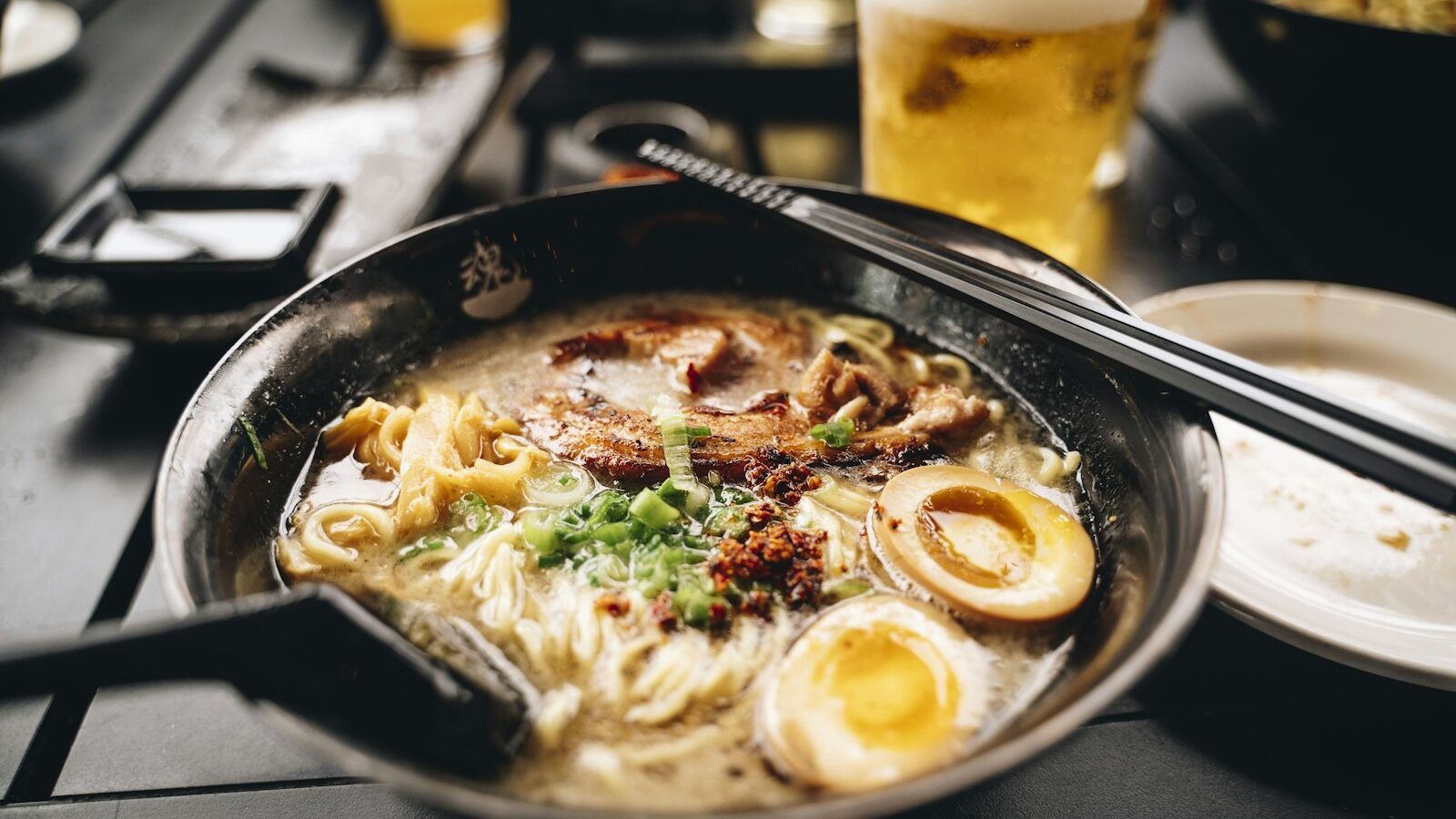
Singapore’s love affair with ramen runs deep, with Japanese ramen shops drawing steady queues of devotees. But ramen is not one dish; it is a whole family of styles, each defined by its broth, noodles and toppings. This guide explains the main ramen styles so you can order with confidence and find the bowl that suits your taste.
What ramen is
Ramen is a Japanese noodle soup dish, built on four core components: the broth, a seasoning base called tare, the noodles, and the toppings. The magic is in how these elements are balanced and how much care goes into each, particularly the broth, which can take many hours to prepare. While ramen has humble origins, it has been elevated into something close to an art form, with shops often specialising in a particular style perfected over years. Understanding the styles is the key to appreciating and choosing your ideal bowl.
The main broth styles
The broth is the soul of ramen, and it is the main way styles are categorised.
- Tonkotsu, a rich, creamy, pork-bone broth simmered for hours until milky and full-bodied. It is one of the most popular styles, prized for its depth.
- Shoyu, a soy-sauce-based broth, savoury and clear, often lighter than tonkotsu.
- Shio, a salt-based broth, typically the lightest and most delicate, letting subtle flavours shine.
- Miso, a broth flavoured with fermented soybean paste, hearty and robust with a savoury sweetness.
Many shops build their reputation on one signature broth, so knowing these styles helps you choose a shop as much as a bowl.
Noodles and toppings
Beyond the broth, the noodles and toppings complete the experience.
| Component | What to know |
|---|---|
| Noodles | Vary in thickness and texture, matched to the broth |
| Chashu | Braised or roasted pork slices, a classic topping |
| Ajitama | A marinated soft-boiled egg with a jammy yolk |
| Nori and menma | Seaweed and bamboo shoots for flavour and texture |
| Spring onion | Freshness and a mild bite |
The interplay of a rich broth, springy noodles, tender chashu and a perfectly runny egg is what makes a great bowl so satisfying. Some shops let you customise elements like noodle firmness and richness.
How to order
Ordering ramen can involve a few choices, and shops often make it easy. You typically select your broth or the shop’s signature bowl, and may be able to specify preferences such as noodle firmness, broth richness, or extra toppings. Some shops use a ticket machine at the entrance where you choose and pay before sitting, which can feel unfamiliar at first but is straightforward. If in doubt, the signature bowl is usually the best introduction to a shop’s strengths.
Beyond the classic bowl
Ramen has a few close relatives and variations worth knowing. Tsukemen is a style where the noodles are served separately from a concentrated dipping broth, so you dip each mouthful, keeping the noodles firm. Mazemen, or brothless ramen, tosses the noodles in a sauce rather than soup. There are also regional and specialty styles, from spicy versions to those featuring different proteins. Exploring these broadens your ramen horizons beyond the standard bowl and reveals just how versatile the dish can be.
How to spot a great bowl
- A broth with genuine depth, whether rich and creamy or clean and delicate, that tastes carefully made.
- Noodles with the right texture, springy and matched to the broth.
- Well-executed toppings, such as tender chashu and a properly jammy egg.
- A shop that specialises, since focus often means mastery.
- A queue of enthusiasts, a reliable sign in a competitive scene.
Because ramen shops often pour years into perfecting a single style, the best bowls reflect real dedication, and it shows in every spoonful.
Where to find it
Ramen shops are found across Singapore, concentrated in shopping malls, dining districts and areas with a strong Japanese food presence. Many are outposts or inspired by renowned Japanese establishments, and the scene is competitive enough that standards are generally high. For the best experience, seek out shops known for a particular broth style you enjoy, and be prepared to queue at the most popular spots, especially during peak dining hours.
The ramen boom and what it means for diners
Singapore’s ramen scene has grown remarkably, from a handful of shops to a competitive landscape where many styles and specialists coexist. For diners, this is excellent news: standards are high, variety is wide, and you can find everything from rich tonkotsu specialists to shops exploring lighter or more unusual bowls. The competition pushes shops to refine their craft, and it means you are rarely far from a good bowl. It also means it pays to be a little discerning, seeking out shops celebrated for the particular style you love rather than settling for the nearest option. As with much of Singapore’s food scene, the abundance is a gift, and a little exploration is richly rewarded.
The takeaway
Ramen is a world of its own, defined chiefly by its broth: rich tonkotsu, savoury shoyu, delicate shio or hearty miso, each paired with carefully made noodles and toppings like chashu and a jammy egg. Once you understand the styles, you can choose both a shop and a bowl to match your taste, and explore variations like tsukemen and mazemen for something different. Seek out shops that specialise, order their signature bowl, and take a moment to appreciate the hours of craft in a great broth. Do that, and you will understand why ramen inspires such devotion in Singapore.
Explore more: Japanese food in Singapore · Sushi in Singapore: a beginner’s guide · Yakitori and Japanese grills: a guide