
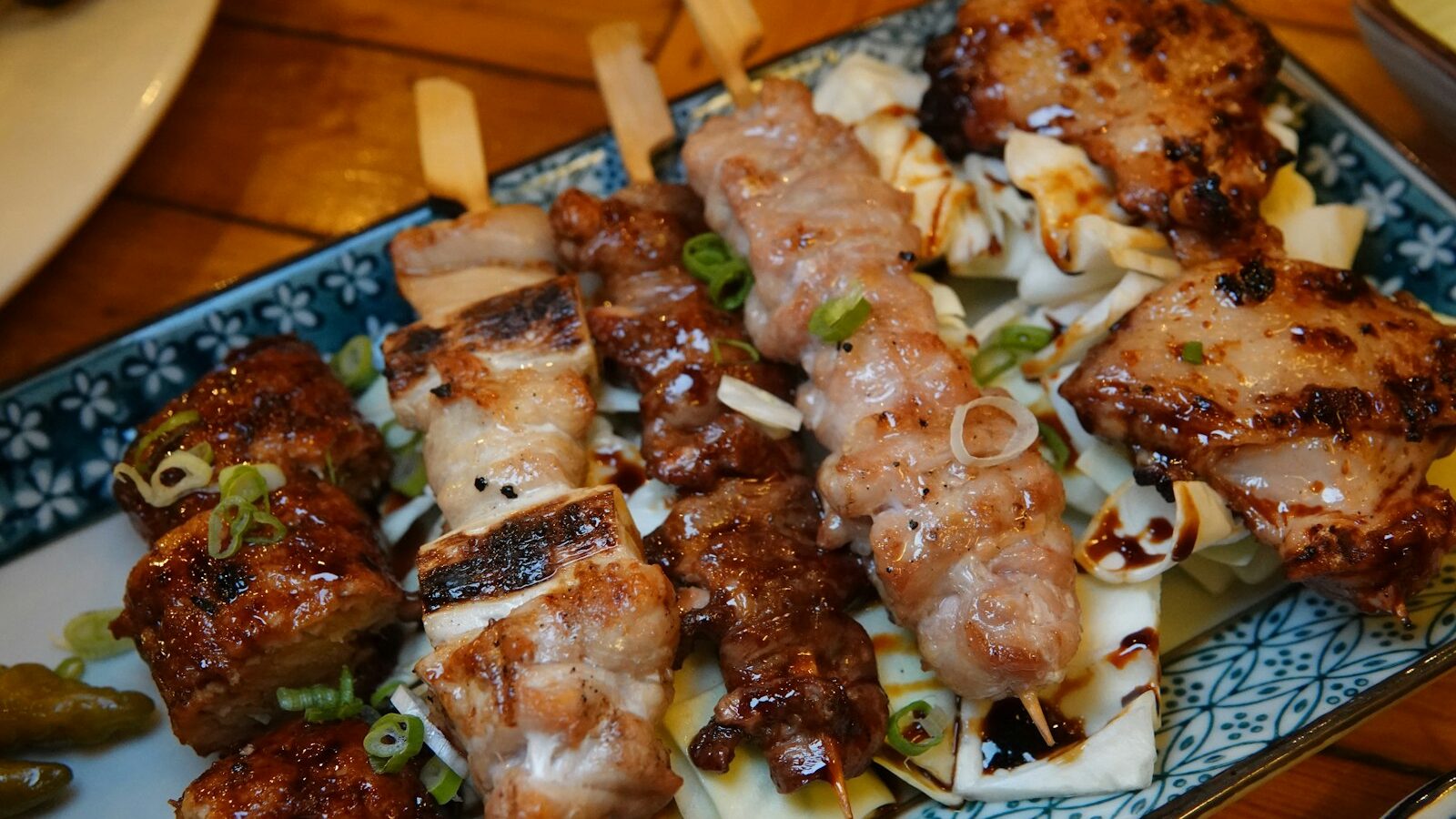
Yakitori is Japanese comfort food at its most convivial: skewers of chicken grilled over charcoal, enjoyed with a cold drink in the relaxed buzz of an izakaya. Simple in concept but refined in execution, it is a joy to explore. This guide covers yakitori, its cuts and seasonings, and how to enjoy the izakaya experience.
What yakitori is
Yakitori means grilled chicken, and traditionally it refers to skewers of chicken, and various chicken parts, grilled over charcoal. It is a specialty in its own right, with dedicated yakitori chefs treating the grilling of each cut as a craft, judging the charcoal, timing and seasoning to bring out the best in every piece. Though the classic is chicken, yakitori-style grilling extends to other skewered items too. The appeal lies in the smoky char, the quality of the chicken, and the simple pleasure of eating skewer after skewer in good company.
The cuts and skewers
Part of the fun of yakitori is the range of cuts, which goes well beyond plain breast meat.
- Momo, thigh meat, juicy and flavourful.
- Negima, chicken and spring onion alternated on the skewer.
- Tsukune, seasoned chicken meatballs, often served with a dipping sauce.
- Kawa, chicken skin, grilled until crisp.
- Various other parts, prized by enthusiasts for their distinct textures.
Beyond chicken, many places also grill vegetables and other items, so there is something for everyone. Trying a range of skewers is the best way to appreciate the craft.
Tare versus shio
A key choice with yakitori is the seasoning, and there are two classic approaches.
| Style | What it is | Best for |
|---|---|---|
| Tare | A sweet-savoury soy-based glaze | Rich, caramelised flavour |
| Shio | Simply salt | Tasting the quality of the meat |
Tare gives a glossy, sweet-savoury finish, while shio, just salt, lets the natural flavour and the charcoal smokiness shine. Neither is better; many diners order some of each to enjoy the contrast. A good chef knows which cuts suit which seasoning.
The izakaya experience
Yakitori is often enjoyed at an izakaya, a Japanese pub-style eatery designed for relaxed eating and drinking. The atmosphere is casual and lively, meant for lingering over small plates and drinks with friends or colleagues. You order dishes gradually rather than all at once, pairing skewers with other small plates and drinks like beer, sake or highballs. This unhurried, sociable style of dining is central to yakitori’s charm, turning a meal into an easygoing evening rather than a quick bite. Embracing the izakaya rhythm, ordering as you go and settling in, is the best way to enjoy it.
How to order
- Start with a few skewers and order more as you go, izakaya-style.
- Try both tare and shio to appreciate the difference.
- Explore beyond breast meat, since thigh, tsukune and other cuts are highlights.
- Add small plates, pairing skewers with other izakaya dishes.
- Choose a drink to match, as beer and highballs suit the smoky grill.
The gradual, exploratory ordering is part of the experience, so there is no need to decide everything upfront.
Why the craft matters
It is worth appreciating that good yakitori is more skilled than it looks. The chef manages the charcoal heat, positions each skewer precisely, and times the grilling so that skin crisps, meat stays juicy, and glazes caramelise without burning. Sourcing quality chicken and using every part respectfully is part of the tradition. This attention is why a great yakitori skewer, seemingly humble, can be so memorable, and why dedicated yakitori restaurants are prized. Recognising the craft adds to the enjoyment, turning a simple skewer into an appreciation of technique honed over years.
Where to find it
Yakitori and izakaya are well represented in Singapore, from casual spots to more refined specialists, concentrated in dining districts and areas with a strong Japanese food presence. Some places focus purely on yakitori with charcoal grills and a counter, while many izakaya offer skewers alongside a broader menu of small plates. For the full experience, seek out a place with a proper charcoal grill, settle in at the counter or a table with friends, and enjoy the relaxed, skewer-by-skewer rhythm.
The takeaway
Yakitori is the delicious art of charcoal-grilled skewers, most classically chicken, enjoyed in the relaxed, sociable setting of an izakaya. Explore the range of cuts beyond plain meat, try both the sweet-savoury tare and the pure shio seasoning, and embrace the gradual, drink-alongside rhythm of izakaya dining. Behind the simplicity lies real craft in the grilling, which is why a great skewer is so satisfying. Gather some friends, settle in, and enjoy one of Japan’s most convivial and rewarding culinary traditions, alive and well in Singapore.
Common first-timer mistakes to avoid
Yakitori is forgiving and there are no strict rules, but a few habits get in the way of enjoying it properly. Knowing them in advance means you spend the evening tasting rather than second-guessing yourself.
- Ordering everything at once, which defeats the izakaya rhythm and leaves skewers sitting until they cool. Order in small rounds so each batch arrives hot off the grill.
- Sticking only to familiar cuts, which means missing the parts many regulars rate most highly. Ask the chef or staff what is good that day and let their suggestion guide a skewer or two.
- Drowning shio skewers in sauce, when a salt-seasoned skewer is meant to taste of the meat and charcoal alone. Try it as served before reaching for extra seasoning.
- Pulling all the pieces off the skewer onto a plate, which is usually unnecessary. At most counter-style places you eat straight from the stick, one piece at a time.
- Rushing, treating it like a quick meal rather than a slow evening. The pleasure builds over an unhurried succession of skewers and drinks, so give it time.
None of these are true errors, and no good place will make you feel awkward. Think of them as small ways to get more from the experience rather than rules to worry about.
Dietary needs and dining out in Singapore
Because yakitori is grilled to order over an open flame, it suits diners who like to know exactly what they are eating, but a few Singapore-specific points are worth checking before you book.
Halal availability varies. Many Japanese izakaya are not halal-certified, and grills, glazes and shared cooking surfaces may involve pork or alcohol-based ingredients, so if this matters to you, confirm the restaurant’s certification or ingredient practices directly rather than assuming. For the current list of certified establishments, you can refer to MUIS (the Islamic Religious Council of Singapore).
Allergies and alcohol are the other things to raise upfront. Tare glazes are typically soy-based and may contain wheat, and some marinades and drinks contain alcohol, so flag any soy, wheat, gluten or alcohol concerns to the staff when you order rather than at the end. Many kitchens can steer you toward shio-seasoned skewers or plainer options if you ask. If you have serious allergies, describe them clearly and ask how each item is prepared, since a busy charcoal counter handles many ingredients side by side.
Explore more: Japanese food in Singapore · Ramen in Singapore: styles explained · Sushi in Singapore: a beginner’s guide