
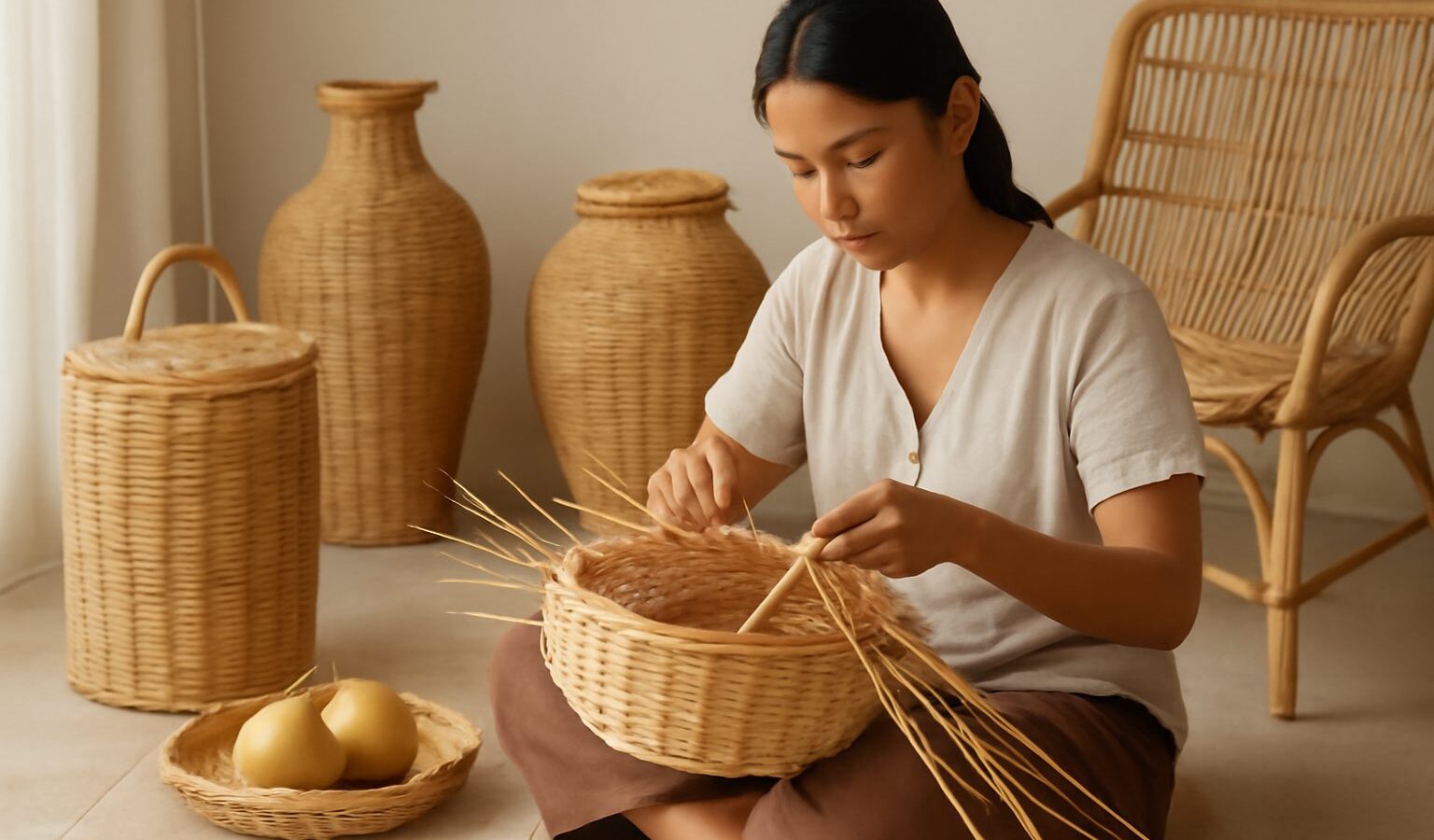
In an age of plastic and moulded furniture, it is easy to forget that homes were once furnished with the supple strength of hand-woven cane. The rattan weaving Singapore relied on for chairs, baskets and everyday goods is a fading trade, a quiet craft of patient hands that shaped a natural fibre into objects of use and beauty.
What rattan and basket weaving are
Rattan is a climbing palm whose long, flexible stems have been used across Southeast Asia for generations. Once harvested, cleaned and prepared, the cane can be bent, coiled and woven into a remarkable range of goods, from sturdy furniture to fine baskets. Its combination of strength, lightness and pliability makes it ideal for handwork, and its natural warmth gives finished pieces a character that synthetic materials struggle to match.
Basket weaving is the wider craft of interlacing plant fibres into containers and mats. Weavers may work with rattan, bamboo strips or other natural materials, threading and plaiting them into forms that hold their shape through the tension of the weave alone. A well-made basket needs no nails or glue, for its strength comes from the pattern itself and the skill of the hands that formed it.
The two crafts overlap closely. A rattan worker may frame a chair one day and weave a basket the next, drawing on the same feel for the material and the same repertoire of knots, coils and lattices. Both demand an understanding of the fibre, a sense of proportion and the patience to build an object strand by strand.
Its heritage in Singapore
Rattan work once had a firm place in daily life. Cane furniture furnished homes across the island, prized for being cool, light and well suited to a tropical climate. Baskets of every size served the markets, kitchens and trades, carrying goods, storing produce and organising the clutter of the household. Before mass-produced containers became cheap and plentiful, the woven basket was simply how things were held and moved.
The trade supported skilled artisans and small workshops. Rattan shops sold cane furniture and repaired worn pieces, re-caning chair seats and mending frames so they served for many more years. This culture of repair reflected a time when goods were made to last and mending was cheaper than replacing. A good rattan chair might pass through several rounds of repair before it was finally retired.
The craft drew on traditions carried by communities from across the region, where working with cane and other fibres was long established. Knowledge passed from experienced hands to younger ones, often within families or through the daily rhythm of a workshop. The weaver learned by watching, imitating and repeating, until the movements became second nature.
The technique of the weave
Good rattan work begins long before the weaving. The cane must be selected, cleaned and prepared, then split or shaped to the right thickness for the task. For furniture, a frame is formed and secured, giving the piece its structure. For baskets, the weaver builds from a base outward, adding strand upon strand until the walls rise to the desired shape.
Steps in the craft
- Preparing the cane, cleaning and splitting it to suitable widths.
- Forming the frame or base, which gives the piece its foundation.
- Weaving the body, interlacing strands in patterns that lend both strength and beauty.
- Securing the edges, binding the rim so the work holds firm.
- Finishing, trimming loose ends and smoothing the surface for use.
Much of the skill lies in tension and consistency. The strands must be pulled evenly so the pattern stays regular and the object holds its form. Too loose and the piece sags; too tight and the cane may split. The weaver reads the material constantly, adjusting to its natural variation. This is knowledge that lives in the fingers, built through long repetition rather than instruction alone.
| Aspect | Hand-woven rattan | Mass-produced alternatives |
|---|---|---|
| Material | Natural cane fibre | Plastic, metal or moulded synthetics |
| Making | Woven by hand, strand by strand | Machine-made in quantity |
| Repairability | Can be re-caned and mended | Often discarded when damaged |
| Character | Warm, individual, natural | Uniform and impersonal |
| Skill required | Years of practice | Minimal handwork |
| Lifespan with care | Long, with repair | Variable, often short |
Why the trade is fading
The decline of rattan weaving mirrors the fate of many traditional handicrafts. Cheap, mass-produced furniture and containers flooded the market, offering low prices and easy replacement. Plastic proved light, waterproof and inexpensive, undercutting the woven basket in the very roles it once filled. As tastes and habits changed, demand for hand-woven goods shrank.
The nature of the work also weighs against it. Weaving is slow, physical and exacting, and it rewards patience over speed. Younger people have gravitated towards less demanding and better-paid work, leaving fewer hands to carry the craft forward. The long learning period, once absorbed naturally within families and workshops, no longer fits easily into modern working life. As older artisans retire, their knowledge risks retiring with them.
Yet the craft has not vanished. A renewed appreciation for natural materials, handmade goods and sustainable living has brought fresh interest to rattan. Woven furniture has found favour again for its warmth and craftsmanship, and some artisans and enthusiasts work to keep the skills alive. This quiet revival cannot restore the trade to what it was, but it offers the craft a foothold in a changed world.
Where the heritage lives on today
A handful of rattan shops and artisans continue the work, making, selling and repairing cane goods for those who value them. Workshops and interest groups sometimes offer the chance to learn basic weaving, passing the craft to curious hands. Designers and makers drawn to natural fibre bring rattan into contemporary pieces, blending old technique with new form.
The heritage lives, too, in the objects that survive in homes and collections, each one a record of a maker’s patience. To use a hand-woven basket or sit in a re-caned chair is to keep company with a craft that shaped daily life for generations. Honouring it means valuing not only the finished pieces but the slow, skilled labour behind them.
A respectful close
The rattan and basket weaving heritage of Singapore is a quiet one, easy to overlook yet deeply woven into the fabric of everyday life in earlier times. In each basket and chair lies the patience of an artisan and the strength of a natural fibre coaxed into useful beauty. To remember this fading trade is to honour the hands that made ordinary objects extraordinary, one strand at a time.
Explore more: Traditional trades of Singapore · Traditional signboard carving in Singapore · Joss paper and effigy craft in Singapore