
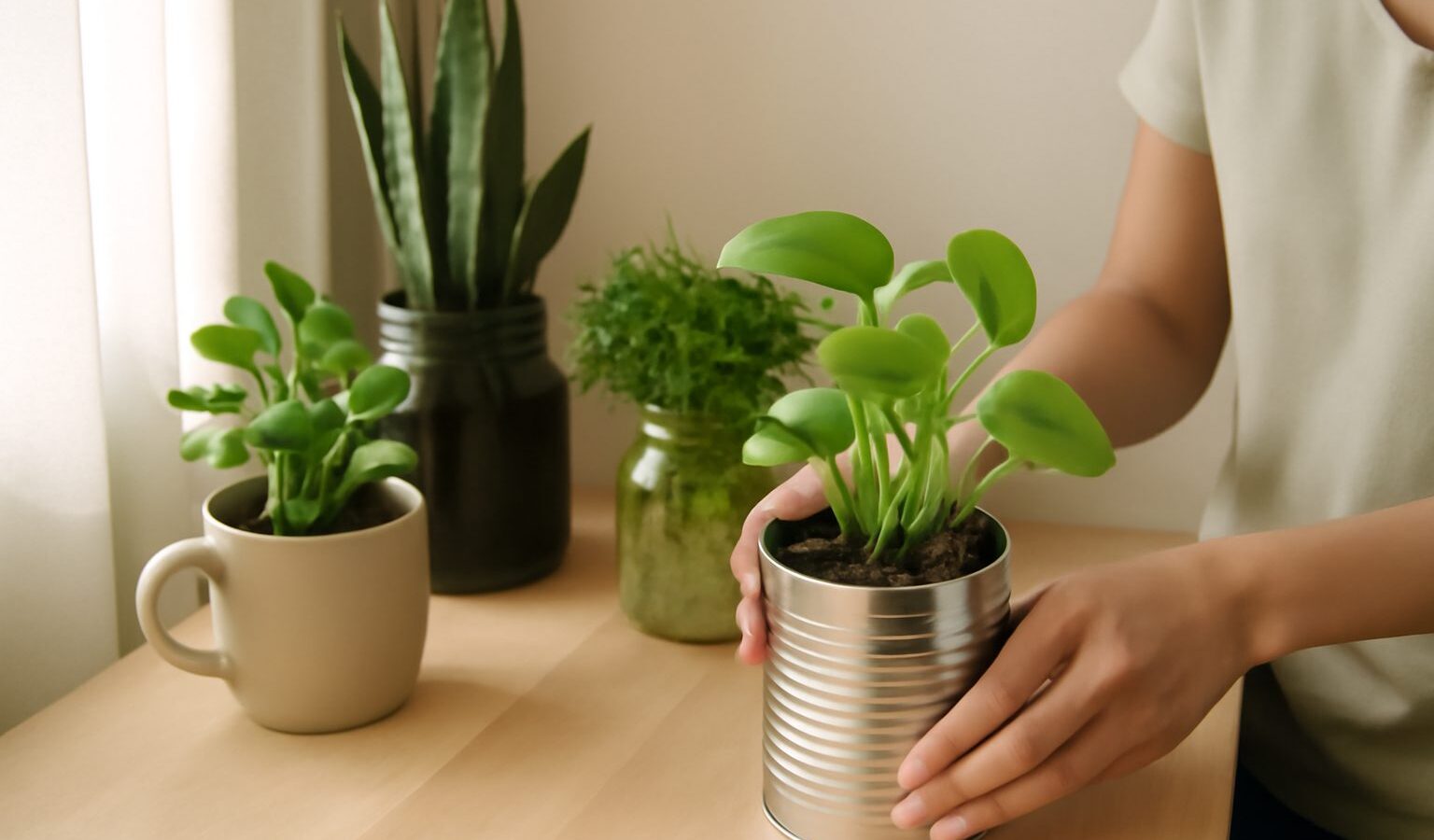
You do not need to buy a single new pot to start a thriving garden. Upcycling plant containers in Singapore is one of the friendliest ways to grow more greenery on a small budget, and it keeps useful things out of the rubbish chute at the same time. Look around your kitchen and recycling bin and you will find biscuit tins, takeaway tubs, milk cartons, tin cans, plastic bottles, chipped mugs and old buckets, all of which can become a home for a plant. The trick is knowing how to prepare them so your plants stay healthy in our hot, humid climate.
This guide walks you through what makes a good upcycled container, how to sort out drainage, and which safety points to watch, especially if you plan to grow herbs and vegetables you will eat.
What Makes a Good Upcycled Container
Almost any vessel that holds soil can hold a plant, but some work far better than others. The first thing to think about is size. A container needs enough depth and volume for the roots of whatever you want to grow. Leafy herbs and small houseplants are happy in tins and tubs, while chillies, tomatoes and other hungry crops want something closer to the size of a pail. If you are unsure how big to go, our guide on choosing the right pot size for your plant explains how root systems and pot volume work together.
Material matters too. In Singapore’s heat, thin metal tins can get very warm in direct sun and effectively cook the roots inside, so keep bare metal containers in bright shade or slip them inside a lighter outer pot. Dark plastic heats up in the same way. Pale colours, ceramic and thicker plastic stay cooler and hold moisture more steadily. Glass jars look lovely but have no drainage and heat up fast, so save them for water propagation rather than potting soil.
Think about weight and where the container will live. On a high balcony or a corridor ledge, a heavy ceramic bowl full of wet soil is a lot to lift and a hazard if it can fall. Lighter tubs and buckets are safer and easier to move when you rearrange your space.
Sorting Out Drainage
This is the single most important step, and the one most people skip. Almost nothing you upcycle will come with drainage holes, and a container with no way for water to escape will drown your plant’s roots, especially during the monsoon when everything stays damp for days. Root rot is the usual result. Our article on how to deal with root rot shows just how quickly soggy soil can turn fatal.
To add drainage, turn the container over and make several holes in the base. For plastic tubs and bottles, a heated skewer or a drill with a small bit works well. For tin cans and metal tins, a hammer and a nail will punch clean holes, though you should file down any sharp burrs afterwards so you do not cut yourself when handling the pot. Make more holes than you think you need, spaced across the whole base, not just one in the middle.
If you genuinely cannot make holes, use the container as a decorative outer sleeve, sometimes called a cachepot. Grow your plant in a cheap plastic nursery pot with proper drainage, then lower that pot inside the pretty upcycled one. Just remember to tip out any water that collects in the bottom after watering or rain, or you will end up with the same soggy problem.
A shallow layer of coarse material at the base does not replace holes, but a saucer or tray underneath will catch runoff and protect your floor. If you want to reduce watering altogether, some upcycled containers can be turned into a wicking or self-watering system, which is handy in our fast-drying heat.
Food Safety for Edible Plants
Upcycling is brilliant for a small edible garden, but be a little more careful when you plan to eat what you grow. Only use food-safe containers for herbs and vegetables. Old food tins, drink bottles and takeaway tubs are designed to hold food and are fine. What you should avoid is any container that once held chemicals, paint, solvents, engine oil, cleaning products or unknown industrial contents. Traces can linger in the plastic or metal and are not worth the risk near anything you will put in your mouth.
Give every reused container a proper wash with soapy water before you plant, and rinse well. If you are growing leafy greens, chillies or herbs to eat, pair your food-safe pots with clean potting mix and wash your harvest before cooking. For more on getting edibles going in tight spaces, see our guide to starting a small edible garden.
Prepare, Plant and Enjoy
Once your container is clean, drained and safe, fill it with a good free-draining potting mix rather than heavy garden soil, which compacts and holds too much water in pots. Add your plant, water it in, and place it where it will get the light it needs. Group a few upcycled pots together and you have an instant, characterful little garden that cost you almost nothing.
The real charm of upcycling plant containers in Singapore is that it lowers the barrier to starting. There is no need to wait for a shopping trip or spend money you would rather not. Rinse out that biscuit tin, punch a few holes, and give a cutting a home. Your balcony, your budget and the bin will all thank you.