
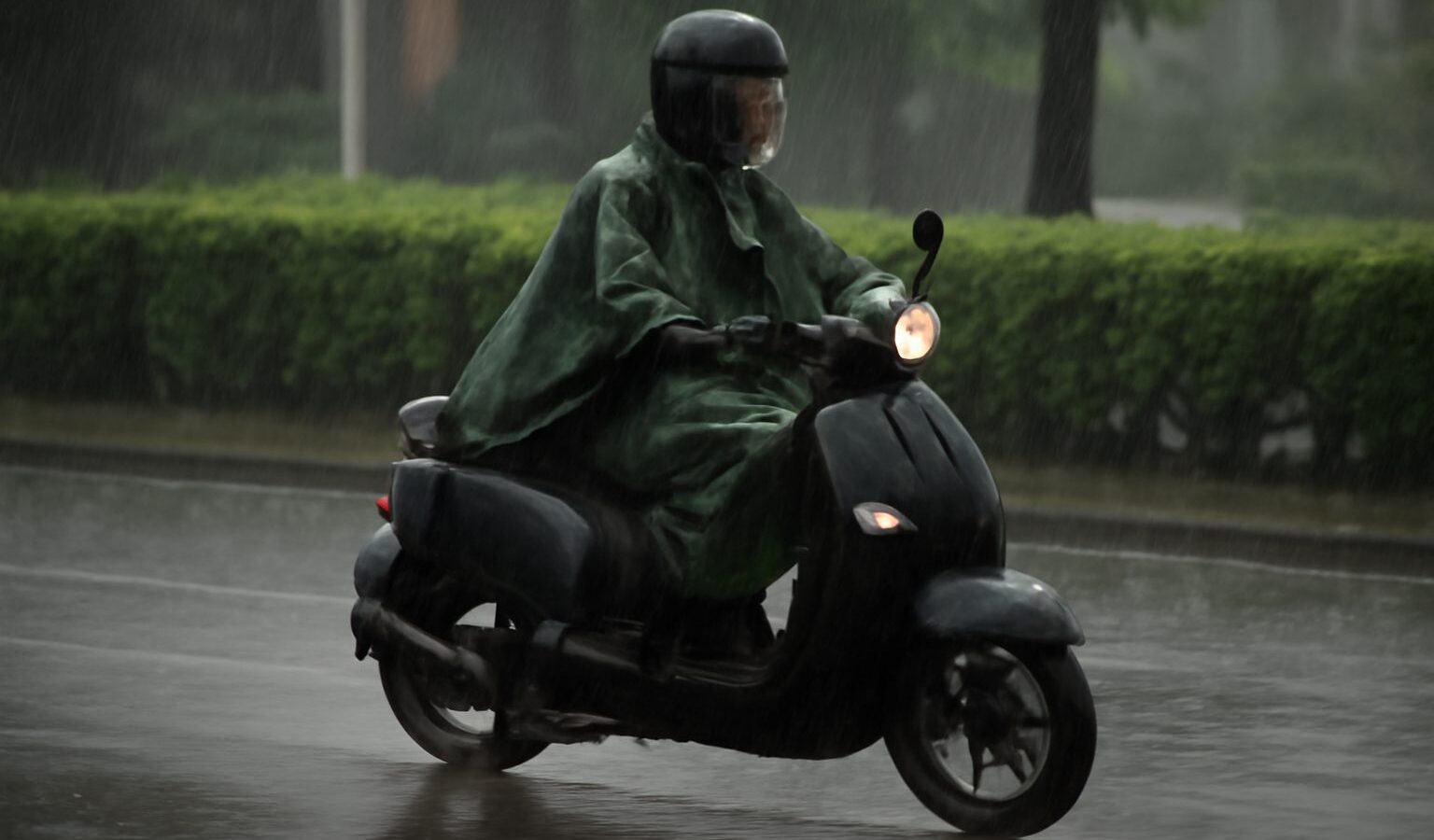
If you ride in Singapore, you will ride in the rain. Our tropical climate serves up sudden downpours and long monsoon spells, and a rider who only feels safe on dry tarmac will spend a lot of the year anxious or stranded. The good news is that riding in the rain is a learnable skill. It is less about brute confidence and more about smoothness, patience and reading the road. Get those right and a wet commute becomes routine rather than frightening.
This is general information, not professional riding instruction. If you are a new rider, a certified school or an experienced mentor is the best way to build wet-weather skill. Always ride within the law, wear proper gear, and never let getting somewhere on time push you into a risk you would not otherwise take.
Why Wet Roads Rob You of Grip
A motorcycle relies on two small contact patches, each roughly the size of your palm, to do everything: accelerate, brake and turn. In the dry, those patches grip well. Add water and the tyre has to push that film aside to reach the road, which takes time and reduces the friction available. That is why everything you do on a wet road must be gentler and earlier.
Grip is at its worst in the first few minutes of rain after a dry spell. Oil, rubber dust and grime build up on the road surface, and the initial light rain lifts this into a greasy film before heavier rain washes it away. Those opening minutes deserve extra caution. Standing water brings a second hazard, aquaplaning, where a wedge of water lifts the tyre clear of the road so it skims rather than grips. On a bike this feels like a sudden light, vague steering, and the cure is to ease off gently and let the tyre settle, never to grab the brakes or chop the throttle.
Worn or under-inflated tyres make all of this far worse. The tread grooves are what channel water away from the contact patch, so a tyre near its wear limit loses grip on wet roads long before it looks dangerous. Check your tyre condition and pressures often, and replace tyres before they are marginal.
Gear Up So You Can See and Be Seen
Comfort is not a luxury in the rain; a cold, soaked, squinting rider makes poor decisions. Sort your gear out before the wet season, not during a downpour.
- A clear, clean visor. Rain, spray and a fogged-up visor together are the biggest visibility killer. Use an anti-fog treatment or a pinlock insert, crack the visor slightly at low speed to clear mist, and keep the outside clean so droplets bead and run off.
- A proper rain suit or waterproof jacket and trousers. Being dry keeps you warm and focused. Bright or reflective outer layers help drivers pick you out against grey, rain-blurred surroundings.
- Waterproof gloves and boots. Numb, wet hands lose feel on the controls, exactly when you need the most delicate inputs.
- Reflective or high-visibility elements. In heavy rain and spray, car drivers genuinely struggle to see motorcycles. Assume you are invisible and position yourself to be seen.
Keep your gear packed under the seat or in a top box so a sudden shower never catches you unprepared. Pulling on a rain suit at the roadside beats riding soaked and shivering.
Smooth Inputs and Slower Speeds
The single golden rule of wet riding is smoothness. Sudden inputs, a stab at the brakes, a snap of throttle, an abrupt lean, ask more of the tyres than a wet road can give. Do everything progressively, and do it earlier than you would in the dry.
- Brake early and gently. Begin braking sooner, use both brakes progressively, and squeeze rather than grab. Anti-lock brakes, if your bike has them, are a real safety aid in the wet, but they are a backstop, not a licence to brake late.
- Roll the throttle, do not snap it. Feed power in smoothly, especially when pulling away or exiting a corner, so the rear tyre is not overwhelmed.
- Straighten up for hazards. A bike has the most grip when upright. Do your braking before a corner while straight, then take the corner gently and smoothly rather than leaning hard.
- Increase your following distance. Wet stopping distances are much longer. Double the gap you leave to the vehicle ahead so you are never forced into a hard stop.
- Ease off before standing water. Roll off gently and keep the bike upright through puddles and flooded patches, avoiding sudden braking or steering.
The table below sums up the wet-weather habits worth building.
| Do this in the wet | Not this | Why it matters |
|---|---|---|
| Squeeze both brakes early and smoothly | Grab the front brake late | A locked wheel on a wet road loses grip and can slide |
| Roll the throttle on progressively | Snap the throttle open | A sudden surge can spin up the rear tyre |
| Brake while upright, then corner gently | Brake hard mid-corner | The tyre has least grip when leaned over |
| Double your following distance | Sit close behind traffic | Wet stopping distances are far longer |
Reading the Road for Hidden Hazards
Wet tarmac is not uniformly slippery; some surfaces are treacherous. Painted road markings, the white lines, arrows and pedestrian crossings, become slick when wet, as do metal surfaces like manhole covers, expansion joints on flyovers and steel road plates over works. Cross them upright and without braking or accelerating hard.
Watch for the tell-tale rainbow sheen of spilled oil and diesel, common near junctions, bus stops and petrol stations where vehicles idle and drip. Kerbside gutters and the low points of our roads collect standing water quickly during a downpour, so anticipate deeper water on the left and near drains. On expressways, spray thrown up by lorries and buses can blind you for a moment, so hang back and pick your position to keep clear air ahead.
Position yourself in the drier wheel tracks left by cars where you can, rather than the greasy centre of the lane, while still keeping a safe buffer from other traffic. Look far ahead so you spot flooding, stopped vehicles or debris in time to respond gently rather than suddenly.
When to Slow Right Down or Shelter
Part of skilled wet riding is knowing when not to ride. If rain becomes so heavy that you cannot see clearly or your visor keeps fogging, there is no prize for pressing on. Slow right down, put on your hazard lights if traffic is heavy, and look for a safe place to pull over.
Shelter under a covered walkway, a petrol station canopy, a multi-storey carpark or an overhead bridge, choosing somewhere you can stop fully clear of moving traffic, and wait for the worst of a squall to pass. Tropical downpours are often intense but short, so ten or fifteen minutes of patience can turn a dangerous ride into a manageable one.
Never ride into flood water of uncertain depth. Fast-moving or deep water can sweep a bike from under you or hide potholes and open drains, and water drawn into the engine can cause serious damage. If a road is flooded, turn around and find another way. Getting home a little later, dry and upright, always beats the alternative. Ride legally, ride smoothly, and let the weather set the pace rather than the clock.