

A power-assisted bicycle, or PAB, looks like a normal bicycle but has a small motor that helps you along when you pedal. For many people they are a practical way to commute, run errands, or make hilly routes and longer trips less tiring. Riding a power assisted bicycle singapore has clear rules for, though, and getting those rules right matters, both for your safety and to avoid trouble. This guide walks through the general principles so you know what to expect, and points you to the official source for the exact requirements, which can change.
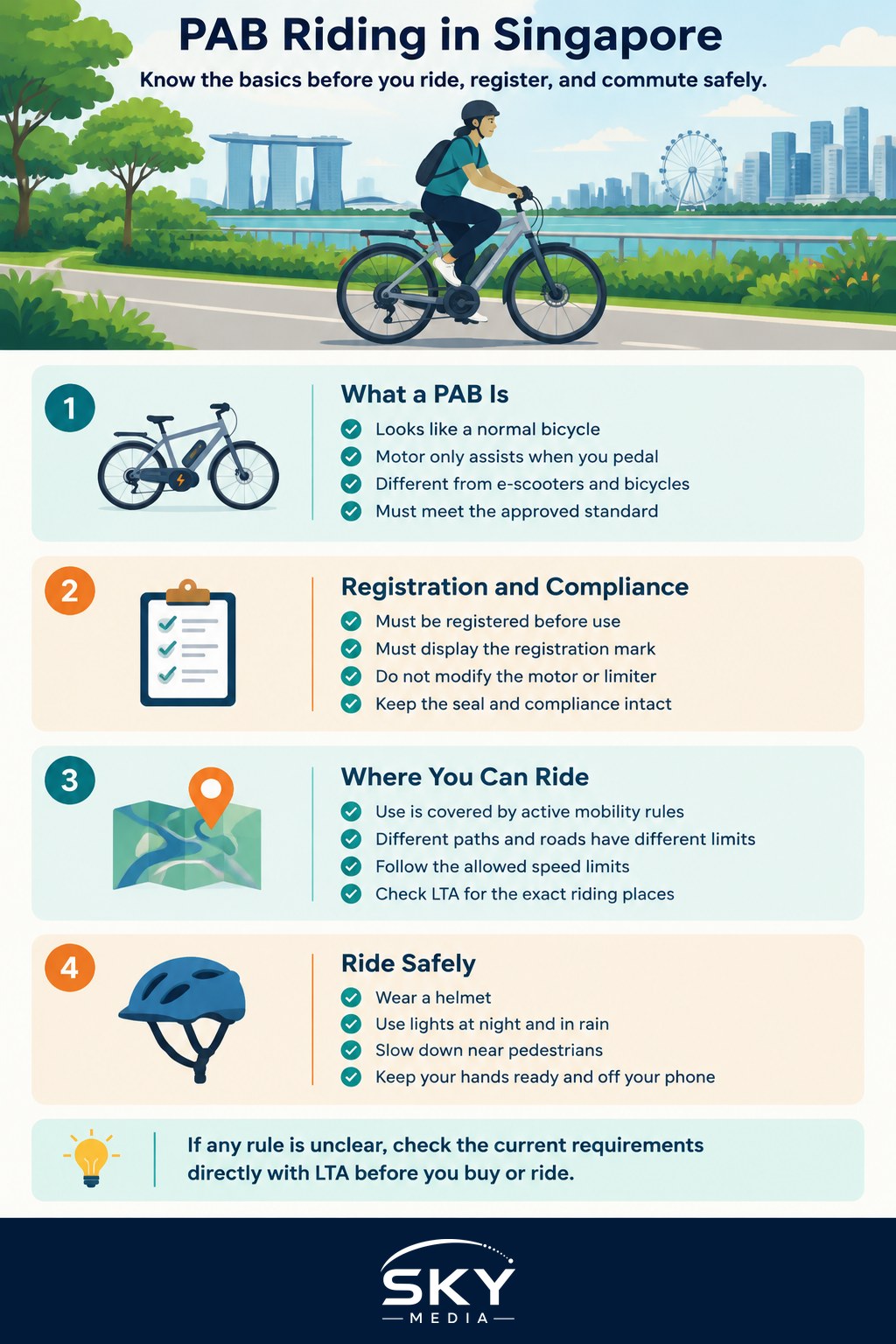
What Counts as a PAB
A PAB sits in its own category, distinct from a regular bicycle and from personal mobility devices like e-scooters. The key feature is pedal assistance: the motor is meant to support your pedalling, not to power the device on its own like a motorcycle. Because a PAB has a motor, it is treated more strictly than a plain bicycle.
To be legal, a PAB must meet the approved standard set by the authorities. In practice this means the device should be an LTA-approved model that has passed the required checks and carries a proper seal showing it complies. That seal matters. It is the visible sign that the device is a type allowed on our paths and roads. Buying an unsealed or non-compliant model, even if it looks the part, can leave you with something you cannot legally ride.
If you are still deciding between device types, it is worth understanding the differences first. Our guide to e-bikes versus PMDs versus bicycles breaks down how these categories compare, and personal mobility device rules covers the neighbouring category so you do not mix them up.
Registration and Keeping It Legal
Because a PAB is motorised, it must be registered before it can be used, and it needs to display its registration mark. This is different from a normal bicycle, which needs no registration at all. Registration ties the device to you and is part of how the rules are enforced.
Two things are especially important to keep in mind:
- No illegal modifications. Tampering with the motor, the speed limiter, or any part that affects how the device performs is a serious matter. Modified PABs can be far more dangerous and are not legal to ride. Keep your device in its original approved condition.
- Keep it sealed and compliant. If your PAB loses its seal or is found not to meet the approved standard, you should not be riding it. Only use a device that remains genuinely compliant.
The specific registration steps, fees, the approved standard, and any age or licensing requirements are all set by the Land Transport Authority, and they can be updated over time. Rather than relying on what a shop or a friend tells you, check the current requirements directly with LTA before you buy or ride. That is the single most reliable way to stay on the right side of the rules.
Where You Can Ride and Staying Safe
Where a PAB may be used is governed by the same framework that covers other active mobility devices, and it is not a free-for-all. Different paths and roads have different rules about what is allowed, and there are speed limits designed to keep everyone safe when you share space with pedestrians and cyclists. Because these details are set under the law and can be adjusted, treat LTA as the source for exactly where riding is permitted and at what speed. Our overview of the Active Mobility Act explained gives you the bigger picture of how these shared spaces are meant to work.
Safety is where you have the most control, so make the most of it:
- Wear a helmet. Even where it may not be strictly required for every situation, it is one of the simplest ways to protect yourself.
- Use lights, especially at night and in the rain, so others can see you.
- Ride at a sensible speed, slow down near pedestrians, and give way when you should.
- Keep both hands ready and stay off your phone while riding.
- Maintain your PAB well, checking brakes and tyres regularly.
Riding a power assisted bicycle singapore recognises as a legitimate way to get around can be genuinely convenient once you have the basics sorted. Buy an approved and sealed model, register it, never modify it, ride only where allowed, and put safety first. When any specific rule is unclear, confirm it with LTA, because staying informed is part of being a responsible rider.
Official sources: Land Transport Authority (LTA)
Further reading: Group Cycling on Singapore Roads: Riding Two Abreast and Other Rules