
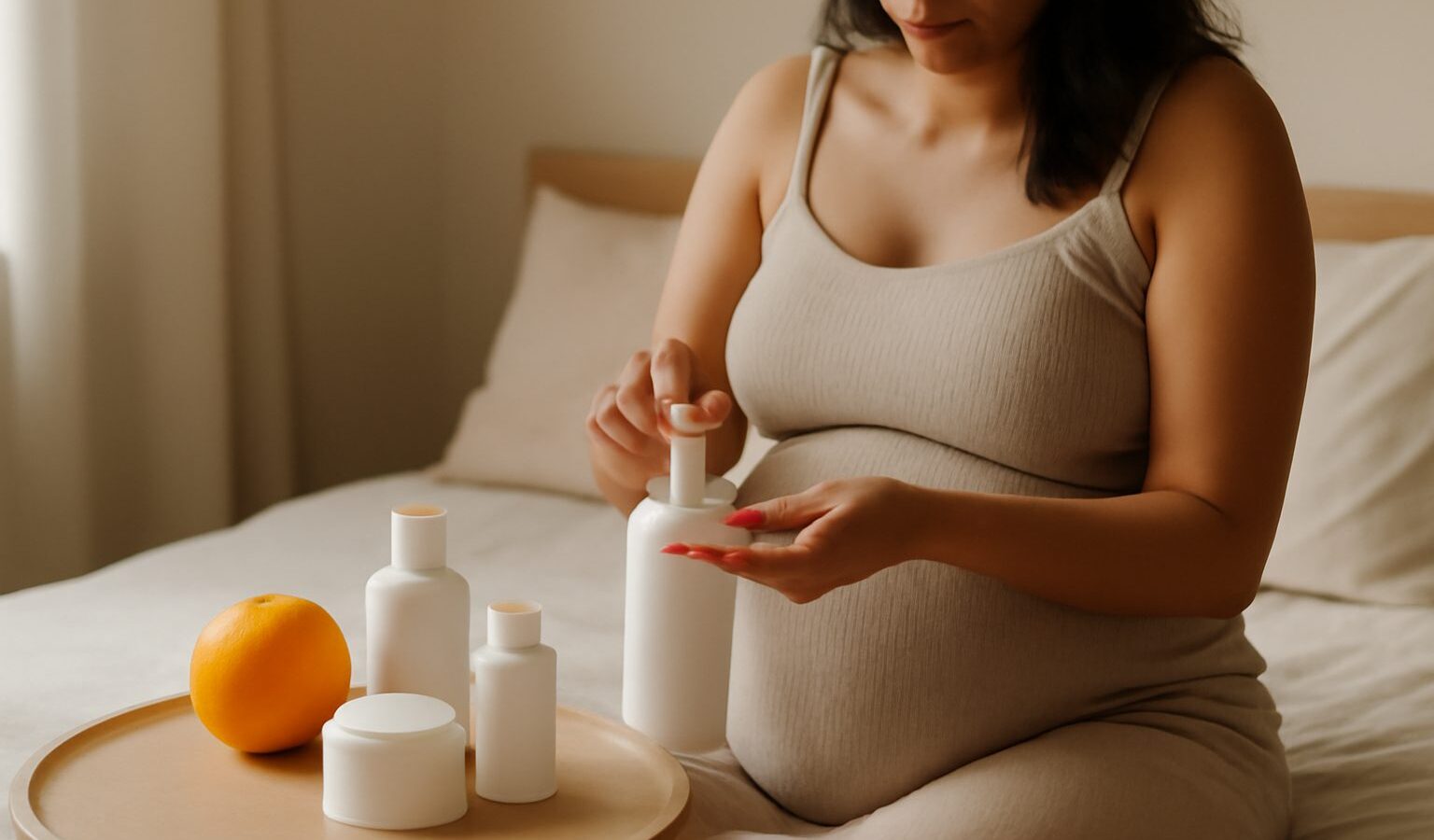
Pregnancy-safe skincare is one of those topics where sensible caution beats a shelf full of new products. Your skin often behaves differently while you are expecting, and Singapore’s year-round heat and humidity add their own twists, from extra oil and sweat to sudden sensitivity. The good news is that a gentle, pared-back routine usually serves you better than a complicated one. This guide explains, in general terms, which ingredient types are commonly approached with more caution during pregnancy and which are generally considered gentler, so you can have an informed conversation rather than guess. It is general information only, not medical advice.
Please read the whole thing with one rule in mind: anyone who is pregnant or breastfeeding should confirm their routine, and any active ingredient, with their own doctor or obstetrician before making changes.
Why Skin Changes During Pregnancy
Hormonal shifts can change how your skin looks and feels, sometimes week to week. Some people find their skin glows and calms down; others notice more oil, breakouts, dryness or patches of darker pigmentation, especially across the cheeks and forehead. In our climate, that pigmentation can be nudged along by strong daily UV, so it often becomes more noticeable here than in cooler places.
Skin can also turn more reactive than usual. A cleanser or serum you have used for years might suddenly sting or leave you flushed. This is common and not a sign you have done anything wrong. It simply means a calmer, simpler approach is worth trying, and that patch testing anything new becomes more important than ever.
Because these changes vary so much from person to person, there is no single routine that suits everyone. What follows are general patterns, not personalised recommendations.
Ingredient Types Commonly Approached With Caution
Certain categories of skincare active are the ones people most often ask their doctor about during pregnancy. This does not mean they are automatically off limits for you; it means they are the ones worth raising in a consultation rather than deciding on alone.
- Retinoids and strong vitamin A derivatives: the group most frequently flagged for a careful conversation with your doctor, including prescription forms and their over-the-counter cousins.
- High-strength exfoliating acids: potent leave-on acid treatments are often discussed, whereas gentle, low-strength versions may be viewed differently. Your doctor can advise on your specific products.
- Certain brightening or acne actives: some ingredients used for pigmentation or spots are commonly reviewed case by case, so bring the actual labels to your appointment.
- Essential oils and fragranced products in high concentrations: worth mentioning, particularly if your skin has become more reactive.
The practical move is simple. Photograph the ingredient lists of everything you use, or bring the bottles along, and let your doctor or obstetrician tell you what to keep, pause or swap. Never treat a general article, including this one, as a green light.
Ingredient Types Generally Considered Gentler
Plenty of everyday skincare is generally regarded as gentle, and these categories tend to form the backbone of a comfortable pregnancy routine in a humid climate. Even so, confirm your own list with your doctor, because sensitivity varies.
- Gentle, fragrance-free cleansers: a mild cleanser that does not leave skin tight is usually all you need morning and night.
- Basic hydrators and humectants: lightweight, water-loving ingredients that draw in moisture suit our humidity well and rarely cause fuss.
- Fragrance-free moisturisers: a simple moisturiser keeps the skin barrier comfortable, especially with all the aircon drying you out at work.
- Broad-spectrum sunscreen: daily sun protection is one of the most useful steps of all, both for comfort and for keeping pregnancy-related pigmentation from deepening.
Below is a plain comparison to help you frame that conversation with your doctor. Treat the right-hand column as gentle defaults, not as a promise, and the left as topics to raise rather than fears to act on.
| Ingredient type | Typical approach in pregnancy | Sensible everyday alternative |
|---|---|---|
| Retinoids / strong vitamin A | Commonly discussed with a doctor first | Gentle hydration and a good moisturiser |
| High-strength leave-on acids | Often reviewed case by case | Mild, low-strength exfoliation if advised |
| Strong brightening actives | Frequently checked ingredient by ingredient | Daily broad-spectrum sunscreen for pigment |
| Heavily fragranced products | Worth flagging, especially if reactive | Fragrance-free cleanser and moisturiser |
A Simple Routine That Suits Singapore
You do not need a long ritual to look after your skin here. In fact, the humidity rewards restraint. A short, reliable routine that you actually follow will do more than an ambitious one you abandon by the second trimester.
A sensible everyday shape looks like this:
- Morning: gentle cleanse, a light hydrating layer if you like, a fragrance-free moisturiser, then broad-spectrum sunscreen as your last skincare step. Reapply sunscreen through the day if you are out in the sun.
- Evening: gentle cleanse to remove sweat, sunscreen and grime from commuting, then moisturiser. Keep it uncomplicated.
- As needed: a hydrating layer on dry days, a lighter hand on humid ones.
Keep textures light and breathable so they sit well under heat and sweat. If a product ever stings, flushes or breaks you out, stop it and give your skin a quiet few days of just cleanser, moisturiser and sunscreen. Introduce only one new thing at a time, and patch test it on your inner arm or jaw for a few days before putting it all over your face.
For pigmentation specifically, the most reliable everyday tool is consistent sun protection plus shade and a hat when you can, rather than reaching for strong actives on your own.
When to See a Doctor or Pharmacist
Some skin situations deserve professional eyes rather than self-treatment. See a doctor, dermatologist or pharmacist if you have a rash that is spreading, intense or widespread itching, painful or worsening breakouts, or any skin change that worries you. Itching that becomes severe, particularly later in pregnancy, is something to raise promptly with your doctor rather than manage with skincare.
A pharmacist is a handy first stop for checking whether an over-the-counter product is a reasonable choice, and for pointing you to a doctor when something needs more attention. Aesthetic treatments and clinical procedures are best paused or discussed with a MOH-licensed clinic, with a proper consultation first, rather than booked on impulse while expecting.
Above all, remember the theme of this guide. Pregnancy-safe skincare is general information, and your own doctor or obstetrician is the right person to confirm what belongs in your routine.
Explore more
For a gentler daily approach, see our guide to using facial oils in a humid climate and the difference between hydrating and moisturising your skin. If your barrier feels stressed, how to fix over-exfoliated skin is a calm place to start.