

Planning a beach day at one of our islands, a dive trip, or a holiday somewhere with coral? You have probably seen bottles proudly labelled reef-safe or ocean-friendly and wondered whether they really are. The honest answer is that reef safe sunscreen singapore shoppers see on shelves is not a regulated, standardised claim, so the words alone do not guarantee much. This guide explains what the label means, what to actually look at, and how to protect both your skin and the sea without overthinking it.
Why “Reef-Safe” Has No Single Agreed Standard
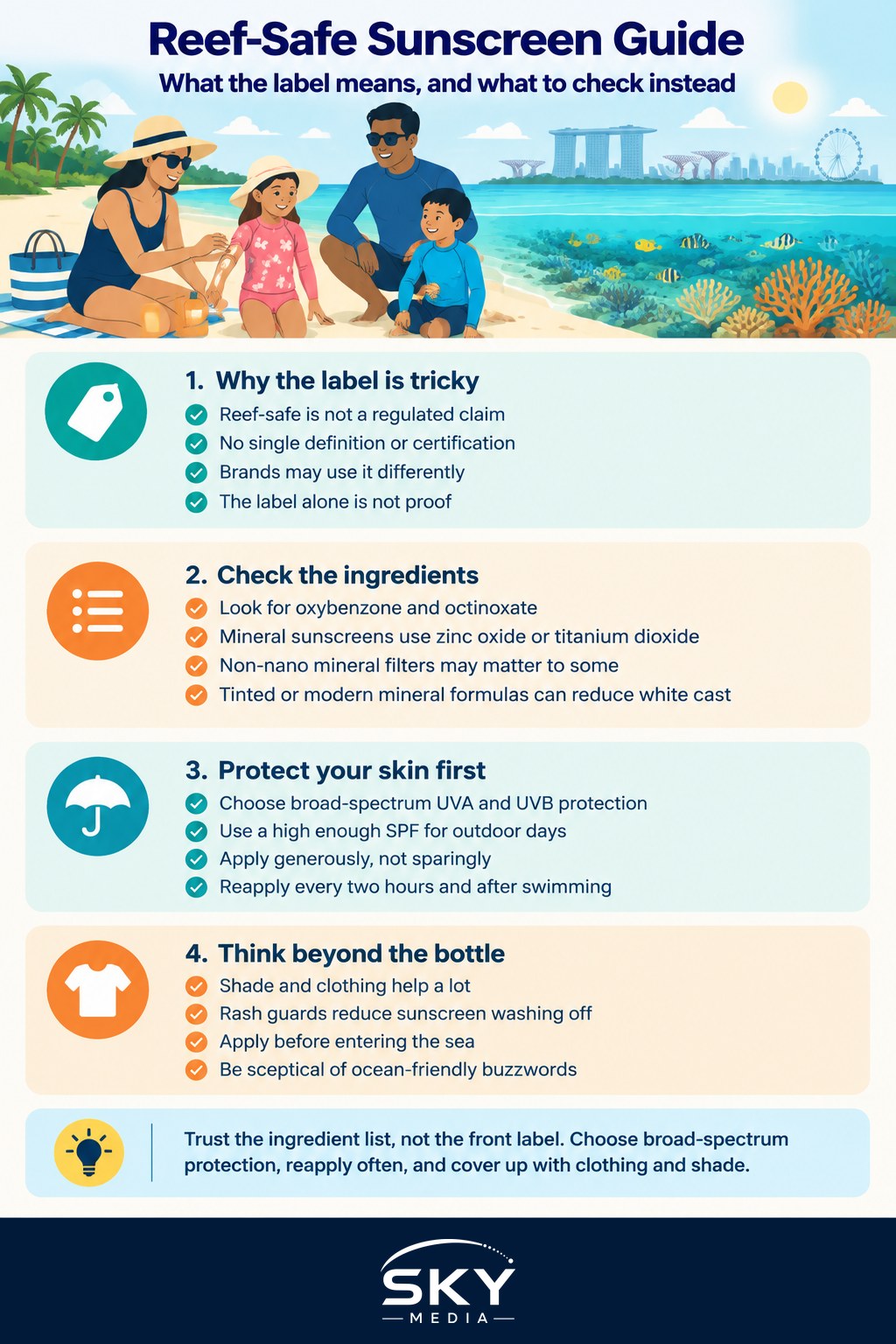
This is the single most important thing to understand. There is no universal legal definition or independent certification that all brands must meet before printing reef-safe on a bottle. Different companies use the phrase to mean different things. Some use it to signal that they have left out a couple of specific ingredients. Others use it more loosely as general marketing. Because the term is not policed by one authority, two products with identical claims can contain very different formulas.
That does not mean the concern is fake. It means the label is not a shortcut you can trust on its own. The reliable move is to turn the bottle over and read the ingredients list yourself, the same way you would for any other purchase. If reading labels feels daunting, our guide to how to read a skincare label makes the ingredient list far less intimidating.
What To Actually Look At On The Ingredients List
Concern has centred on a small number of chemical UV filters, most commonly oxybenzone and octinoxate, which some research and some travel destinations have flagged over potential effects on coral and marine life. A number of popular dive and snorkel spots around the world have restricted these specific ingredients. The science on real-world reef harm is still developing and debated, but if you want to err on the cautious side, checking for those names is a practical starting point.
Many people who want a gentler-on-the-ocean option choose mineral sunscreens, which use zinc oxide or titanium dioxide to protect the skin. If you go this route, a couple of nuances matter:
- Look for non-nano mineral filters if avoiding very small particles is important to you, as some concern focuses on nano-sized minerals in the water.
- Mineral formulas can leave a white cast, though modern versions and tinted options have improved a lot.
- Mineral and chemical filters each have pros and cons for how they feel and perform. Our comparison of mineral versus chemical sunscreen walks through the trade-offs so you can pick what suits your skin and your trip.
The key point remains: judge the product by what is inside it, not by a slogan on the front.
Protection Still Comes First
In your very reasonable effort to be kind to the reef, do not lose sight of why you are wearing sunscreen in the first place. Under our strong, year-round equatorial sun, sun protection is non-negotiable, and a product only helps if it actually protects you.
Whatever you choose, make sure it is:
- Broad-spectrum, meaning it defends against both UVA and UVB.
- A high enough SPF for a day outdoors, applied generously. Most people apply too little.
- Reapplied regularly, roughly every two hours and after swimming, sweating or towelling off.
Remember that sunscreen is only one layer of protection, not a force field. Seek shade during the harshest midday hours, wear a rash guard or UV-protective swimwear, pop on a hat and sunglasses, and stay hydrated. Covering up with clothing is genuinely one of the most effective and eco-friendly forms of sun protection there is, and a rash guard also means less sunscreen washing off into the water. For the fundamentals, our overview of sunscreen and sun protection covers the essentials, and applying body sunscreen properly helps you get full, even coverage on beach days.
Being A Thoughtful Buyer And Beachgoer
Eco-friendly is a broad idea, and sunscreen is only part of it. If reducing your footprint matters to you, you might consider packaging, formula size for your trip, and how much product actually ends up in the water. Small habits help: apply sunscreen well before you enter the sea so it has time to absorb, choose swimwear that covers more skin, and reapply on the sand rather than in the shallows.
Be a little sceptical of buzzwords generally. Biodegradable, ocean-friendly and reef-safe are all appealing words, but none of them come with a single guaranteed meaning. Treat them as a prompt to check the ingredients rather than as proof. If you have very reactive skin or specific medical concerns, a pharmacist or doctor can help you find a filter type that agrees with you, and you should always patch-test a new sunscreen before a big day out.
The takeaway is simple. Wear sun protection every single day, choose broad-spectrum and reapply, read the ingredients instead of trusting the front label, and cover up with clothing and shade. That combination protects your skin properly while making a genuine, sensible effort for the ocean too.
Frequently Asked Questions
Is a mineral sunscreen automatically better for coral than a chemical one? Not automatically. Mineral filters such as zinc oxide are a popular choice for people wanting a gentler option, but the science on reef harm is still developing, and some concern focuses on nano-sized particles. Check the whole ingredient list rather than relying on the filter type alone.
Can I still wear normal sunscreen for a day at the beach? Yes, protecting your skin matters more than worrying over a perfect product. Some dive and snorkel spots overseas restrict certain ingredients, so check local rules for your trip. Wear broad-spectrum sunscreen, reapply, and add shade and clothing to reduce how much you need.
How can I cut down on sunscreen washing into the sea? Put it on well before you enter the water so it can absorb, and reapply on the sand rather than the shallows. Wearing a rash guard or UV-protective swimwear covers more skin, which means less product ends up in the water.
Which sunscreen ingredients do people usually avoid for reef reasons? Oxybenzone and octinoxate are the two chemical filters most often named, and some travel destinations have restricted them. The evidence on real-world harm is still debated, so reading the label for those names is a cautious starting point, not a guarantee.
Do I need to patch-test a new sunscreen before a beach trip? It is a sensible habit, especially for reactive skin, because trying an untested formula for the first time on a long day outdoors is risky. Test a small spot beforehand, and ask a pharmacist or doctor if you have specific skin concerns.