
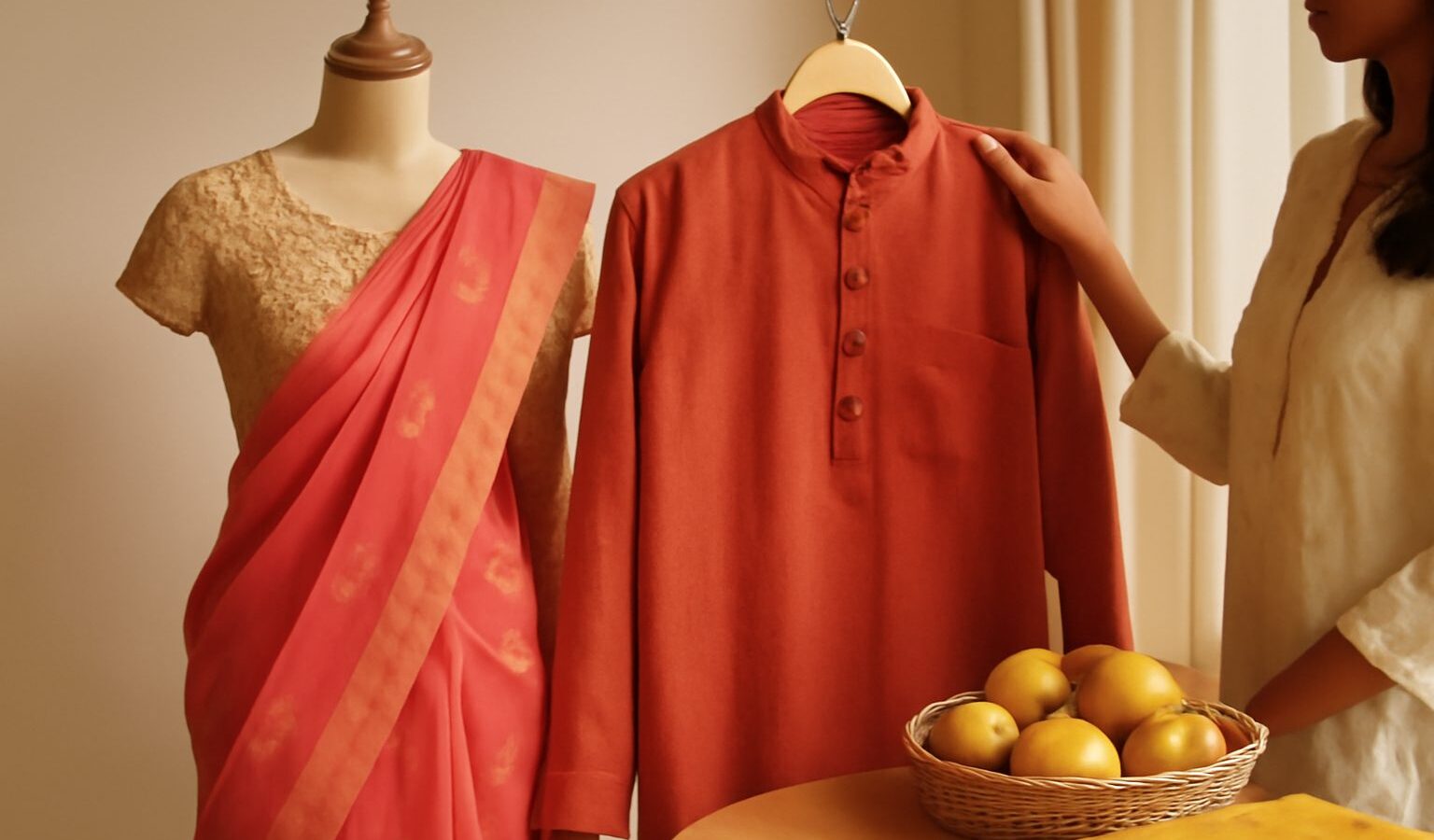
Finding the right Indian clothes shop in Singapore is easier than many people expect. Whether you need a silk saree for a wedding, a cotton kurta for the office, a salwar suit for a friend’s open house or a veshti for a temple prayer, the city has a long-established cluster of textile and fashion stores, plus heartland shops and online sellers that work all year round, not only in the weeks before Deepavali. This guide covers where to look, what each garment is, how to judge fabric and fit, and how to get alterations done.
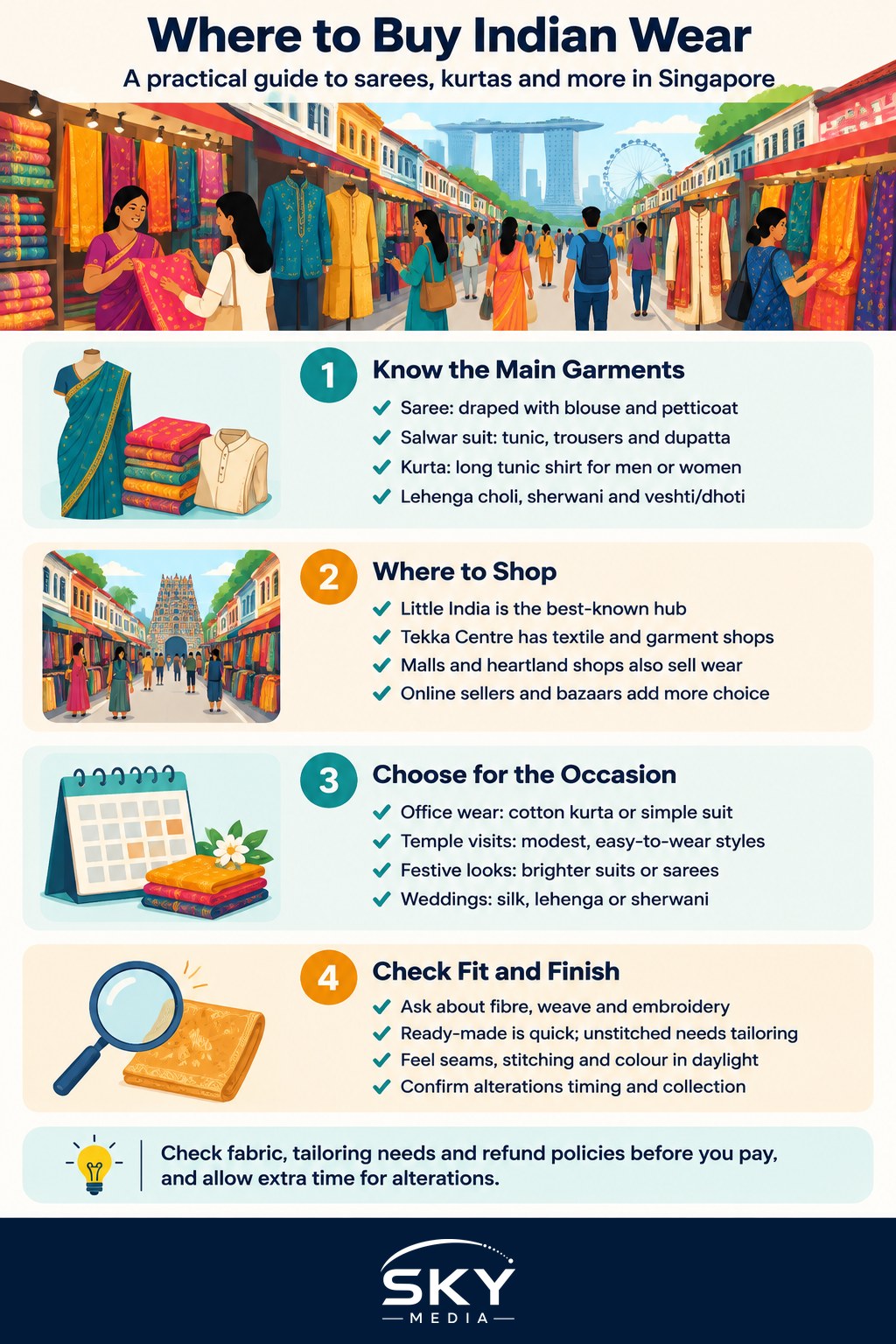
Know the Main Garments Before You Shop
Shop staff are usually happy to explain, but knowing the basic terms helps you browse with confidence.
- Saree (or sari). A long unstitched length of fabric draped around the body, worn over a fitted blouse and an underskirt called a petticoat. The blouse is often stitched separately to your measurements.
- Salwar kameez (or salwar suit). A tunic (kameez) worn with trousers (salwar) and usually a long scarf called a dupatta. Variations include churidar trousers that gather at the ankle and straight-cut pants.
- Kurta. A long tunic shirt worn by men and women. Men’s kurtas are often paired with pyjama trousers or simply jeans; women’s kurtis are shorter tunics that suit daily wear.
- Lehenga choli. A long, often heavily embellished skirt with a cropped blouse and a dupatta, popular for weddings and celebrations.
- Sherwani. A long, structured coat worn by men at weddings and formal events.
- Veshti or dhoti. A length of cloth wrapped around the waist, commonly white or cream with a coloured border, often worn by men for prayers, weddings and festive occasions.
If you are new to draping, our guide on how to wear a saree walks through the pleats and pinning step by step.
Little India: The Main Shopping Area
Little India, centred on Serangoon Road and the lanes around it, is the best-known area for Indian wear in Singapore. Within a short walk you will find:
- Textile and saree specialists that stock silk, cotton and synthetic sarees, from everyday prints to heavy wedding silks, and often sell unstitched blouse fabric.
- Ready-to-wear boutiques with salwar suits, kurtis, lehengas and men’s kurtas in standard sizes.
- Tailors and alteration shops, many on upper floors and side lanes, that stitch saree blouses, hem trousers and adjust fit.
- Accessory stalls selling bangles, bindis, jewellery, hair ornaments and footwear to finish an outfit.
Tekka Centre, the market and hawker complex at the start of Serangoon Road, has textile and garment shops on its upper level. Little India Arcade, a conserved shophouse block opposite, is known for festive accessories, small clothing stalls and henna. Along the side streets such as Campbell Lane, Dunlop Street and Buffalo Road, you will find more fabric and clothing shops mixed in with restaurants and grocers.
Little India gets very crowded on weekend evenings and especially in the run-up to Deepavali, when there is also a street light-up and festive bazaar. If you want unhurried service and time to try things on, go on a weekday morning or early afternoon.
Beyond Little India: Other Places to Look
You do not have to travel to Serangoon Road for every purchase.
- Heartland malls and neighbourhood shops. Some suburban malls and town centres in areas with larger Indian communities have Indian wear boutiques or stalls, especially near festive periods.
- Mainstream fashion stores. Several international and local chains sell kurta-style tunics, printed cotton tops and festive capsule collections, useful for a simple, modern look.
- Online sellers. Many local boutiques sell through their own websites and social media, and there are larger marketplaces that ship from India. Check sizing charts carefully, look at return policies and allow extra time for overseas delivery.
- Bazaars and pop-ups. Festive bazaars and community events sometimes host independent designers and home-based sellers.
For a broader view of fashion shopping across the island, see our guide on where to shop for clothes in Singapore.
Choosing the Right Outfit for the Occasion
The same shop may sell everything from a simple office kurti to a bridal lehenga, so start by deciding what the outfit is for.
| Occasion | Common choices | Fabric to look for | What to check before buying |
|---|---|---|---|
| Office or daily wear | Cotton kurta or kurti, simple salwar suit | Cotton, linen blends, rayon | Breathability, machine washable, length suits your work setting |
| Temple visit or prayers | Modest salwar suit, simple saree, veshti for men | Cotton, light silk | Covers shoulders and knees, easy to sit on the floor in |
| Deepavali open house or festive dinner | Brighter salwar suit, kurta set, lighter saree | Art silk, georgette, chiffon | Comfort in heat, colour, matching dupatta and accessories |
| Wedding or formal event | Silk saree, lehenga, sherwani, embellished kurta | Pure silk, heavier brocade | Blouse tailoring time, weight of embroidery, dress code from the hosts |
| Performance or dance | Costume sets from specialist tailors | Varies by dance form | Teacher’s requirements, fit for movement |
If you have been invited to a wedding, it is worth asking the couple or a friend from the family about colours to avoid, since customs vary between communities and families. Our guide to Indian wedding customs in Singapore explains common ceremonies and what guests typically wear.
Judging Fabric, Quality and Price
Prices for Indian wear vary widely, so it helps to understand what drives them rather than relying on a fixed budget.
- Fibre. Pure silk sarees, especially well-known handwoven varieties such as Kanchipuram silk, generally cost more than art silk (a synthetic or blended imitation), georgette or cotton. Ask the shop what the fabric is and whether it is pure or blended.
- Weave and work. Handwoven fabric, real zari (metallic thread) borders and hand embroidery take more labour than machine prints or machine embroidery.
- Ready-made versus unstitched. A ready-made salwar suit is convenient. Unstitched suit sets and saree blouse pieces need tailoring, which adds cost and time but gives a better fit.
- Care. Heavy silks and embellished pieces often need dry cleaning. Cotton and rayon are easier to wash at home but may shrink, so ask before buying.
Feel the fabric, look closely at the stitching and the inside seams, check for loose beads or sequins, and hold the colour up to daylight if you can, since shop lighting can change how a shade looks. Bargaining is not expected in most fixed-price shops, though some smaller stalls may offer a discount on multiple items. Always ask about the exchange and refund policy before paying.
Tailoring, Alterations and Timing
Tailoring is where many first-time buyers get caught out.
- Saree blouses are usually stitched to measure from the blouse piece that comes with the saree. Bring a well-fitting blouse or top as a reference, and decide on neckline, sleeve length and back style in advance.
- Salwar suits from unstitched sets need full tailoring. Ready-made sets may still need hemming or taking in.
- Allow plenty of time. Tailors become very busy before Deepavali and the wedding season. Ask for the expected collection date, and leave room for a second fitting.
- Keep your receipt and measurements. Many tailors keep a record, which makes repeat orders easier.
Turnaround times and charges differ from shop to shop, so confirm both when you drop off your fabric.
Shopping Etiquette and Practical Tips
- Ask before taking photos inside shops, especially of displays and staff.
- Try on outfits where fitting rooms are available. For sarees, staff may demonstrate draping for you.
- Carry some cash, as a few smaller stalls prefer it, although most shops accept cards or digital payments.
- If you are a visitor buying for a cultural event, staff can help you pick something appropriate and respectful. Wearing Indian clothes as a guest at a festive occasion is usually seen as a warm gesture.
Frequently Asked Questions
What else do I need to buy to wear a saree? Besides the saree itself, you need a fitted blouse, which is often stitched from the blouse piece, and a petticoat to tuck the pleats into. Safety pins, matching footwear and simple accessories finish the look. Shop staff can usually advise on what suits your outfit.
How should a kurta fit? A kurta should sit comfortably across the shoulders, with sleeves that end near the wrist or elbow depending on the style. Length varies, from hip to knee, and you should be able to sit and move easily. If it is loose or long, a tailor can adjust it.
How do I store a silk saree so it lasts? Keep it folded in a breathable cotton or muslin cloth, away from damp and direct sunlight, and refold it along different lines now and then to avoid permanent creases. Avoid hanging heavy silks for long periods, and ask the shop whether it needs dry cleaning.
Do I pay GST when ordering Indian clothes online from India? It can apply. Goods bought from overseas may be subject to GST when they enter Singapore, depending on the value and the way they are shipped. Check the current rules with Singapore Customs and IRAS, and look at the seller’s shipping terms before you order.
How far ahead should I order a custom-stitched outfit? As early as you can, since tailors get very busy before Deepavali and the wedding season. Ask the tailor for the expected collection date when you drop off the fabric, and leave room for a second fitting in case adjustments are needed.