

There is a particular thrill in finding a piece with a history. A well-cut jacket from decades ago, a print you have never seen on the racks, a garment made with a care that is hard to find today. Vintage fashion in Singapore has grown from a niche hobby into a genuine style movement, helped by thrift stores, curated boutiques, resale apps, and a wave of shoppers who want something original rather than mass-made. Archive fashion, meaning older pieces from specific labels sought after by collectors, sits at the more serious end of the same interest. This guide covers how to shop both wisely, spot quality, check condition, and care for old clothes in our climate.
Know What You Are Actually Buying
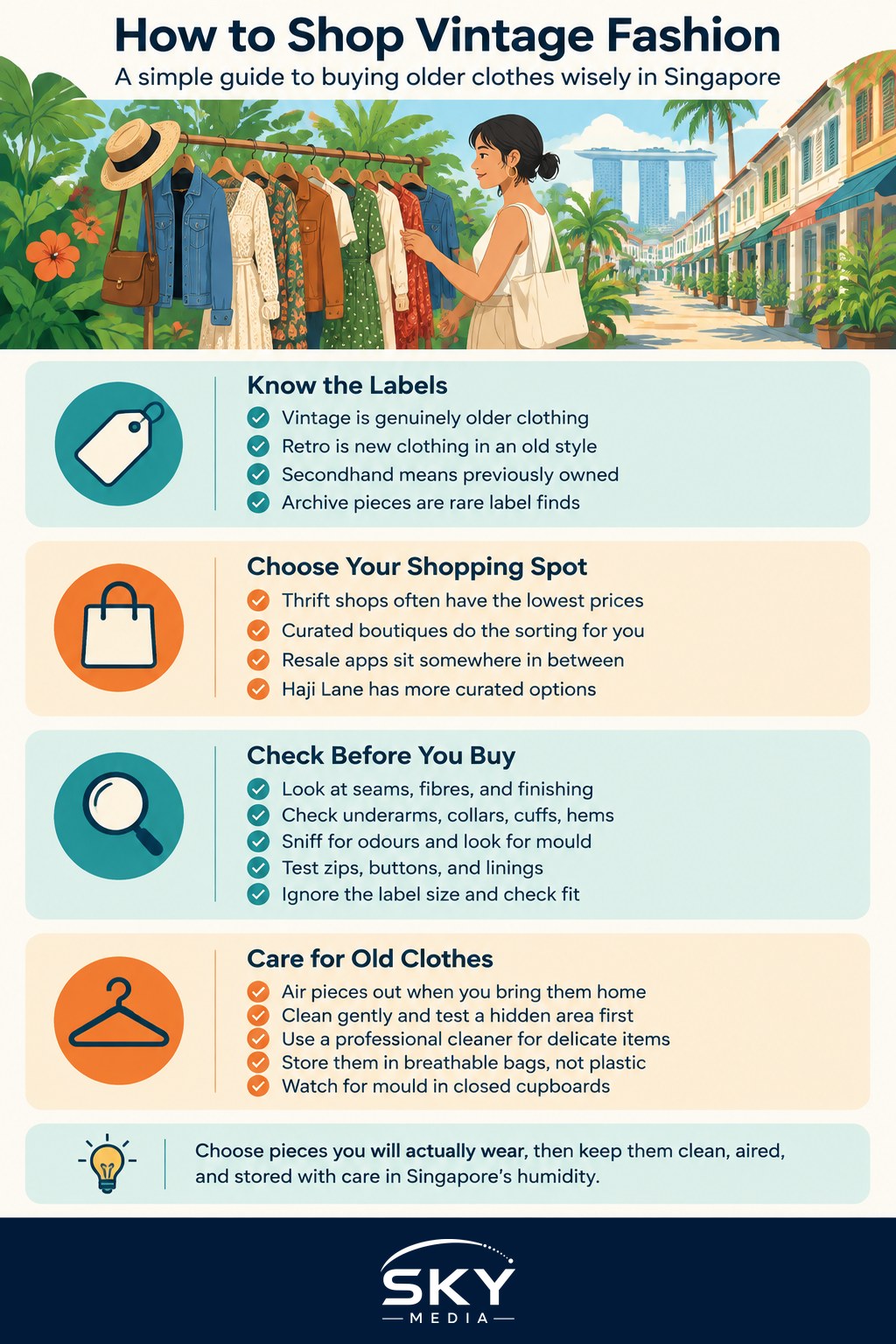
The word vintage gets thrown around loosely, so it helps to sort out the terms. Broadly, vintage refers to genuinely older pieces, often defined as a couple of decades old or more, while retro simply means new clothes made in an old style. Secondhand or preloved just means previously owned, regardless of age. Archive pieces are older items from a particular label that collectors seek out for their design or rarity. None is better than another, but knowing which one you are looking at keeps your expectations and your spending sensible. Our guide to vintage and retro dressing unpacks these styles in more detail.
Where you shop shapes what you find. Thrift and charity shops offer the lowest prices and the biggest thrill of the hunt, though you dig for the gems. Curated vintage boutiques do the sorting for you and charge for it. Resale apps and consignment sit in between. If you are new to the treasure-hunt end, our guide to thrifting in Singapore is a friendly place to start, and the independent boutiques around Haji Lane are worth a wander for something more curated.
Check Quality and Condition Before You Buy
The romance of vintage can distract you from a simple fact: you are buying a used garment that has already lived a life. Inspect it properly before you fall in love. A methodical look saves regret:
- Fabric and construction. Older well-made pieces often have solid seams, natural fibres, and finishing you rarely see in fast fashion. Our notes on how to spot quality clothing translate directly to the vintage rack.
- Damage that matters. Check underarms, collars, cuffs, and hems for wear, thinning, or yellowing. Hold the fabric to the light to spot moth holes and weak spots.
- Stains, odours, and mould. Sniff for that musty smell, which can be stubborn. Some stains lift with care and some are permanent, so factor cleaning into the price.
- Zips, buttons, and linings. Test that everything works. A broken zip or missing button is fixable, but only you can decide if it is worth the trouble.
- The real fit. Sizing has changed a lot over the decades, so ignore the label number and check the actual measurements or try it on. Simple alterations can help, so weigh what is realistic before you commit.
For archive and designer pieces especially, authenticity matters. Take your time, ask the seller about the item’s history, and be cautious of a bargain that seems too good. The same care that helps you spot fake designer goods applies to older pieces sold as rare finds.
Care for Vintage in Humid Singapore
Old clothes have survived this long, and our climate is not always kind to them. Humidity, heat, and the tropical musty smell are the enemies of delicate older fabrics. When a piece comes home, air it out and give it a gentle clean before it joins your wardrobe, always following any care guidance for the fabric and testing a hidden area first. Delicate silks, wools, structured tailoring, and anything fragile are often safest with a professional cleaner rather than a home wash.
Storage is where many vintage pieces are lost. Keep them somewhere with airflow, use breathable garment bags rather than plastic, and watch for mould in a closed cupboard. Our guide to protecting clothes from mould is worth reading before you invest in anything precious. A little airing in indirect light now and then keeps the musty smell away.
Shop Thoughtfully, Not Just for the Label
Vintage shopping is often praised as the sustainable choice, and there is truth in it, since buying an existing garment keeps it in use and out of the waste stream. Kept honest, that is a real benefit rather than a reason to buy more than you will wear. The greenest vintage piece is the one you actually love and keep, not a rack of impulse finds that sit unworn.
Buy for fit, quality, and genuine delight rather than the story alone. A gorgeous jacket that does not fit your life will still gather dust, however special its origin. The best vintage wardrobe blends a few characterful old pieces with the clothes you already reach for, which is exactly the balance a well-developed signature style encourages.
Final Thoughts
Shopping vintage fashion in Singapore is part treasure hunt, part homework, and wholly rewarding when you get it right. Learn the terms so you know what you are buying, inspect quality and condition with clear eyes, and care for older pieces properly in our humidity so they last. Buy what genuinely fits and delights you, keep your sustainability claims honest, and you will build a wardrobe with real character that no shop full of new stock can match.
Frequently Asked Questions
What is the difference between vintage, retro and archive fashion? Vintage means genuinely older pieces, often a couple of decades old or more, while retro is new clothing made in an old style. Archive pieces are older items from a particular label that collectors seek for design or rarity.
How can I tell if a vintage piece is authentic? Take your time, ask the seller about the item’s history, and inspect the labels, fabric and construction. Be cautious of a bargain that looks too good. The same care used to spot fake designer goods applies to older pieces sold as rare finds.
How do I get the musty smell out of vintage clothes? Air the piece out first and give it a gentle clean, following the fabric’s care guidance and testing a hidden spot. Delicate silks, wools and structured tailoring are often safest with a professional cleaner, since a musty smell can be stubborn.
Does vintage sizing match modern sizing? Not reliably. Sizing has changed a lot over the decades, so ignore the label number and check the actual measurements or try it on. Consider whether simple alterations could help, but weigh what is realistic before you commit.
Is buying vintage really more sustainable? Partly. Buying an existing garment keeps it in use and out of the waste stream, which is a real benefit. It does not help if you buy impulsively and never wear it, so the greenest piece is the one you love and keep.
Further reading: Understanding Genderless and Unisex Fashion · Understanding Y2K and Fashion Revivals · How to Resell Your Preloved Fashion in Singapore