

Ultra-cheap shopping apps have changed how many young Singaporeans buy clothes. A haul of tops, dresses and accessories can cost less than a single item at a mall, and the endless scroll of new styles is hard to resist. But anyone who has shopped Shein Temu Singapore style knows the experience can be hit and miss: one piece fits perfectly, the next arrives tiny, see-through or smelling of chemicals.
This guide is a realistic look at what to expect. It covers how to read sizing on these platforms, what quality you are actually paying for, how returns generally work and what to check before you hit checkout, so you buy fewer regrets and more pieces you will actually wear.
Why the Prices Are So Low
Understanding the business model helps set your expectations. These platforms typically work with large networks of manufacturers, many based in China, and ship items directly to customers rather than through local shops. Designs are produced quickly in response to trends, often in small runs, and fabrics and finishing are chosen to hit very low price points.
This means:
- Quality varies widely, sometimes within the same order.
- Product photos may not match reality, since images can be styled, edited or show a different sample.
- Sizing is not standardised, because different suppliers use different patterns.
- Delivery takes longer than local retailers, as most orders ship from overseas.
Since 2023, GST has also applied to low-value goods imported into Singapore, and it is typically collected at checkout. Check the final total, including any shipping, before you pay.
Reading Sizing Charts Properly
Ignoring the size chart is the most common reason hauls disappoint. Sizes such as S, M or L on these apps do not reliably match Singapore mall brands or your usual size.
A better approach:
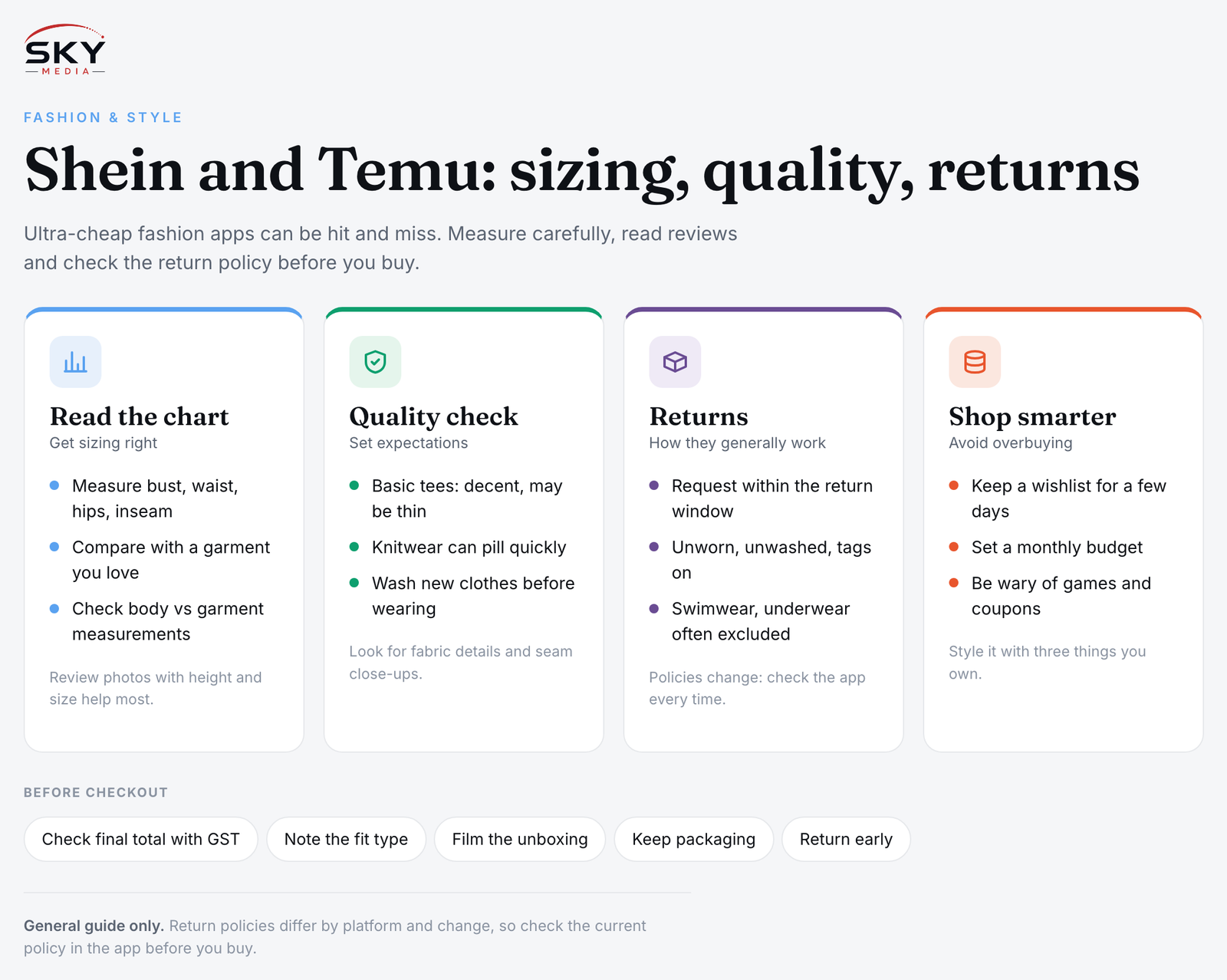
- Measure yourself with a soft tape: bust, waist, hips and, for bottoms, inseam. Write these down and keep them in your notes app.
- Measure a garment you love while it lies flat. Comparing product measurements to a piece that already fits you well is often more accurate than body measurements alone.
- Check whether the chart shows body or garment measurements. A garment measurement of 90cm bust is not the same as being suitable for a 90cm body, since you need some ease for movement.
- Look at fabric stretch. Many listings show whether a fabric is non-stretch, slight stretch or high stretch. Non-stretch items need more ease.
- Read reviews with photos. Reviewers often share their height, weight and size bought, which is the most useful sizing information on the page.
- Note the fit type. Terms like “oversized”, “slim fit” or “cropped” change everything about how a size will feel.
When in doubt between two sizes, many shoppers choose the larger, since a slightly loose top can be styled or altered, while a tight one usually cannot.
Setting Realistic Quality Expectations
Cheap does not always mean bad, but it is wise to be selective. Some categories tend to work better than others.
| Item type | Typical experience | Tips before buying |
|---|---|---|
| Basic tees and tanks | Often decent value, fabric can be thin | Check fabric composition and review photos for sheerness |
| Trend pieces and party wear | Fun for one-off events, may not last | Buy for occasions, not as wardrobe staples |
| Knitwear and outerwear | Quality varies a lot, can pill quickly | Read reviews carefully, avoid if you want longevity |
| Swimwear and underwear | Fit and lining can be inconsistent | Check lining details, size charts and hygiene return rules |
| Shoes | Sizing and comfort often unpredictable | Compare insole length in cm, expect a break-in period |
| Accessories and jewellery | Usually fine for casual use | Watch for metals that irritate skin or tarnish |
Signs of better quality in a listing include clear fabric composition, close-up photos of seams and stitching, many reviews with real photos, and consistent comments about fit. For a detailed checklist on telling good garments from poor ones, see our guide on how to spot quality clothing.
Once your order arrives:
- Wash new clothes before wearing, especially items that will touch your skin, as new fabrics may carry dyes or finishing residue.
- Check for smells or skin reactions. If an item causes irritation, stop wearing it.
- Inspect seams and zips before removing tags, in case you need to return it.
How Returns Generally Work
Return policies on ultra-cheap platforms differ by platform and can change, so treat the following as a general guide and always check the current policy in the app before you buy.
Common features include:
- A return window that starts from delivery, within which you must submit a request.
- Return requests through the app, where you choose the items and a reason.
- Conditions, such as unworn, unwashed items with original tags.
- Non-returnable items, often including swimwear, underwear, earrings and some personalised or final-sale goods, for hygiene reasons.
- Return shipping arrangements, which may involve dropping the parcel at a designated collection point or arranging a courier pickup. Some offers include free returns, others charge a fee or limit free returns.
- Refund method, which may be to your original payment method or to store credit. Check which applies before you choose.
Practical habits that help:
- Take photos and a short video when opening a parcel, especially if something is damaged or wrong.
- Keep the original packaging until you are sure you are keeping everything.
- Screenshot the order details and return confirmation.
- Submit returns early in the window rather than waiting until the last day.
For a cheap item, the effort and possible cost of returning it may outweigh the refund. Some shoppers decide in advance which items they would actually bother to return, and only take risks on low-cost pieces they are happy to keep or pass on. Your general rights as a Singapore consumer are explained in our guide on consumer rights, returns and refunds in Singapore. If a dispute with a seller cannot be resolved, the Consumers Association of Singapore (CASE) can advise on next steps.
Shopping Smarter Without Overbuying
The real cost of ultra-cheap fashion is often in what you do not wear. A haul of fifteen items at low prices can still be money wasted if half of it sits unworn.
Ways to shop more deliberately:
- Keep a wishlist for a few days before buying. Impulse purchases often fade.
- Buy for gaps in your wardrobe, not for a feeling. Ask whether you can style the item with at least three things you already own.
- Set a monthly budget and stick to it, regardless of flash deals and countdown timers.
- Be wary of games and coupons designed to keep you in the app and nudging you to buy more.
- Protect your account. Use a strong password, avoid saving cards on shared devices, and only download apps from official app stores.
Clothes you no longer want can have a second life. Selling or swapping them, or browsing secondhand options first, can be just as budget-friendly. Our guide to buying secondhand clothes on Carousell shows how to find good preloved pieces locally, often with the chance to inspect them before paying.
Ultra-cheap apps can be a fun, affordable part of your wardrobe if you go in with clear eyes: measure carefully, read reviews, check the return policy every time, and buy less but better.