
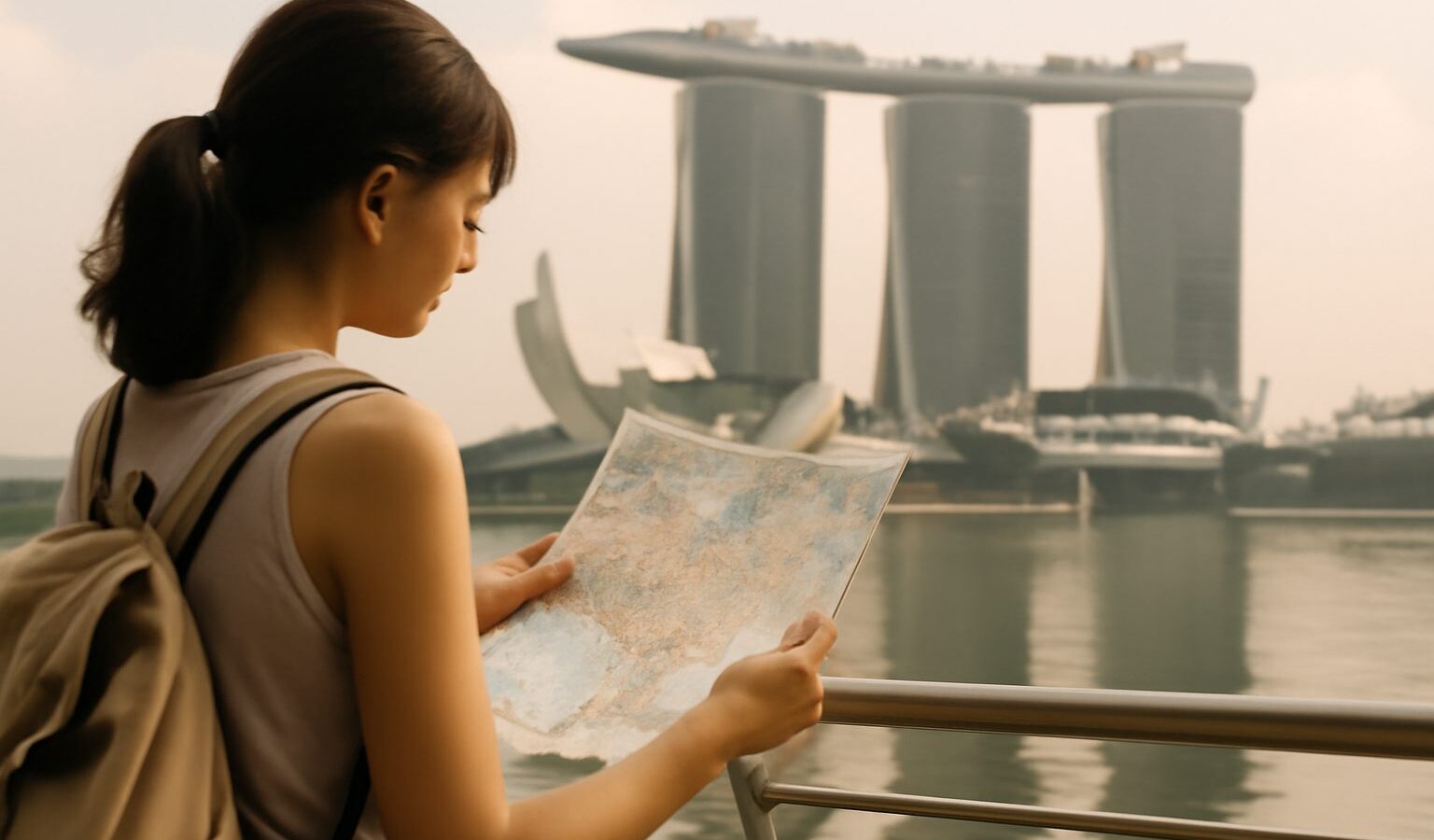
Race-style games are one of the easiest ways to get a group moving, talking and laughing. An Amazing Race Singapore game sends teams around a neighbourhood, park or building to solve clues, complete challenges and race to a finish line. It works for corporate team building, school and community groups, family reunions and birthday outings with friends.
You can hire an organiser to run everything or design your own game with a free afternoon of planning. This guide compares both routes and shows you how to build a fair, fun and safe race, whatever your group size.
Why Race-Style Games Work So Well
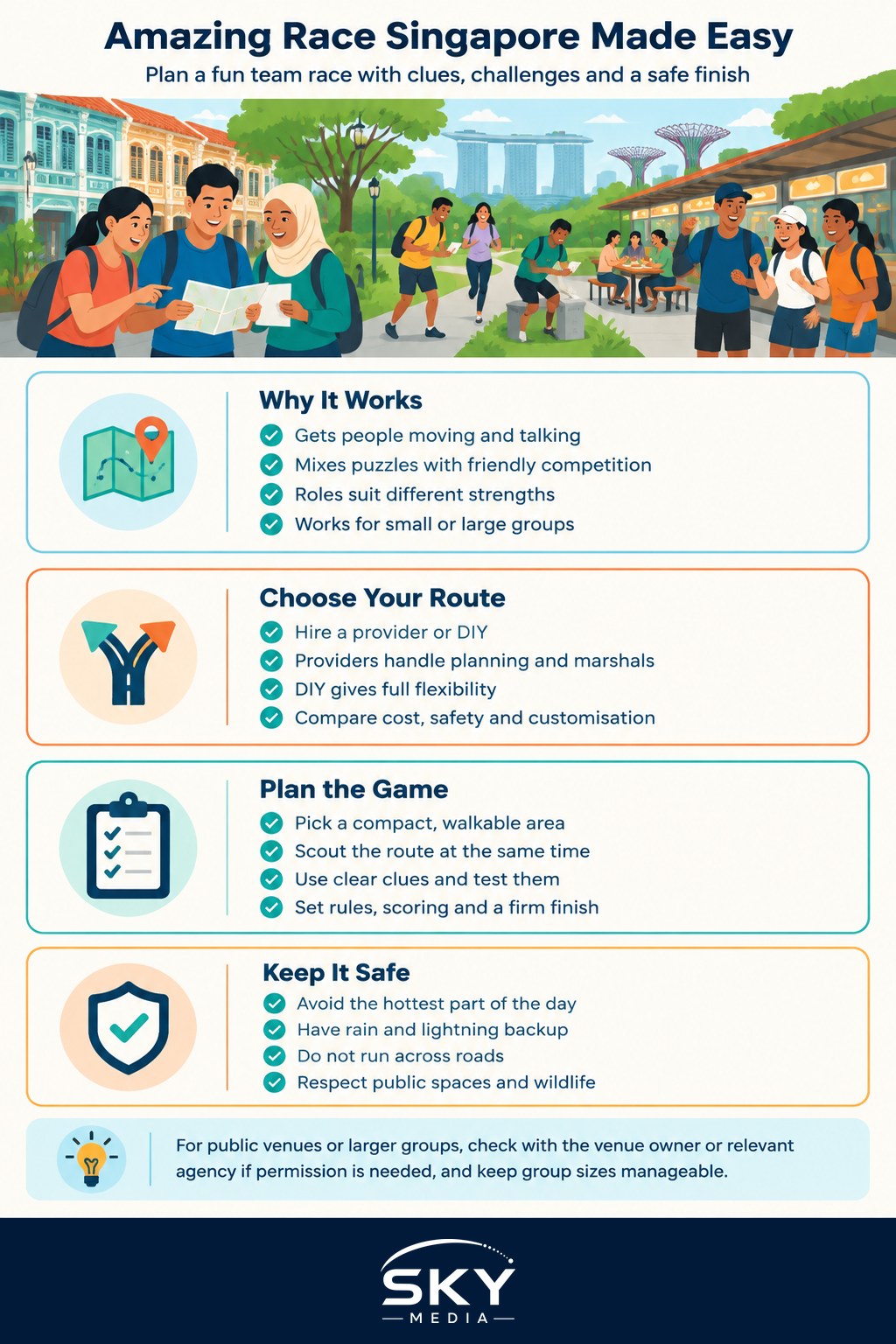
Scavenger hunts and Amazing Race formats mix several things people enjoy: friendly competition, puzzles, exploring places they think they know, and a clear goal. For teams at work, they also reveal how people communicate under mild pressure, which is often more useful than a classroom-style workshop.
They work well because:
- Everyone has a role, from map reader and clue solver to photographer and timekeeper
- Challenges can suit mixed abilities, including people who prefer thinking tasks to physical ones
- Singapore’s compact size, good public transport and mix of heritage districts make it easy to create interesting routes
- The format scales from a small group of friends to a large company event
Organised vs DIY: Which Route to Choose
The first decision is whether to hire a professional organiser or run your own game. Both can be great; the right choice depends on group size, budget and how much time you have.
| Factor | Organised race (hired provider) | DIY race (you plan it) |
|---|---|---|
| Planning effort | Low, provider designs route and clues | High, you scout, write clues and run the day |
| Group size | Handles large groups with marshals | Best for small to medium groups |
| Format options | Often app-based, themed or with props | Paper clues, chat-group clues or simple apps |
| Cost | Usually per-person or package fees | Mainly transport, prizes and snacks |
| Flexibility | Set formats, some customisation | Fully tailored to your group and venue |
Choosing an organised provider
Many companies in Singapore run race-style games for corporate and private groups. When comparing them, ask:
- What formats do they offer? Outdoor city trails, heritage routes, indoor games in malls or offices, and mobile app-based races are common.
- How is safety handled? Ask about marshals, first aid cover, wet weather plans and how they handle heat.
- How inclusive is the game? Check that challenges suit different fitness levels, ages and any mobility needs in your group.
- What is included? Clarify whether the price covers facilitators, props, prizes, transport and photos, and what the cancellation and rain policies are.
- Can they customise? Corporate groups often like company-themed clues or challenges linked to values.
Avoid choosing purely on price. A well-facilitated game with clear rules and good flow makes a much bigger difference than extra props.
How to Design Your Own Race
A DIY game takes some effort but can be more personal and very low cost. Here is a simple process.
1. Pick a compact area
Choose a walkable zone with shade, toilets and public transport nearby. Heritage districts, waterfront promenades, large parks and neighbourhood town centres all work well. Keep the route short enough that teams spend most of their time on challenges rather than walking in the sun.
2. Scout the route in person
Walk the whole route at the same time of day you plan to run the game. Check that clue locations are public, accessible and not likely to be blocked by works or events. Take photos for reference.
3. Write clear, fair clues
Mix clue types so different people can shine:
- Riddles and wordplay that point to a landmark or street name
- Photo challenges, such as recreating a pose in front of a mural or finding a specific architectural detail
- Observation tasks, such as counting items on a plaque or finding a date on a building
- Local knowledge questions about food, history or language, ideal for mixed groups of locals and newcomers
- Mini challenges, like ordering a drink in a dialect you do not usually speak, or learning a few words from a team member’s language
Test every clue on someone who has not seen it. If they cannot solve it in a reasonable time, simplify it or add a hint option.
4. Decide how clues are delivered
Options include sealed envelopes handed out at checkpoints, a group chat where the organiser releases clues after teams send a photo, or free form and survey tools that unlock the next question when an answer is entered. Chat-based releases are easy and need no marshals at every point.
5. Set rules and scoring
Write down the rules and share them before the start. Cover how points are scored, whether teams may use taxis or only walk and take public transport, penalties for skipping a task, and the final meeting time. A firm finish time matters more than a fixed finishing order.
6. Plan the finish
End at an air-conditioned café, food centre or a home where teams can cool down, share photos and celebrate. Small prizes and funny awards, such as “best team photo” or “most creative wrong answer”, keep the mood light.
For a simpler indoor version for young children, our guide to planning a simple Easter egg hunt at home has ideas you can adapt for any occasion.
Keeping Everyone Safe and Respectful
Singapore’s climate and busy public spaces mean safety needs real thought.
- Heat and hydration. Avoid the hottest part of the day, build in shaded rest stops, and remind everyone to bring water, a cap and sunscreen. Anyone who feels dizzy or unwell should stop and rest.
- Rain plans. Have a covered alternative route or indoor challenges ready, and stop outdoor play during lightning.
- Road safety. Make it clear that running across roads is never allowed and that time penalties are better than risks.
- Respect public spaces. Do not hide clues in places of worship, private property, condo grounds or areas that block footpaths. Keep noise down in residential areas and on public transport.
- Nature areas. In parks, stay on paths, follow NParks rules and do not touch or feed wildlife.
- Inclusion. Offer non-physical alternatives for challenges and make sure no task embarrasses anyone.
If you plan a large event in a public venue, check with the venue owner or relevant agency whether any permission is needed, and keep group sizes manageable.
Ideas for Different Groups
- Corporate teams: mix work-themed riddles with heritage clues, and finish with a short debrief about what helped teams succeed.
- Families: pair young children with older cousins or grandparents, use picture clues and keep the route short.
- Friends and birthdays: add playful dares and food challenges at hawker stalls along the route.
- Newcomers to Singapore: design clues around local food, transport and landmarks so the game doubles as an orientation.
If your group enjoys physical challenges, our guide to obstacle course racing in Singapore is a fun next step. Whether you hire a provider or design every clue yourself, an Amazing Race Singapore game is a memorable way to see the city differently and bring people closer together.
Further reading: Murder Mystery Games and Dinners in Singapore · Pottery Workshops in Singapore for Team Building Groups