

If you are organising a terrarium workshop in Singapore for team building, you are in good company. Terrarium making has become a popular choice for HR teams, office managers and department heads who want something calmer than laser tag and more hands-on than a talk. Colleagues build a small glass garden with soil, moss, plants and decorative pieces, then take it home or back to their desks.
This guide is written for the person planning the event. It covers why terrariums work for corporate groups, the formats available, how to compare providers and what to settle before you sign. If you are booking for yourself or a few friends instead, our guide to terrarium and candle workshops in Singapore is a better starting point.
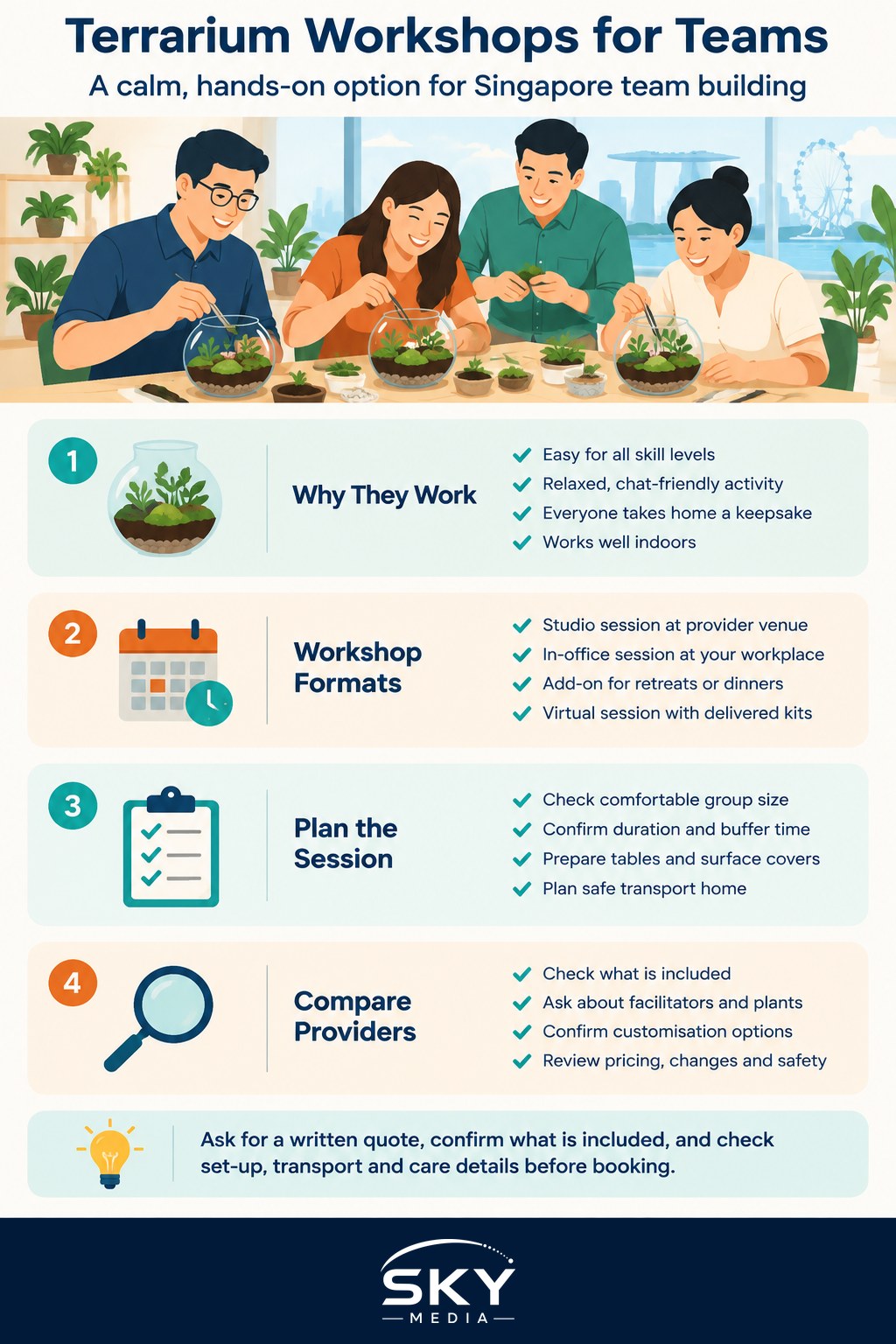
Why Terrariums Work for Corporate Groups
Terrarium workshops suit a wide range of teams for a few reasons.
- Low barrier to entry. No artistic or physical skill is needed. Colleagues of different ages, fitness levels and seniority can take part on equal terms.
- Calm and conversational. People chat while they work, which helps new hires and cross-department colleagues get to know each other without forced icebreakers.
- A lasting takeaway. Each participant leaves with a living piece they made, which often ends up on office desks as a reminder of the day.
- Fits a sustainability theme. Many companies pair the session with a message about greenery, biophilic design or caring for the environment.
- Works indoors. In Singapore’s heat and frequent rain, an indoor, air-conditioned activity avoids weather cancellations.
Terrariums are not ideal for every goal. If your aim is high-energy competition or physical teamwork, look at other formats in our wider guide to team-building activities in Singapore.
Formats to Choose From
Providers usually offer a few standard formats. Knowing them helps you brief vendors clearly.
| Format | How it usually runs | Works best when |
|---|---|---|
| Studio session | Your team travels to the provider’s workshop space, with materials and tools set up | Groups that fit the studio and want a change of scene |
| In-office session | The facilitator brings materials to your office, pantry or meeting room | Busy teams, larger groups or tight schedules |
| Hotel or event venue add-on | The workshop runs as one segment of an offsite, retreat or dinner | Company retreats and year-end events |
| Virtual session with delivered kits | Kits are sent to each person and the facilitator leads online | Hybrid or distributed teams across locations |
Some providers also offer variations such as closed glass jars, open bowls, moss-only designs or a combined terrarium and candle session. Ask what styles they can do and whether participants can choose.
Planning Group Size, Timing and Space
Group size. Ask each provider for their comfortable minimum and maximum per facilitator. Larger groups usually need more facilitators so that everyone gets help when layering soil or placing plants.
Duration. Most sessions run for a couple of hours including a briefing and clean-up, but confirm the exact timing. Leave buffer time for late arrivals, photos and packing the finished pieces.
Space and set-up. For in-office sessions, you will need tables with enough elbow room, protective covering for surfaces and easy access to a sink for hand washing. Soil and gravel can get messy, so avoid carpeted boardrooms if you can. Ask the provider what they bring and what you need to supply.
Transport home. Finished terrariums can be heavy and fragile. Check whether boxes or carriers are included, especially if staff will take public transport afterwards.
How to Compare Providers
Rather than choosing on price alone, compare providers on the points that matter for a corporate group. Ask each one the same questions so you can line up the answers side by side.
- What is included? Glass container, plants, soil layers, decorative figurines, tools, aprons, packaging and care instructions.
- How many facilitators? And what experience do they have with groups of your size?
- What are the plants? Ask which plants are used and whether they suit indoor, air-conditioned conditions, since desks in offices behave differently from a sunny windowsill at home.
- Customisation. Can they add your company colours, a themed figurine or branded packaging? Is there an extra charge?
- Pricing structure. Is it per head, a package rate or a minimum spend? Are there surcharges for in-office travel, weekend timing or venue set-up? Ask for a written quote including GST.
- Cancellation and changes. What happens if headcount changes or the date moves? Get the terms in writing.
- Accessibility and allergies. Can they accommodate staff with mobility needs, and are any materials a concern for people with allergies or sensitive skin?
- Insurance and safety. For in-office or venue sessions, ask whether they carry public liability insurance and how they handle glass breakage.
Prices vary widely depending on container size, materials, group size and format, so request quotes from more than one provider rather than relying on figures you see online.
Turning a Craft Session Into Real Team Building
A terrarium workshop is pleasant on its own, but a little structure makes it more meaningful.
- Mix the seating. Assign tables so people sit with colleagues they rarely work with.
- Add a theme. Ask each person to include one element that represents something about the team’s year, then share it briefly at the end.
- Run a short reflection. Five minutes on what helps a small ecosystem thrive (light, water, balance) can lead naturally into a discussion about team habits.
- Pair it with food. Ending with a simple tea break or lunch gives conversations time to continue.
- Take a group photo. A shot of everyone with their terrariums is useful for internal newsletters and year-end slides.
If you want a comparable craft option for a different group, our look at pottery workshops for team building groups covers how that format differs in mess, duration and takeaways.
After the Workshop: Keeping the Terrariums Alive
Many office terrariums wither because nobody explains basic care. Ask the provider for printed care cards, and share a quick reminder in your team chat a week later. Common tips include keeping terrariums out of harsh direct sun, watering sparingly and wiping condensation from closed containers if it builds up heavily. Staff who want to try more can read up on getting started with terrariums at home.
Final Checklist Before You Book
- Confirm headcount, date, venue and format.
- Get a written quote that lists inclusions, GST and any surcharges.
- Check cancellation, rescheduling and headcount change terms.
- Agree on set-up time, space requirements and clean-up responsibilities.
- Share dietary, accessibility and allergy needs in advance.
- Plan how participants will carry their terrariums home.
With a clear brief and the right provider, a terrarium session can be one of the most relaxed and memorable team events on your calendar, and the little gardens on everyone’s desks will keep the goodwill going long after the day itself.