

A pottery workshop is a popular choice for Singapore team building because it is hands-on, calm and a little messy in a way that gets colleagues laughing together. Nobody arrives as an expert, so seniority melts away once everyone has clay on their hands. But planning a pottery workshop for a team is very different from booking a class for yourself. You need to think about group size, the right format, how finished pieces get back to the office and how to keep the session inclusive.
This guide is written for HR teams, office managers and anyone organising a group session. If you are a hobbyist looking for regular classes instead, our guide to pottery and craft workshops is a better starting point.
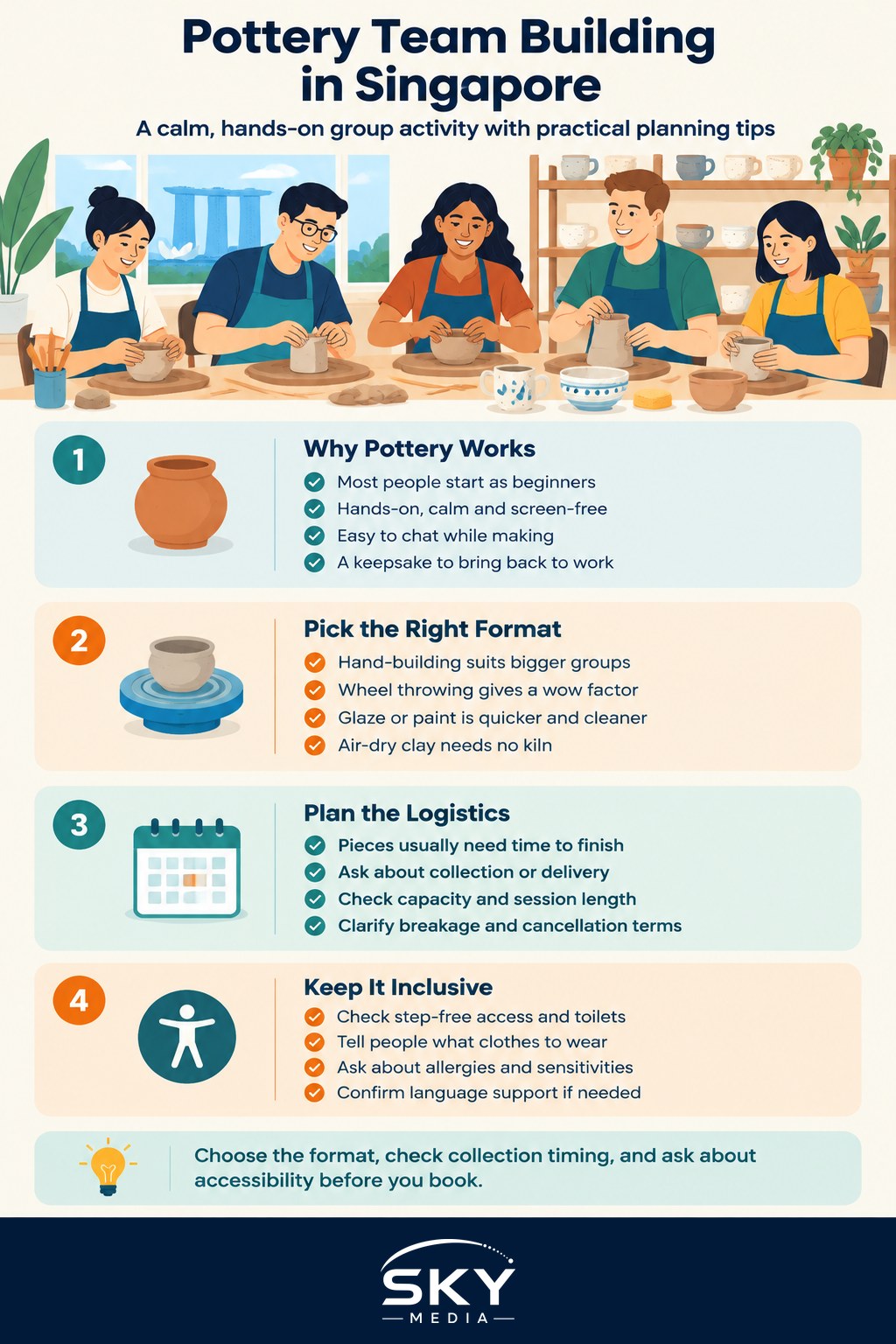
Why Pottery Works for Team Building
Pottery suits groups for a few reasons:
- Level playing field. Almost everyone is a beginner, so no one dominates.
- Focus without screens. Clay demands attention, which gives people a genuine break from work chat.
- Natural conversation. Hand-building in particular leaves people free to talk while they work.
- A lasting keepsake. Each person takes home a mug, bowl or plate that reminds them of the day.
- Low physical demand. It is seated or standing at a table, so most colleagues can take part comfortably.
It is less suited to teams that want high energy or competition. If that is your goal, compare it with other options in our round-up of team-building activities in Singapore.
Choosing the Right Workshop Format
Studios usually offer a few formats for groups. The right one depends on headcount, time and how much hands-on depth you want.
| Format | What participants do | Good for | Points to check |
|---|---|---|---|
| Hand-building | Shape clay with hands and simple tools using pinch, coil or slab methods | Larger groups, mixed abilities, chatty sessions | Pieces still need firing, so collection is later |
| Wheel throwing | Centre and shape clay on a potter’s wheel with instructor help | Smaller groups wanting a “wow” experience | Number of wheels limits group size; may need rotations |
| Glaze or paint your own | Decorate pre-made bisque pieces with glaze or paint | Short sessions, very large groups, on-site events | Less hands-on clay work, but quicker and cleaner |
| Air-dry clay | Make items that harden without a kiln | Office or off-site venues with no kiln access | Items are more fragile and not food safe |
For a mixed team, hand-building is often the safest default. Wheel throwing is memorable but trickier, and many first-timers need a lot of help to produce something usable.
Logistics That Catch Planners Out
The single biggest surprise for first-time organisers is timing. Real ceramic pieces made from clay usually need to dry, be fired in a kiln, glazed and fired again. That process can take several weeks, so participants rarely leave with a finished piece on the day. Ask the studio:
- How long until pieces are ready? Plan around this if the workshop is tied to a year-end party or a farewell.
- Collection or delivery? Some studios deliver to the office for a fee, while others require pickup. Collecting 30 mugs is a job in itself, so assign someone.
- Labelling. Check how pieces will be marked so each person gets their own back.
- Breakage policy. Pieces occasionally crack in the kiln. Ask how this is handled.
Other practical questions include:
- Venue. Will you go to the studio, or can the instructors come to your office or an event space? On-site sessions are convenient but usually limited to formats that do not need wheels.
- Capacity. Studios have a maximum headcount and a ratio of instructors to participants. For larger teams, ask about splitting into two sessions.
- Duration. Allow enough time for a short demo, making time and clean-up. Rushed sessions frustrate beginners.
- Food and drink. Some studios allow catering or have a space for refreshments. Clay and food should be kept apart, so ask where people can eat.
- Cancellation and changes. Read the terms for changing headcount, rescheduling and deposits. Corporate calendars move, and you do not want to pay for empty seats.
Prices vary by format, group size, materials and whether firing and delivery are included. Ask for an itemised quote rather than comparing headline per-person figures.
Making the Session Inclusive
A good team activity should work for everyone in the group. Before booking, consider:
- Mobility and accessibility. Check whether the studio is step free, has accessible toilets and offers seated workstations. Wheel throwing can be harder for people with back or knee issues.
- Clothing. Tell participants in advance that clay and glaze can stain. Suggest comfortable clothes, short or easily rolled sleeves and closed shoes. Studios usually provide aprons, but confirm.
- Allergies and sensitivities. Some people react to dust or certain materials. Ask the studio what they use and share any concerns.
- Pregnancy and health. Glazes and kiln areas may have specific safety guidance. Ask the studio, and let colleagues opt for a different role, such as decorating only, if they prefer.
- Language. For multinational teams, confirm the instructor can conduct the session in English, and in Mandarin if needed.
Adding Structure Without Killing the Fun
Pottery works fine as a relaxed session, but a light structure can help it feel like team building rather than a class:
- A shared theme. Ask everyone to make a piece representing the team’s year, a value or a goal.
- Pairs or trios. Have colleagues from different departments work side by side.
- A team set. Each person makes one piece of a matching set for the office pantry.
- Show and tell. Spend the last ten minutes letting people share what they made.
Keep any competition gentle. Judging pottery skills can make beginners self-conscious, so prizes for “most creative” or “best story” tend to land better than “best made”.
Other Craft Options to Compare
If pottery’s firing timeline does not suit your event date, similar hands-on activities may fit better. Candle making workshops for private groups let people take finished pieces home the same day, and chocolate workshops for teams add a tasting element that works well for festive or year-end gatherings.
A Quick Booking Checklist
- Confirm headcount and pick a format that fits it.
- Ask about firing timelines, collection or delivery, and breakage policy.
- Get an itemised quote that shows what is included.
- Check accessibility, clothing advice and food arrangements.
- Read the cancellation and headcount change terms.
- Brief the team on what to wear and what to expect.
With a clear plan and the right format, a pottery workshop gives your team a relaxed few hours together and a handmade reminder of it long after the clay has dried.
Further reading: Terrarium Workshops in Singapore for Team Building · Kintsugi Workshops in Singapore: Mending Ceramics With Gold