
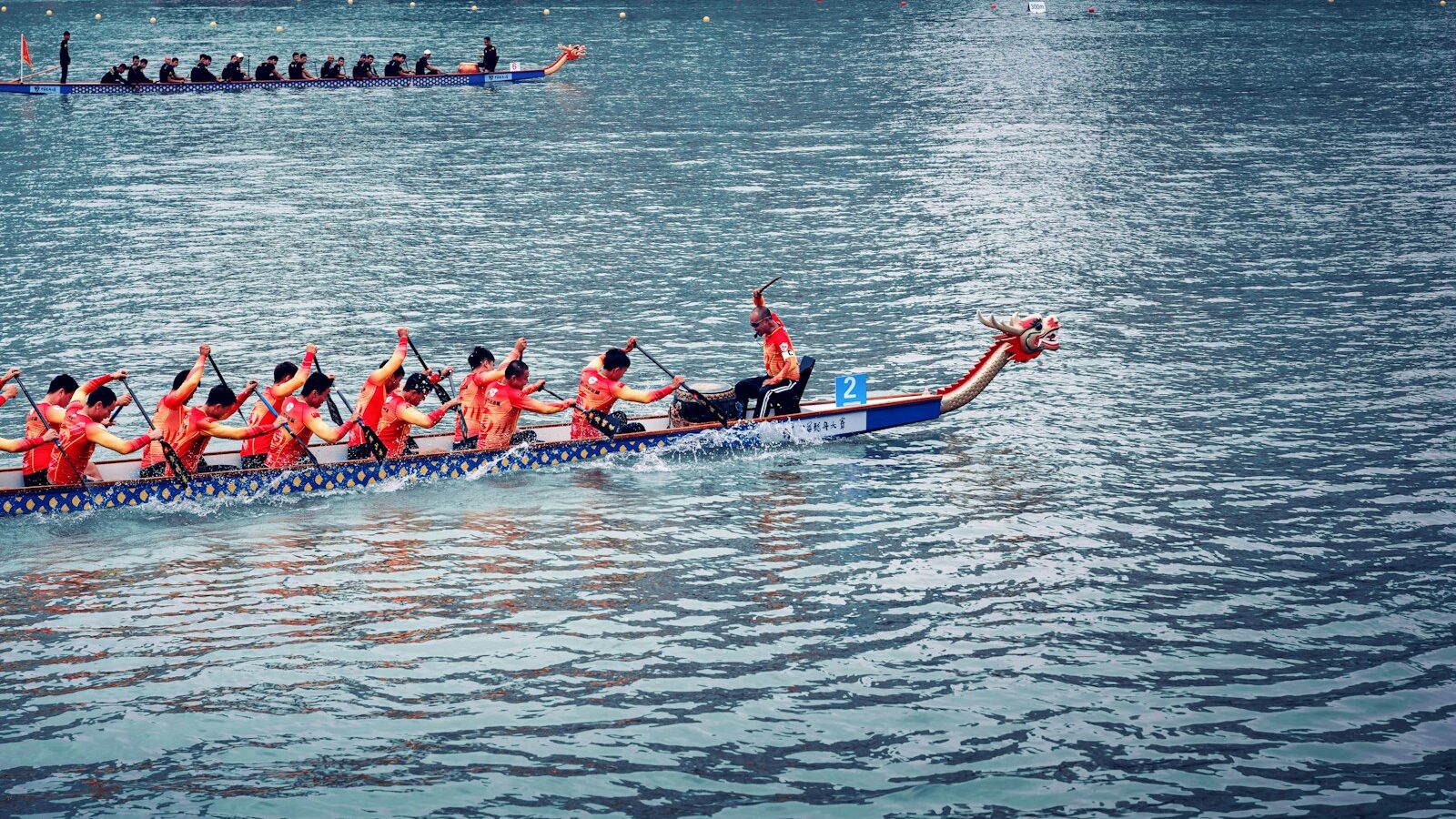
There are few sights in Singapore as stirring as a row of long, painted boats charging across the water, paddles flashing in time to a pounding drum. Watching a dragon boat race in Singapore costs nothing at most venues, suits families and makes a great outing for visitors and newcomers. You do not need to know anything about the sport to enjoy it, but a little planning helps you find the right spot, stay comfortable in the heat and understand what is happening on the water.
This is a spectator’s guide. If you are thinking of picking up a paddle yourself, our article on the Dragon Boat Festival covers the festival and its background in more depth.
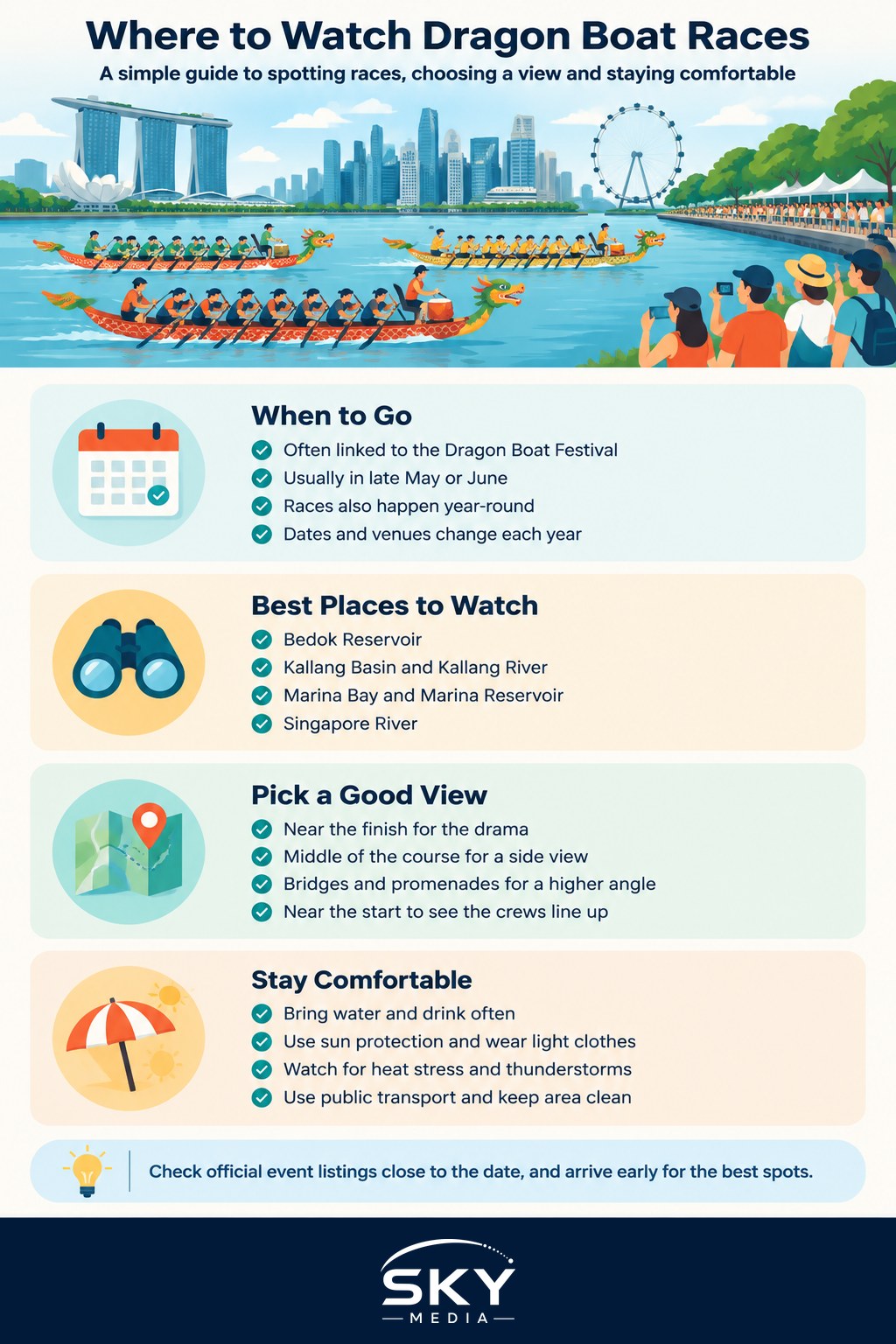
When Dragon Boat Races Happen
Dragon boat racing is closely tied to the Dragon Boat Festival (Duanwu), held on the fifth day of the fifth lunar month, usually in late May or June. Races around this period are often the most festive, with decorated boats, drummers and community events alongside the competition.
However, the sport runs well beyond the festival itself. Dragon boating is an active competitive and recreational sport in Singapore, with clubs, schools, universities, corporate teams and community groups training through the year. Regattas and championships are held at various points in the calendar, not only in June.
Dates, venues and formats change every year. To find current events:
- Check the Singapore Dragon Boat Association (SDBA), the national body for the sport, for its competition calendar.
- Look at the People’s Association and community club event listings, as community races are often organised at the grassroots level.
- Follow university, school and club dragon boat teams on social media, since they often announce the regattas they are racing in.
- Search for official event pages from venue operators and festival organisers closer to the date.
Waterways That Commonly Host Races
Several of Singapore’s reservoirs and rivers have a history of hosting dragon boat races and training. Which one is used in a given year depends on the organiser, so always confirm the venue for the specific event you want to see.
| Waterway | What to expect as a spectator | Getting there |
|---|---|---|
| Bedok Reservoir | Calm water popular with paddlers, park paths and open grassy banks for a relaxed, neighbourhood feel | Bedok Reservoir MRT station is nearby; check the walking route to the event area |
| Kallang Basin and Kallang River | Wide water close to the Sports Hub area, often used for watersports and larger events | Stadium and Kallang MRT stations serve the area |
| Marina Bay and Marina Reservoir | Dramatic city skyline backdrop, good for photos, can be crowded on event days | Several Downtown and Circle Line stations around the bay |
| Singapore River | Historic riverside setting near the quays, with bridges and promenades as viewpoints | Clarke Quay and Raffles Place MRT stations |
Many reservoirs also have teams training in the early morning or late afternoon on weekends, so even outside race days you may catch boats practising from the bank.
How to Choose a Good Viewing Spot
Where you stand makes a big difference to what you see.
- Near the finish line is where the drama happens: tight sprints, roaring crowds and the results announcement. It is also the most crowded.
- Along the middle of the course gives you a clearer, side-on view of the boats in full stride, and is often less packed.
- Bridges and elevated promenades, where available, offer an overhead angle that shows off the colours and synchronised paddling.
- Near the start lets you see crews lining up and the tension before the horn, but the race moves away from you quickly.
Arrive early, especially for finals, and look for official spectator zones. Organisers may cordon off areas near the pontoons and boat launch points for safety, so respect barriers and marshals’ instructions.
Understanding What You Are Watching
A little knowledge makes the race much more fun to follow.
- The crew. A standard dragon boat has pairs of paddlers sitting side by side, a drummer at the front and a steerer (sometimes called the helm) at the back with a long steering oar. Smaller boats are also used for some categories.
- The drummer. The drummer sets the rhythm and keeps the crew in sync. Watch how the beat speeds up for the final push.
- The start. Crews usually begin with a burst of short, fast strokes to get the heavy boat moving, then settle into a longer, steadier rhythm.
- Categories. Races are often split by distance, crew size and division, such as open, women’s, mixed, corporate, youth or masters. A single event day may have many heats leading up to the finals.
- Festival touches. Around Duanwu, you may see boats decorated with dragon heads and tails, and occasionally ceremonies such as “dotting the eye” of the dragon to bring it to life.
If you like the performance side of Chinese festivals, our guide to lion dance and dragon dance is a natural follow-up.
Staying Comfortable in the Heat
Race days in Singapore are hot, bright and humid, and there is often little shade by the water.
- Bring water and drink regularly, even if you do not feel thirsty.
- Wear sun protection: a cap or hat, sunglasses and sunscreen. A small umbrella helps, but lower it if it blocks the view of people behind you.
- Dress for the weather: light, breathable clothing and comfortable shoes for walking along paths and promenades.
- Watch for heat stress in children and older family members. Take breaks in the shade and head indoors if anyone feels faint or unwell.
- Check the weather. Afternoon thunderstorms are common. Races may be paused for lightning, so have a plan for shelter.
Tips for Families and Photographers
- Bring a mat or foldable stool if the venue allows it and you plan to stay for several heats.
- Keep children well back from the water’s edge, as banks and pontoon areas can be slippery.
- Use public transport. Parking near popular venues fills up quickly on event days.
- For photos, a fast shutter speed freezes splashing paddles, and a side-on position shows the crew’s synchronised strokes best. Our guide to photographing boats and harbours has more technique tips.
- Bin your rubbish or take it home. Keeping reservoirs and rivers clean protects the water everyone enjoys.
Making a Day of It
Race days pair nicely with the rest of the festival. Bring along some rice dumplings for a picnic, explore the park around the reservoir, or, if the race is on the Singapore River, wander the quays afterwards. Our guide to Clarke Quay and Boat Quay suggests places to stroll once the last boat crosses the line.