
Every motorcycle in Singapore eventually reaches a point where riding it no longer makes sense. The Certificate of Entitlement (COE) may be running out, repairs may cost more than the bike is worth, or you may simply be switching to public transport or a car. If you need to scrap a motorcycle in Singapore, the process is more structured than handing the bike to anyone with a lorry. The vehicle has to be formally deregistered with the Land Transport Authority (LTA), and the way you do it affects whether you recover any money.
Most guides to end-of-life vehicles focus on cars. This one walks through what is different, and what is the same, for motorcycles and scooters.
Why Motorcycles Are Scrapped Rather Than Simply Parked
In Singapore, a registered vehicle carries ongoing obligations. It needs a valid COE, valid road tax and valid insurance to be used on the road. When the COE expires, the motorcycle cannot legally stay on the road, and the registered owner is expected to deal with it: renew the COE, export the bike, or deregister and scrap it.
Leaving an unused bike parked indefinitely in a carpark or void deck is not a solution. Town councils and carpark operators can take action against abandoned vehicles, and you remain the registered owner until LTA records show otherwise. Deregistration is what formally ends your ownership.
A few common triggers for scrapping:
- The COE is close to expiry and renewing it does not make financial sense for an older bike.
- The bike has been in an accident and repair costs exceed its value.
- Major parts such as the engine or frame have failed.
- You are leaving Singapore and do not want to export the bike.
Your Options Before You Decide to Scrap
Scrapping is final, so it is worth comparing it against the alternatives first. The right choice depends on the bike’s condition, how much COE life is left and your plans.
| Option | What it involves | Best suited to |
|---|---|---|
| Renew the COE | Pay the Prevailing Quota Premium (PQP) to extend the COE for a further period, as set by LTA | A well-maintained bike you plan to keep riding |
| Sell to a dealer or private buyer | Transfer ownership through LTA’s OneMotoring portal; the buyer takes over the remaining COE | A roadworthy bike with useful COE left |
| Scrap locally | Hand the bike to an approved scrapyard and deregister it with LTA | A bike near COE expiry or uneconomical to repair |
| Export | Ship the bike overseas through an exporter and deregister it | A bike with resale value in another market |
If the bike still runs well and has a decent amount of COE remaining, selling usually beats scrapping, because the buyer is paying for both the machine and the right to keep using it. If the COE is about to lapse and the bike is old, scrapping is often the realistic choice.
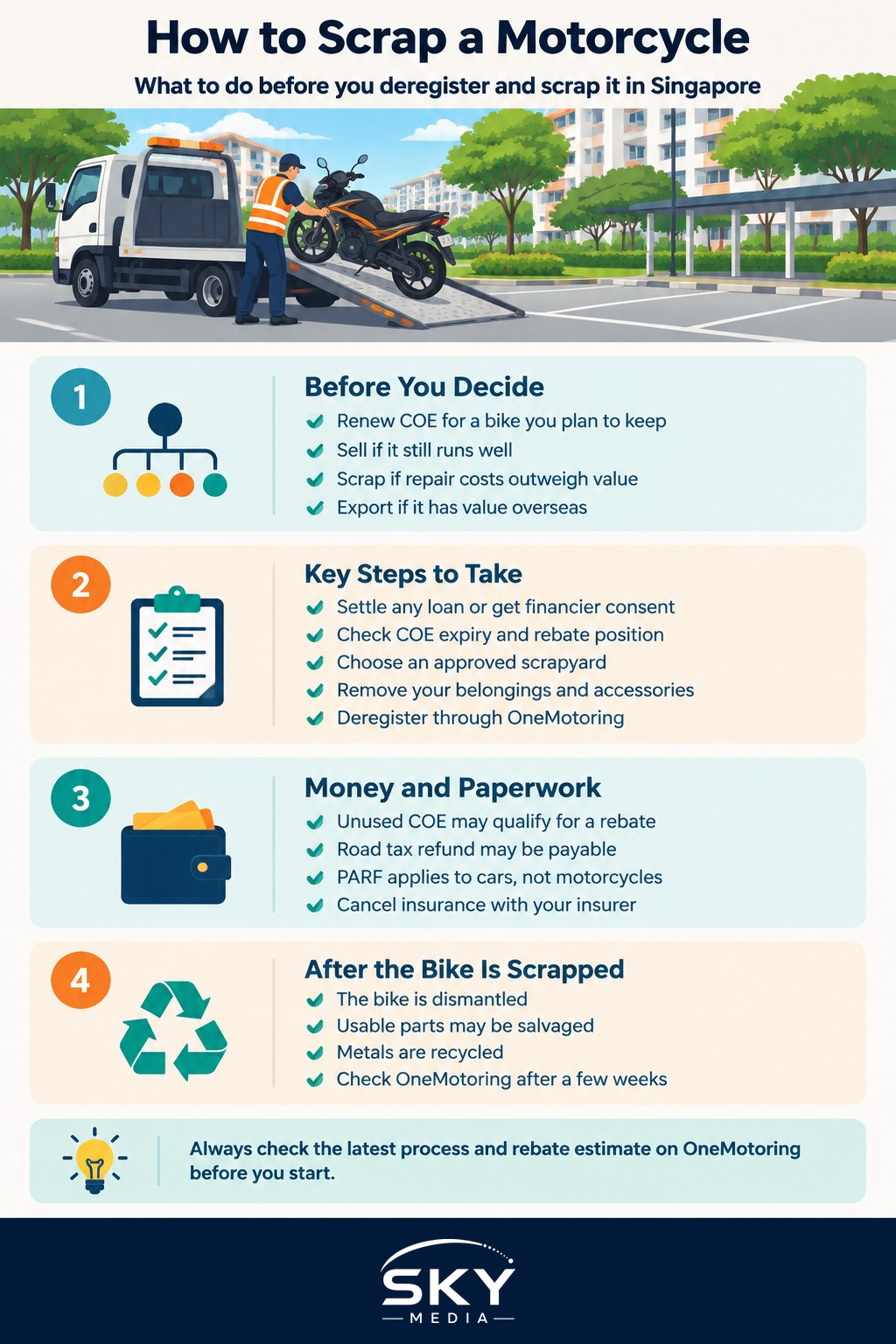
Step by Step: How Scrapping a Motorcycle Works
The exact requirements are set by LTA and can change, so always check the current process on the OneMotoring website before you start. In general, the flow looks like this.
1. Settle any loan on the bike
If the motorcycle was bought on hire purchase, the finance company has an interest in it. You will usually need to settle the outstanding loan, or get the finance company’s consent, before the bike can be deregistered. Ask your financier for a settlement figure early, because this can take a few working days.
2. Check your COE expiry date and rebate position
Log in to OneMotoring with your Singpass to see the bike’s COE expiry date and registration details. If you deregister before the COE expires, you may be entitled to a rebate for the unused portion of the COE. Whether you qualify, and how much you receive, depends on the vehicle’s registration details and LTA’s rules at the time. Do not assume a figure: check the rebate estimate shown on OneMotoring.
Note that the Preferential Additional Registration Fee (PARF) rebate, which many car owners talk about, applies to cars and not to motorcycles. Motorcycle owners should focus on the COE rebate and road tax refund instead.
3. Choose an approved scrapyard
LTA requires that deregistered vehicles meant for scrapping are disposed of properly. Use a scrapyard that is recognised for vehicle scrapping, and ask whether it handles the deregistration paperwork on your behalf. Many motorcycle dealers can also arrange scrapping through the scrapyards they work with, which saves you a trip. Before agreeing, ask:
- Whether the yard will issue the documentation LTA needs to confirm the bike was scrapped.
- Whether they collect the bike or you need to ride or tow it there.
- Whether they pay a small scrap value, charge a collection fee, or neither.
Prices and arrangements vary between operators, so get more than one quote.
4. Remove your belongings and accessories
Before handing the bike over, take off anything you want to keep: top boxes, phone mounts, aftermarket exhausts that you plan to reuse or sell, and the in-vehicle unit if it can be removed and transferred. Clear out under-seat storage too, since items left behind are rarely recovered.
5. Deregister the motorcycle with LTA
Deregistration is done through OneMotoring, either by you or by the scrapyard or dealer acting for you. Once LTA processes it, any eligible COE rebate and road tax refund for the unused period are paid to the registered owner. Keep the confirmation for your records.
Aim to deregister before the COE expiry date. Late deregistration can result in penalties, and the exact consequences are set by LTA.
6. Cancel your insurance
Your motor insurance does not automatically stop when the bike is scrapped. Contact your insurer with the deregistration confirmation and ask about cancelling the policy. Whether you receive a pro-rated refund depends on the policy wording, so check with the insurer directly.
Common Mistakes When Scrapping a Motorcycle
Small slips can cost money or create paperwork headaches later.
- Letting the COE lapse before acting. Leaving it to the last week puts you under pressure and can lead to penalties if deregistration is delayed.
- Handing the bike to an unverified buyer. If an informal buyer takes the bike but never deregisters it, you may still be the registered owner on record.
- Forgetting the loan. An outstanding hire purchase balance can hold up the whole process.
- Not checking for rebates. Some owners scrap without realising they could receive a COE rebate or road tax refund.
- Leaving the insurance running. Premiums may keep being charged on a bike you no longer own.
What Happens After the Bike Is Scrapped
Once the scrapyard takes over, the motorcycle is dismantled. Reusable parts may be salvaged, metals are recycled, and fluids such as engine oil and fuel are drained and handled separately. Batteries and tyres also need proper disposal, which is one reason using a proper scrapyard matters.
On your side, check OneMotoring after a few weeks to confirm the vehicle no longer appears under your name and that any rebates have been credited. If something looks wrong, contact LTA with your deregistration details.
Planning Your Next Ride
Scrapping one bike often raises the question of what comes next. If you are returning to riding, our guide to buying your first motorcycle covers the buying process, while Owning a Motorcycle in Singapore explains the running costs to budget for. If you are weighing up whether to switch to four wheels, Motorcycle Versus Car for Commuting compares the two. And for whatever you ride next, regular basic motorcycle maintenance helps you get the most life out of the COE you pay for.
This article is general information and not legal advice. Deregistration rules, rebates and penalties are set by LTA and may change, so confirm the current requirements on OneMotoring before you scrap a motorcycle in Singapore.
Frequently Asked Questions
How long does it take to scrap a motorcycle in Singapore? Timing depends on your loan status, the scrapyard’s schedule and how quickly LTA processes deregistration. Settling any hire purchase first avoids delays. Start well before your COE expires rather than leaving it to the last week.
Can I still scrap a motorcycle after its COE has expired? You should contact LTA as soon as possible, because late deregistration can bring penalties and may affect any rebates. The consequences are set by LTA, so check OneMotoring or ask LTA directly about your situation.
Do I need to cancel season parking and other charges when I scrap my bike? Yes, terminate any season parking tied to the bike and remove payment accounts linked to it, so you are not billed for a bike that no longer exists. Check with the operators concerned for their cancellation steps.
Can I scrap my motorcycle if I have outstanding fines? Unpaid fines or summonses are best settled first, because they can cause problems with the vehicle’s records. Check with LTA and the relevant agency about what must be cleared before deregistration goes through.
Can a foreigner or PR leaving Singapore scrap their motorcycle before departure? Anyone who is the registered owner can deregister and scrap a bike, but timing matters if you are leaving soon. Allow time for loan settlement, scrapping and refunds, and check with LTA about how rebates reach you if you leave the country.
Official sources: OneMotoring