
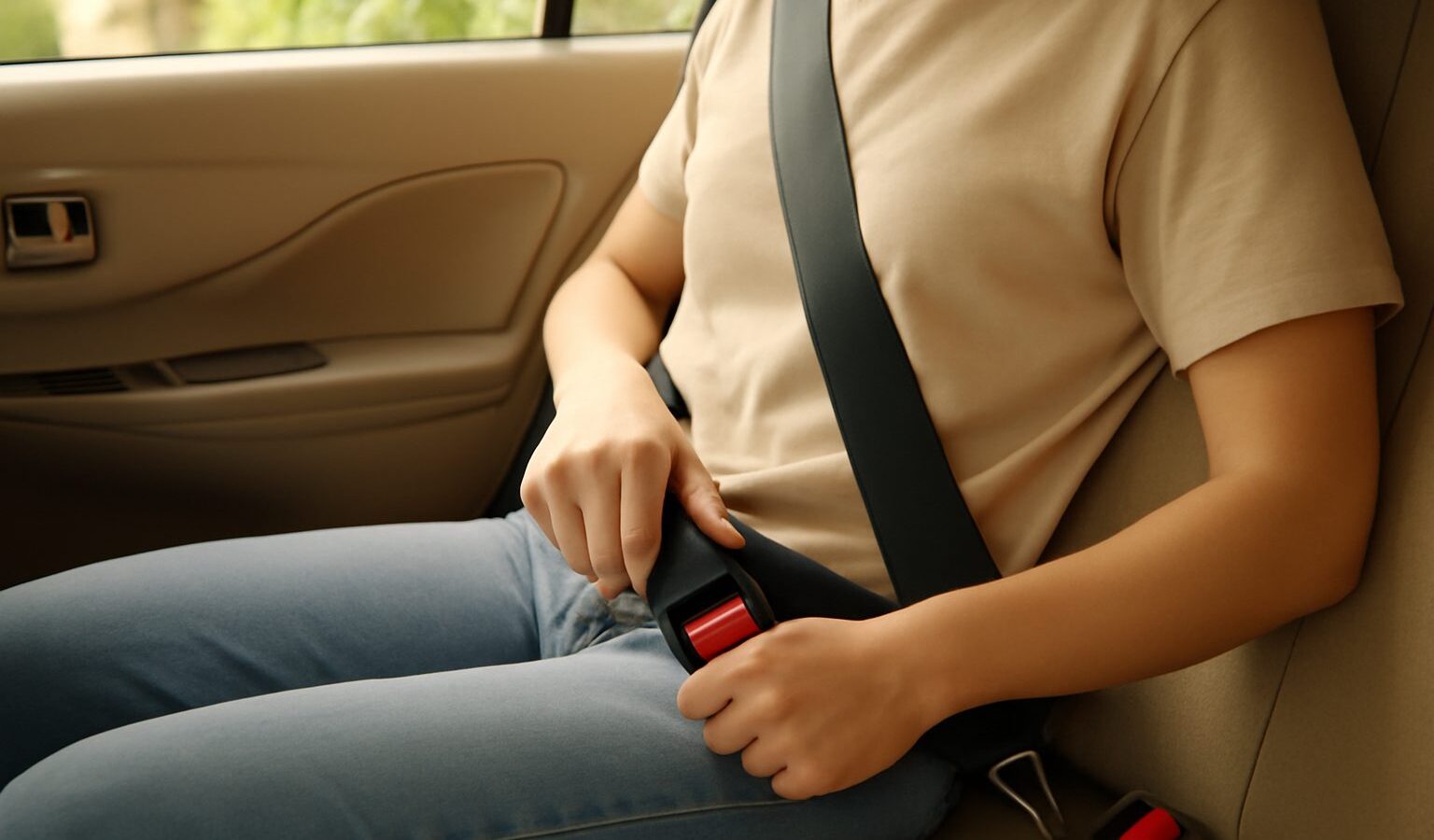
Most people in Singapore buckle up in the driver’s seat without thinking. The picture gets less clear once you are in the back of a taxi, sitting in a private-hire car with your colleagues, riding in a lorry cabin or travelling on a coach to Malaysia. This guide sets out the seat belt rules in Singapore for each type of seat and vehicle, who is responsible for making sure belts are worn, and what penalties can apply.
This is general information, not legal advice. The rules are set out in Singapore’s road traffic legislation and enforced by the Traffic Police, with vehicle standards overseen by the Land Transport Authority (LTA). Rules, fines and demerit points can change, so check the Singapore Police Force and LTA websites for the current position.

The Basic Principle: If a Belt Is Fitted, Wear It
The simplest way to remember the seat belt rules in Singapore is this: if your seat has a seat belt, you are expected to wear it. That applies to the driver and to passengers in both the front and rear seats of cars, taxis and private-hire vehicles.
Seat belts work by keeping you in your seat during a sudden stop or crash. An unbelted rear passenger can be thrown forward with great force, injuring not only themselves but also the person sitting in front. That is why rear seat belt rules exist even though many people still treat the back seat as “safe”.
Rules by Seat and Vehicle Type
Here is a broad overview of how the rules apply in common situations. Details, exemptions and penalty amounts are set by law and may be updated, so treat this as a starting point.
| Seat or vehicle | General rule | Who is mainly responsible |
|---|---|---|
| Driver’s seat, any car | Must wear a seat belt | Driver |
| Front passenger seat | Must wear a seat belt; children below a set height need a suitable child restraint | Adult passenger for themselves; driver for children |
| Rear seats in private cars | Must wear a seat belt where fitted; children below a set height need a suitable child restraint or booster | Adult passenger for themselves; driver for children |
| Taxis and private-hire cars | Passengers must wear seat belts where fitted, front and rear | Passengers, with drivers expected to remind them |
| Lorry and goods vehicle cabins | Driver and cabin passengers should belt up where belts are fitted | Driver and passengers |
| Buses and coaches | Wear belts where fitted, especially on coaches; standing is allowed on public buses | Operator rules apply; check signage |
Front and Rear Seats in Private Cars
For private cars, both front and rear occupants are required to wear seat belts where they are fitted. Adults are responsible for buckling up themselves, and the driver can also face consequences in some situations, especially where children are involved.
Children are treated differently. Singapore’s rules require children below a certain height to use an appropriate child restraint, such as a rear-facing infant seat, forward-facing child seat or booster seat, rather than an adult belt alone. The driver is responsible for making sure this happens. Our guides on choosing a child car seat and booster seats and the law explain the details and how to pick the right seat for your child’s size.
A few practical points:
- Count belts before you count passengers. You should not carry more people than there are seats with belts.
- Wear the belt correctly. The lap part should sit low across the hips and the shoulder part across the middle of the chest, not under the arm or behind the back.
- One belt per person. Two children sharing one belt, or a child sitting on an adult’s lap, is unsafe.
Taxis and Private-Hire Cars
Passengers in taxis and private-hire cars are expected to wear seat belts too, including in the rear. Many people skip it on short trips, but crashes happen at low speeds as well.
Children in taxis are a common source of confusion. Taxis have historically had some exemptions on child restraints because drivers cannot be expected to carry every size of child seat, but this does not mean children should travel unrestrained. Parents should use a seat belt at minimum and consider a portable booster or a car seat where practical. Some ride-hailing services also offer family bookings with child seats. See our guide to choosing a family car seat for Singapore taxis for portable options, and check the current exemptions on the LTA or Traffic Police website.
Lorries and Goods Vehicles
The driver and any passengers in a lorry’s cabin should wear seat belts where they are fitted, in the same way as in a car.
Carrying workers on the open rear deck of lorries has long been a road safety concern in Singapore. The authorities have introduced and tightened rules over the years, including limits on how many people can be carried, requirements on deck features and measures to move companies towards safer transport such as buses or vans with proper seats. Employers and drivers should check the latest requirements from LTA, the Traffic Police and the Ministry of Manpower (MOM), since this area has been actively reviewed.
Buses and Coaches
Public buses in Singapore are designed for standing passengers and generally do not have seat belts on most seats. Hold on to handrails and, if you are seated, keep children seated beside you or on your lap safely.
Many coaches, including those used for school trips, tours and cross-border journeys, do have seat belts fitted. Where belts are available, wear them. Operators may have their own rules and reminders, and the driver or tour leader can advise. For school excursions, parents can check with the school about the transport arrangements.
Penalties for Not Wearing a Seat Belt
Not wearing a seat belt is an offence. Depending on the situation, the consequences can include:
- A composition fine, which is a fine you can pay to settle the offence without going to court
- Demerit points on the driver’s record under the Driver Improvement Points System, especially where the driver fails to ensure children are properly restrained
- Prosecution in court for more serious cases or repeat offences, with higher penalties
Exact fine amounts and demerit points are set by the authorities and can be revised. Check the Singapore Police Force website for the current figures rather than relying on old news reports.
Exemptions and Special Cases
There are limited exemptions, for example for some people with specific medical conditions who hold proper certification, and for certain vehicles or situations defined in the rules. If you think an exemption may apply to you, speak to your doctor and check the current requirements with the Traffic Police. Do not assume you are exempt.
Pregnant women should still wear a seat belt, with the lap belt below the bump and the shoulder belt between the breasts and to the side of the bump. Ask your doctor or midwife if you have concerns.
A Simple Habit That Saves Lives
Seat belt rules in Singapore exist because belts reduce serious injuries and deaths. Make “everyone buckled?” a habit before the car moves, whether you are the driver, the passenger in a taxi or the parent strapping in a toddler. It takes seconds and protects everyone in the vehicle.
Frequently Asked Questions
Can a child sit in the front seat of a private car? The rules require children below a set height to use a suitable child restraint, and the driver is responsible for making sure this happens. The front seat is no exception. Check the current height requirements and rules on the Traffic Police and LTA websites before you travel.
Do I need to bring a car seat when taking a taxi with a baby? Taxis have historically had some exemptions on child restraints, but that does not mean children should travel unrestrained. Use a seat belt at minimum and consider a portable booster or car seat where practical. Check the current exemptions with LTA or the Traffic Police.
Does the driver get fined if a rear passenger does not buckle up? Adult passengers are responsible for buckling themselves, though the driver can face consequences in some situations, especially where children are involved. Penalties can include fines and demerit points. Check the Singapore Police Force website for the current figures.
How should a pregnant woman wear a seat belt? She should still wear one. The lap belt goes below the bump, and the shoulder belt sits between the breasts and to the side of the bump. Ask your doctor or midwife if you have concerns, and never assume you are exempt.
Do I need a seat belt on public buses and coaches? Public buses are designed for standing passengers and generally do not have belts on most seats, so hold the handrails. Many coaches used for tours, school trips and cross-border journeys do have belts fitted, and where belts are available you should wear them.
Official sources: OneMotoring
Further reading: Carrying Workers in the Back of a Lorry: The Rules in Singapore