
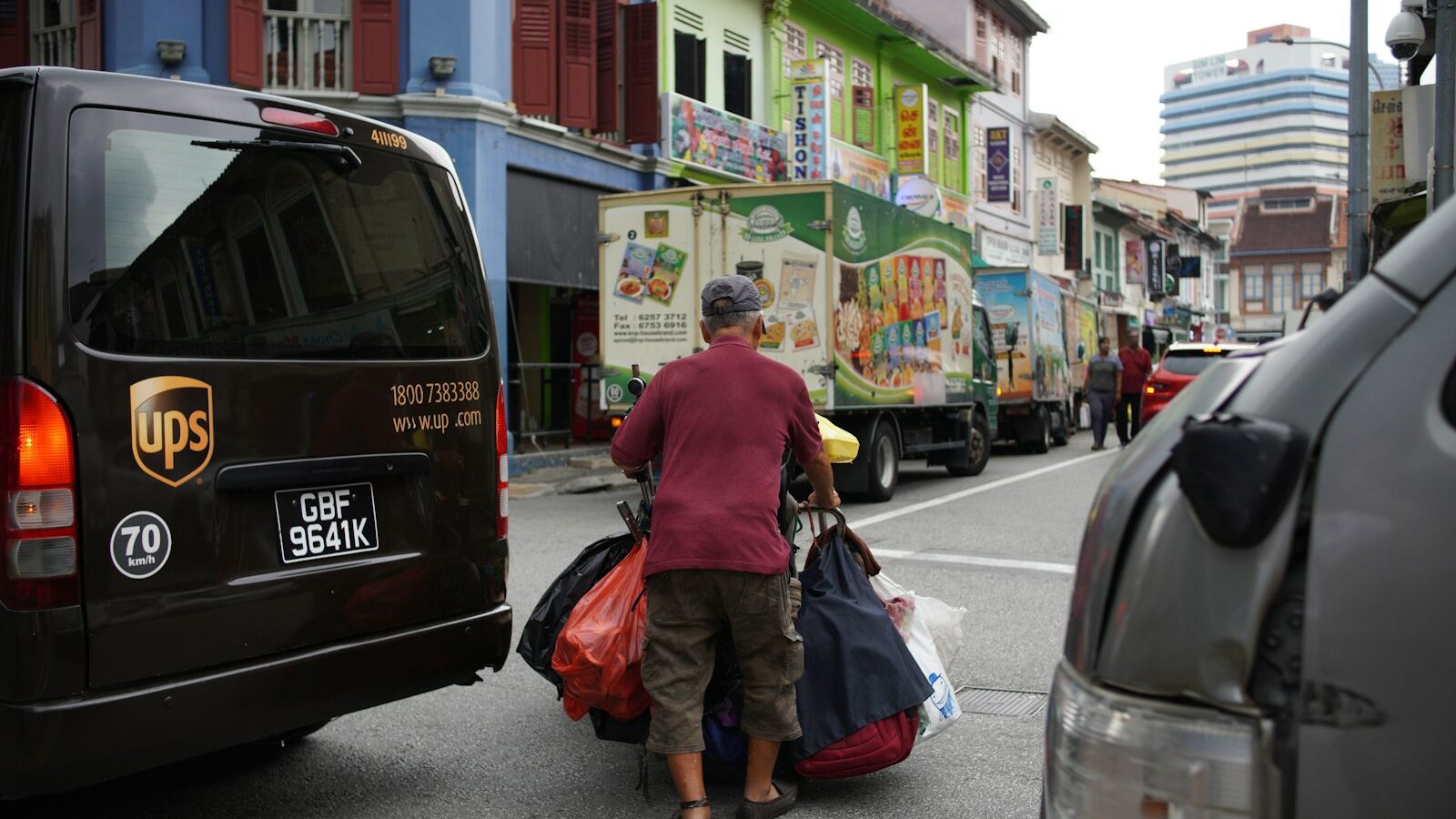
If you run a construction, renovation, landscaping, logistics or facilities business, there is a good chance your workers travel between dormitories and sites in the rear deck of a company lorry. It is a familiar sight on Singapore roads, and also one of the most debated, because accidents involving workers on lorry decks have repeatedly led to serious injuries and deaths.
This guide explains, in plain terms, how lorry passenger rules in Singapore work for business owners: who regulates what, the kinds of requirements that apply to the vehicle, the driver and the people in the back, and what you can do to reduce risk beyond the legal minimum. It is general information, not legal advice. The rules have been tightened several times and may change again, so always confirm current requirements with the Land Transport Authority (LTA), the Ministry of Manpower (MOM) and the Traffic Police before you act.
Who Sets the Rules
Several agencies are involved, and as an employer you need to keep all of them in view:
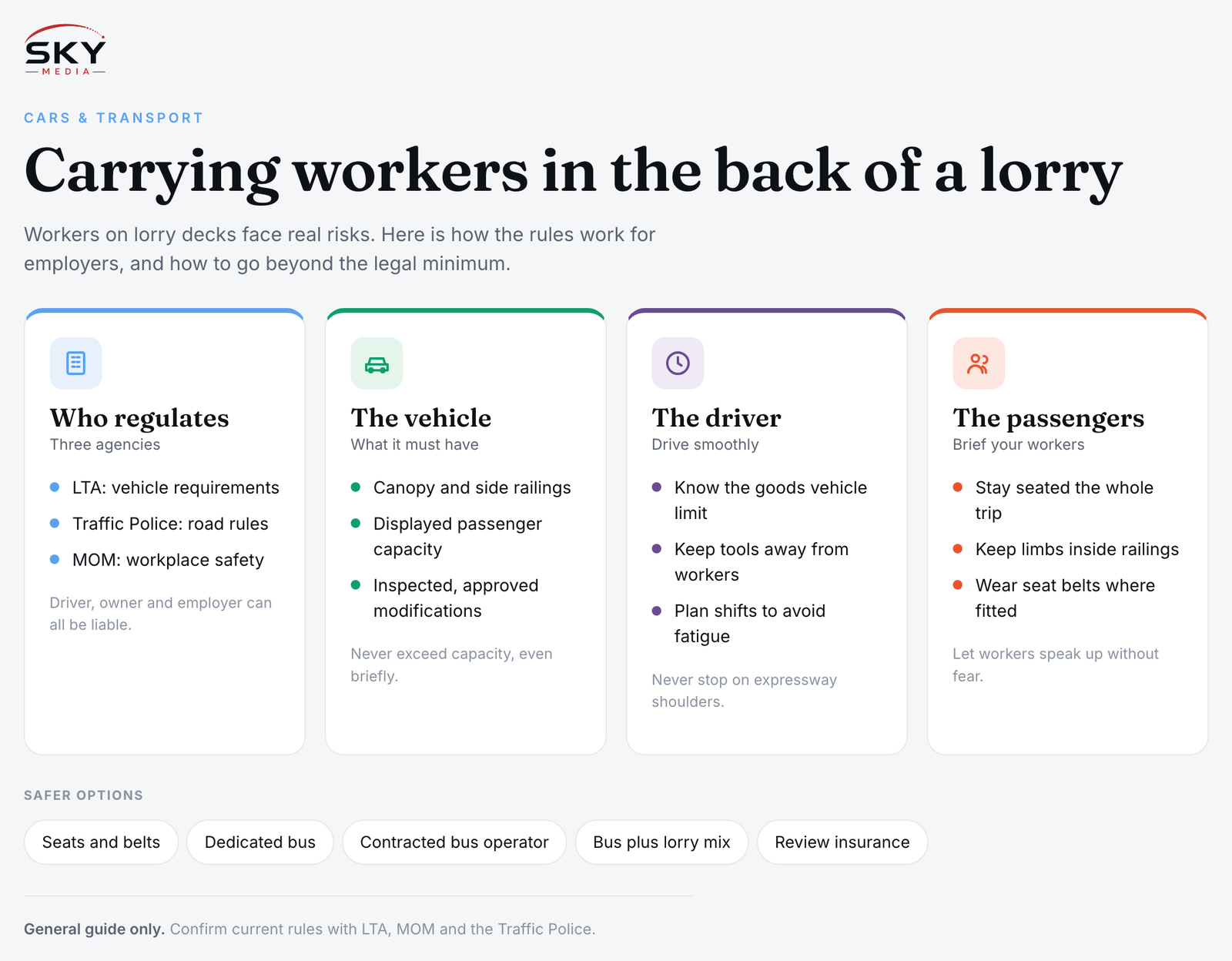
- LTA sets the vehicle requirements under the Road Traffic Act and its rules, including what a goods vehicle must have before it can carry people in the rear deck, how many passengers it may carry and vehicle inspection requirements.
- The Traffic Police enforce road rules such as speed limits, overloading and how passengers are carried, and investigate accidents.
- MOM oversees workplace safety and health. Transporting workers to and from work is part of an employer’s duty of care, and MOM’s guidance, together with the Workplace Safety and Health Council’s materials, covers safe transport practices.
When something goes wrong, the driver, the vehicle owner and the employer can all face consequences, so do not assume that responsibility sits only with whoever is behind the wheel.
What the Vehicle Must Have
Carrying workers in the rear deck is only allowed for goods vehicles that meet LTA’s requirements. These have been strengthened over the years. The key areas to check with LTA are:
- Canopy and side railings. Lorries used to carry workers in the rear deck are generally required to have a protective canopy and railings or side panels of a specified height, to protect passengers from weather and reduce the risk of falls. Check the current specifications, as they have been raised in the past.
- Passenger capacity. The number of workers a lorry can carry in the rear deck is calculated from the available deck space and is indicated on the vehicle. Never exceed it, even for a short trip.
- Seating. Workers are expected to be seated, not standing, while the lorry is moving. Some businesses have voluntarily fitted proper seats and seat belts in the rear deck. Ask LTA or an approved inspection centre about current requirements and approved fittings before modifying a vehicle.
- Inspection and approvals. Modifications such as canopies, seats or railings may need to be inspected and approved. Make sure any workshop you use understands LTA’s requirements and that the paperwork is in order.
- Maintenance. Tyres, brakes and lights matter even more when people are carried in the back. Keep proper maintenance records.
Speed Limits and Driving Rules
Goods vehicles in Singapore are subject to lower speed limits than cars, with the specific limit depending on the vehicle’s weight class. Many lorries are also fitted with speed limiters. Ask LTA for the limit that applies to each of your vehicles, and make sure every driver knows it.
Beyond the posted limit, safe driving matters most when people are seated on an open deck. Sudden braking, sharp turns and lane changes can throw passengers around. Set clear company expectations:
- Drive smoothly and well below the limit in wet weather.
- Never carry workers in the rear deck on the same trip as loose tools, materials or equipment that could shift.
- Only stop to load and unload workers in safe, legal places, never on expressway shoulders.
- Do not allow passengers to sit on the tailgate, the sides or on top of goods.
Driver fatigue is a recognised factor in lorry accidents. Plan shifts so that the person driving workers home at the end of the day has not already worked long hours on site. If your driver also works on site, factor driving time into their working hours.
Rules for the People in the Back
Your workers also need clear instructions. A simple briefing, repeated regularly and in a language they understand, should cover:
- Stay seated for the whole journey, with backs to the canopy or sides where seating is arranged that way.
- Keep arms, legs and heads inside the railings.
- Do not stand, move around or jump off before the lorry has fully stopped.
- Wear seat belts where fitted.
- Report any damage to the canopy, railings or seats immediately.
Encourage workers to speak up if a trip feels unsafe or if the lorry is overloaded. They should not fear losing their job for doing so.
Comparing Your Transport Options
Carrying workers in the rear deck is legal when the rules are met, but it is not the only option, and authorities have encouraged employers to move towards safer alternatives where possible.
| Option | Main advantage | Main drawback | Good for |
|---|---|---|---|
| Lorry rear deck, fully compliant | Moves workers and some equipment together, lowest cost | Highest risk to passengers in a crash | Short trips, when vehicle and driver fully meet requirements |
| Lorry with seats and belts fitted in the rear | Better protection for passengers | Fitting costs, may reduce cargo space | Companies with regular, fixed routes |
| Dedicated bus or minibus | Proper seats and belts for every passenger | Higher cost, separate vehicle for equipment | Large crews, long routes, dormitory to site trips |
| Shared transport or contracted bus operator | No need to own or maintain the vehicle | Less flexibility in timing | Smaller firms, multi-site projects |
Some firms use a mix, for example a bus for workers and a lorry for equipment. Ask whether your main contractor, industry association or any government co-funding schemes can help with the cost of safer transport, and check the current details with the relevant agency.
Practical Checklist for Business Owners
- Confirm with LTA that each lorry used to carry workers meets current canopy, railing and capacity requirements.
- Check that passenger capacity is displayed and that supervisors know the number.
- Brief drivers on speed limits, safe driving and rest.
- Brief workers on seating and conduct, in a language they understand.
- Keep tools and materials separate from people.
- Maintain vehicles and keep records.
- Review your insurance with your insurer, including what is covered for passengers.
- Review MOM’s and the Workplace Safety and Health Council’s current guidance on safe transport of workers.
Related Responsibilities
Transport is only one part of looking after the people you employ. Our guide to hiring foreign workers for your business covers wider employer obligations, and seat belt rules for every passenger in Singapore explains how belt requirements work across different vehicles. If you occasionally need a lorry for one-off moves rather than daily crew transport, see renting a van or lorry for what to check before you book.
The bottom line: if workers ride in your lorry, treat every trip as a safety-critical operation. Meet the legal requirements, go beyond them where you can, and check LTA’s and MOM’s websites regularly for updates.
Frequently Asked Questions
Do I need to report an accident involving workers on a lorry? Work-related injuries and deaths are generally reportable to MOM, and road accidents are also a matter for the Traffic Police. Rules and timelines are set by the agencies and can change, so check MOM’s website for the current requirements. Get injured workers medical help first.
What insurance should cover workers carried on a company lorry? Employers generally need work injury compensation insurance for their employees, and the vehicle should also have its proper motor insurance. Ask your insurer exactly what is covered for passengers in the rear deck, and check MOM’s guidance for current obligations. Do not assume one policy covers everything.
Can workers in Singapore report an unsafe lorry trip? Yes. Workers can raise concerns with their supervisor or employer first, and they can also contact MOM about workplace safety issues. Employers should encourage workers to speak up and make clear nobody will be punished for flagging an overloaded or damaged lorry.
What records should a business keep for its worker-carrying lorries? Keep maintenance and inspection records, details of any approved modifications, the displayed passenger capacity and notes of driver and worker briefings. Records of driver working hours also help manage fatigue. Good paperwork shows you have taken your duty of care seriously if anything goes wrong.
Can workers ride in the front cab with the driver? Passengers in the cab must have a seat and wear a seat belt where one is fitted, and the vehicle’s registered seating limits apply. Do not squeeze extra people in. For the exact seating rules on your vehicle, check with LTA before assigning workers to the cab.
Official sources: Singapore Police Force