

If you keep getting red, flaky patches beside your nose, in your eyebrows or along your hairline, and moisturiser never quite fixes them, seborrhoeic dermatitis may be the reason. Seborrhoeic dermatitis on the face is a common, long-term skin condition that tends to come and go. It is not contagious and not caused by poor hygiene, but it can be frustrating, especially in Singapore’s heat and humidity.
This guide explains what facial seborrhoeic dermatitis usually looks like, why humid weather can make it flare, and the kinds of treatment doctors commonly use. It is general information, not medical advice. If you are unsure what your rash is, or it is not improving, see a GP, polyclinic doctor or dermatologist.
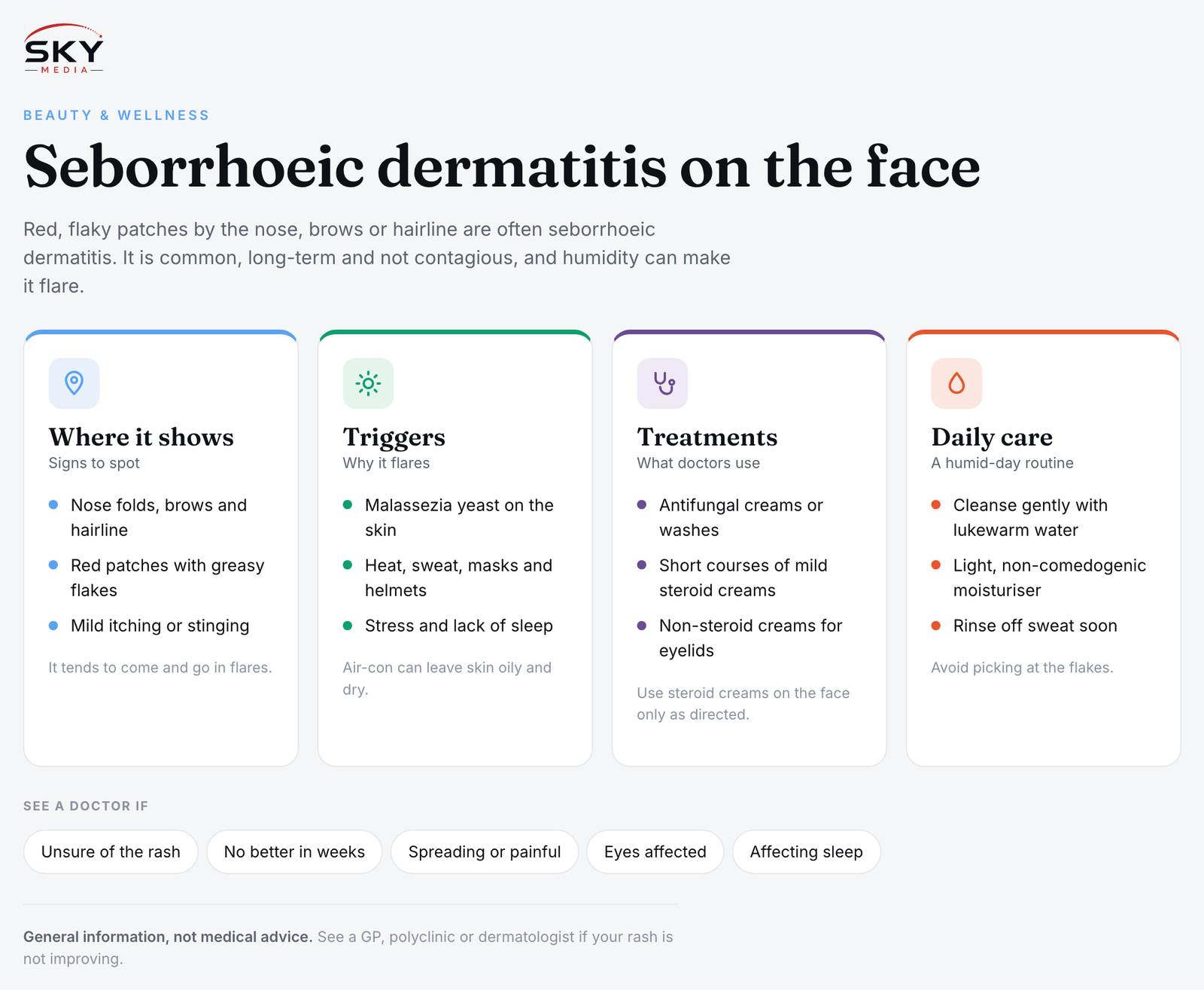
What Seborrhoeic Dermatitis on the Face Looks Like
Seborrhoeic dermatitis favours areas of skin with more oil glands. On the face, the usual spots are:
- The creases beside the nose (the nasolabial folds).
- Eyebrows and the skin between them.
- Along the hairline and around the ears.
- Eyelid margins, sometimes with flakes on the lashes.
- The beard and moustache area in men.
Typical signs include pink or red patches, fine white or yellowish flakes that can look greasy, and mild itching or stinging. On darker skin tones, patches may look lighter or darker than the surrounding skin rather than obviously red. Many people also have dandruff on the scalp at the same time, but some only notice it on the face.
It often follows a pattern of flares and calmer periods, rather than going away for good.
Why It Flares in Singapore’s Humid Weather
Doctors do not fully understand every cause, but a few factors are widely recognised:
- Malassezia yeast. This yeast lives on most people’s skin. In seborrhoeic dermatitis, the skin seems to react to it with inflammation. Many treatments target this yeast.
- Oil production. The condition clusters in oily zones, so anything that increases sebum or traps it can matter.
- Heat, sweat and humidity. Long hours of sweating, wearing masks or helmets, and oily sunscreen can leave skin warm, damp and occluded, conditions some people find set off flares.
- Stress and lack of sleep. Many people notice flares during busy work periods or exams.
- Air-conditioning. Moving between hot outdoors and dry, cold indoor air can leave skin both oily and dehydrated, which may make flaking more visible.
- Other health factors. Some medical conditions and medicines are linked with more severe seborrhoeic dermatitis. A doctor can advise if this applies to you.
How It Differs From Other Facial Rashes
Several facial rashes can look similar, and treatment differs, so getting the right label matters. A doctor may consider:
| Condition | Where it usually appears | Common features |
|---|---|---|
| Seborrhoeic dermatitis | Nose folds, brows, hairline, around ears | Greasy or fine flakes on pink or red skin, often with dandruff |
| Perioral dermatitis | Around the mouth, sometimes nose and eyes | Small bumps, often sparing a thin line next to the lips |
| Rosacea | Cheeks, nose, chin, forehead | Flushing, persistent redness, visible vessels, sometimes bumps |
| Eczema (atopic dermatitis) | Face, neck, skin folds, varies by age | Very dry, itchy skin, often with a personal or family history of allergies |
| Contact dermatitis | Wherever a product touches | Rash after a new skincare item, fragrance or makeup |
If small bumps around your mouth sound more familiar, our guide to perioral dermatitis explains that condition. Note that seborrhoeic dermatitis is different from seborrhoeic keratosis, which is a raised skin growth rather than a rash; see our article on seborrhoeic keratosis if that is what you are dealing with.
Common Treatments Doctors Use
Treatment aims to calm flares and keep the skin settled, not to cure the condition permanently. Your doctor will choose based on how severe it is and where it appears. Common approaches include:
- Antifungal creams or washes that target Malassezia yeast. These are often the first step and may be used regularly to prevent relapses.
- Medicated shampoos used on the face in short contact, sometimes suggested for the beard and brows. Only do this if a doctor or pharmacist advises it, as some ingredients irritate facial skin.
- Mild anti-inflammatory creams for short periods during flares. Steroid creams on the face should be used only as directed, because long or unsupervised use can thin the skin and cause other problems.
- Non-steroid anti-inflammatory creams that some doctors prescribe for sensitive areas like eyelids.
- Gentle eyelid hygiene if the lids are affected, as advised by a doctor or optometrist.
Pharmacists in Singapore can suggest some over-the-counter options and tell you when to see a doctor. Polyclinics and GP clinics can assess the rash and refer you to a dermatologist if needed. Do not use leftover prescription creams from someone else, and do not apply strong products to broken skin without advice.
A Skincare Routine for Humid Days
Alongside medical treatment, gentle daily habits can help many people:
- Cleanse gently, twice a day. Use a mild, non-stripping cleanser and lukewarm water. Harsh scrubs and very hot water often worsen redness.
- Choose lightweight, non-comedogenic moisturiser. Gel or light lotion textures usually suit humid weather better than heavy creams. Patch test new products first.
- Do not skip sunscreen. Look for lighter formulas labelled for sensitive or oily skin, and reapply as needed outdoors.
- Wash off sweat soon. After exercise or a long commute, rinse your face rather than leaving sweat to sit.
- Keep brows, beard and hairline clean. Flakes often collect in hair, so wash these areas as part of your routine.
- Limit triggers you notice. Some people react to heavy oils, fragrance or alcohol-based toners. A simple routine makes it easier to spot what helps.
- Avoid picking flakes. Scratching or peeling can irritate the skin and risk infection.
- Manage stress where you can. Sleep, exercise and downtime are not cures, but they may reduce how often flares appear.
Be cautious with home remedies and trending skincare oils. Some natural oils can feed yeast or irritate skin, and face steaming may make redness worse for some people.
When to See a Doctor
Book an appointment with a GP, polyclinic or dermatologist if:
- You are not sure what the rash is.
- Over-the-counter care has not helped after a few weeks.
- The rash is spreading, very itchy, painful, weeping or crusting.
- Your eyes or eyelids are sore, swollen or your vision is affected.
- It is affecting your sleep, confidence or daily life.
- You have other health conditions or take medicines that affect your immunity.
For babies, a similar condition called cradle cap is common on the scalp; check with your child’s doctor before using any treatment. HealthHub and the Ministry of Health have general health information if you want to read more from official sources.
With the right diagnosis and a calm, consistent routine, most people find facial seborrhoeic dermatitis becomes much easier to manage, even through Singapore’s sticky months.
Frequently Asked Questions
Can I wear makeup if I have facial seborrhoeic dermatitis? Many people can, but choose light, non-comedogenic, fragrance-free products and apply them to calm skin, not raw or weeping patches. Remove makeup gently at the end of the day and clean brushes regularly. If makeup seems to trigger flares, stop and ask your doctor.
Does shaving or trimming my beard help seborrhoeic dermatitis? Some people find a shorter beard makes it easier to clean and to apply treatment, because flakes gather in hair. Keep skin clean and avoid harsh razors on inflamed areas. Ask your doctor or pharmacist what suits you, as responses differ.
Does diet affect seborrhoeic dermatitis? There is no single diet proven to cause or cure it, though some people say certain foods seem to coincide with flares. A balanced diet, good sleep and stress management are sensible. Do not cut out major food groups or take supplements for it without medical advice.
How long before treatment improves the rash, and will it come back? It depends on how severe it is and the treatment your doctor chooses, and many people see improvement within a few weeks. Since the condition tends to flare and settle, it can return, so doctors often suggest ongoing maintenance. See a doctor again if the rash worsens.
Official sources: HealthHub
Further reading: Tinea Versicolor: White Patches on the Skin in Singapore’s Heat