

The move from primary to secondary school is a big milestone, and the posting exercise that follows the PSLE often brings a mix of hope and nerves for families. If you are trying to make sense of secondary one posting singapore parents go through each year, this guide offers a calm overview of how the process generally works and what to think about as a family. Please treat this as a general explanation only. The exact rules, timelines, eligibility conditions, available places and outcomes are set by MOE and can change, so always check the current details on the official MOE channels and with the specific schools you are considering.
How the Process Generally Works
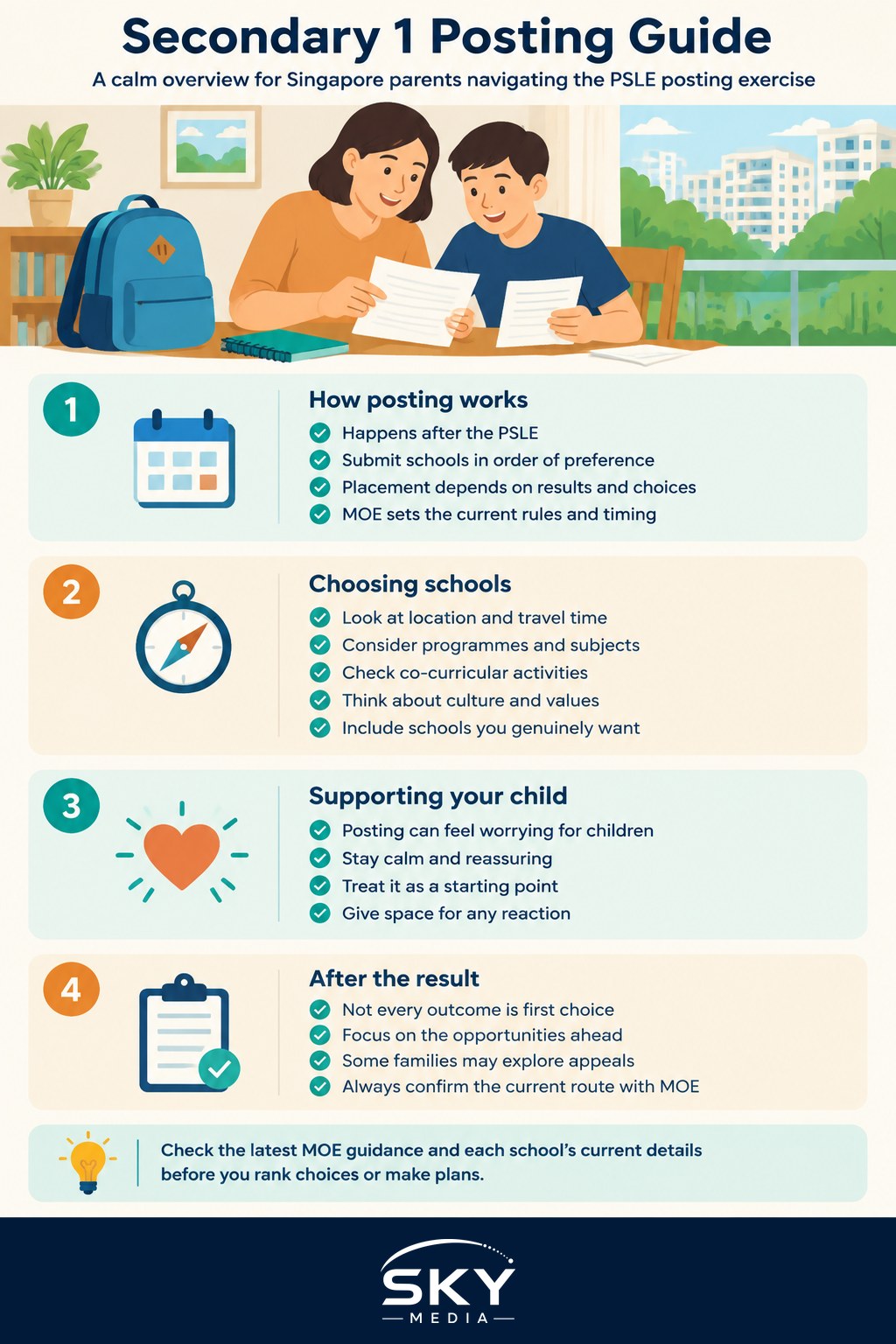
In broad terms, Secondary 1 posting is the exercise that places students into secondary schools after the PSLE. Students and their families submit a list of school choices in order of preference, and posting is then carried out based on each student’s results together with those stated choices. The general principle is that students are considered for schools in the order they listed, according to how they did, so both the choices you make and the results play a part.
Because the details, such as how choices are submitted, how many schools you may list, the cut-off information published, and the timeline, are set by MOE and can be updated from year to year, it is important not to rely on old advice from friends or forums. What was true a few years ago may have changed. The safest habit is to read the current guidance directly from MOE when the exercise opens, and to attend any briefings your child’s primary school offers.
It also helps to understand the wider school landscape before you rank choices. Knowing the difference between the various pathways and school types makes your list more thoughtful. If you would like a broader picture, the Singapore school system explained is a useful starting point, and the transition to secondary school covers what the move itself feels like for a young teen.
What to Consider When Choosing Schools
Choosing and ranking schools is where families have the most say, so it is worth doing thoughtfully rather than in a rush. Consider a spread of factors rather than one alone. Location and daily travel time matter more than people expect, because a long commute affects sleep, energy and family routines for years. Think about the programmes and subjects a school offers, its co-curricular activities, and its overall culture and values, since your child will spend formative years there.
Talk with your child about what they enjoy and where they think they would settle in well. A school that fits your child’s interests and temperament often serves them better than one chosen only for its name. Open houses, school websites and conversations with current families can give you a feel for each place. For a structured way to weigh these factors, choosing a secondary school walks through the considerations in more detail.
When ranking, it is generally wise to list schools you genuinely want, in honest order of preference, and to include a realistic range rather than only the most sought-after options. Because places and demand vary each year, avoid assuming any single outcome. Focus on building a list that you would be comfortable with across different scenarios. Do not rely on rumoured cut-off points or quotas circulating informally, since these can be inaccurate or out of date. Refer only to figures published officially.
Supporting Your Child Through the Wait and the Result
The posting period can be an anxious stretch for children, who may compare themselves with classmates or worry about being separated from friends. Your steadiness helps enormously. Remind your child that a posting is a starting point, not a verdict on their worth, and that students grow and thrive in many different schools. Keeping conversations warm and low-pressure matters as much as any logistics.
When the result comes, give your child space to feel whatever they feel, whether that is delight, relief or disappointment. If the outcome is not what they hoped for, focus gently on the opportunities ahead rather than dwelling on what might have been. Many students settle happily into schools that were not their first choice. If your family is considering options after the result, there are formal avenues to understand, and you can read about appealing a school posting to understand how that route works, while always confirming the current rules with MOE and the schools involved.
A Calm, Informed Approach
The posting exercise can feel like a lot, but it becomes far more manageable when you separate what you can control from what you cannot. You can research schools well, rank your choices thoughtfully, and support your child emotionally. The precise rules, dates and outcomes rest with MOE and the schools, so lean on official sources for those and treat everything else as background. Approach it with calm preparation and an open mind, and you will help your child step into this new chapter feeling supported, whatever the posting brings.
Official sources: Ministry of Education (MOE)
Further reading: How PSLE Tie-Breakers Decide Secondary 1 Posting