
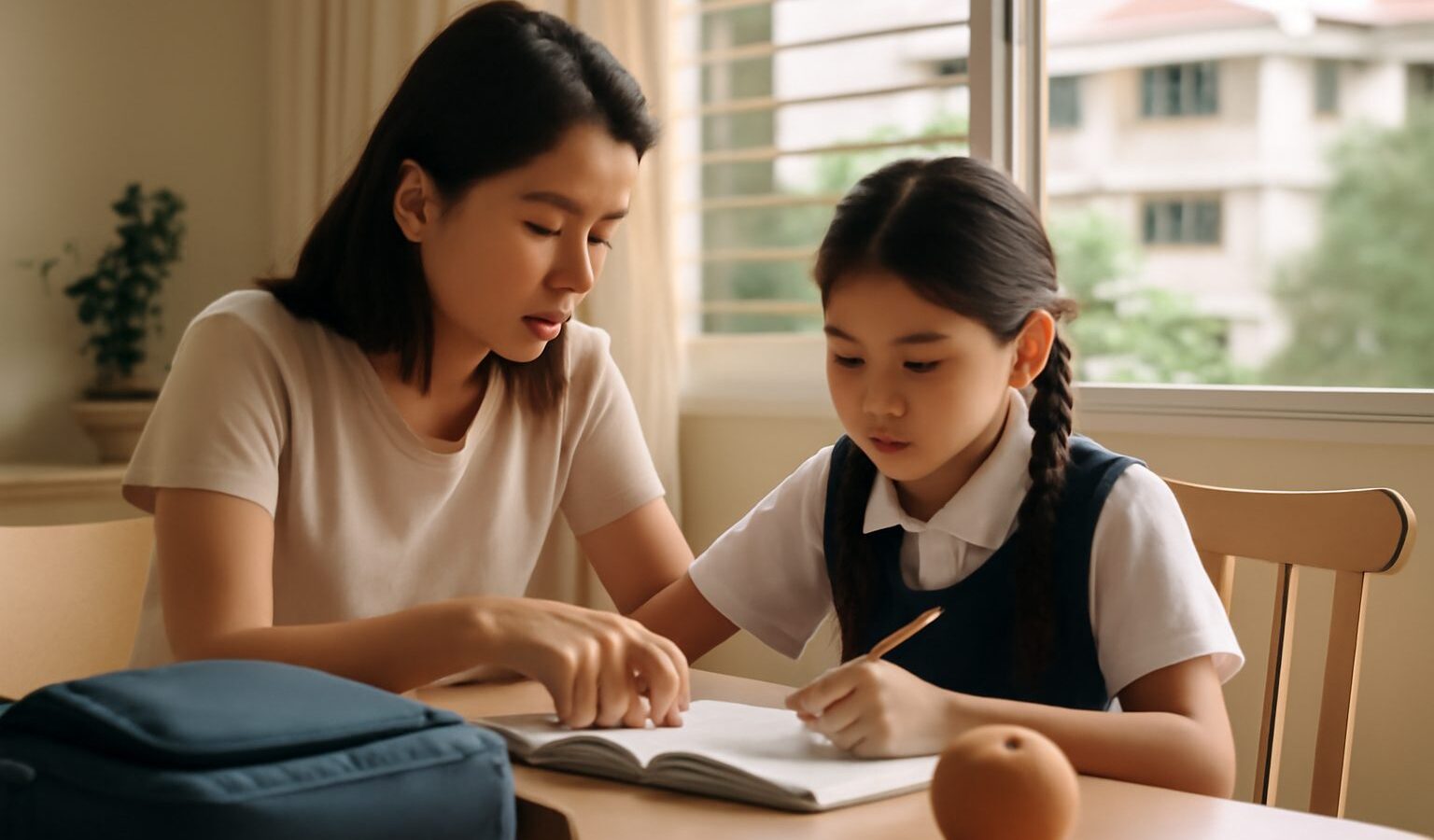
If you are new to local schooling, or simply trying to picture how it all fits together, the singapore school system can feel like a maze of acronyms and stages. This guide walks through the main parts calmly and plainly, from the early years to post-secondary study, so you can see the shape of the whole journey. It is general information only. Education policy changes over time, so please verify current rules, dates and details with the Ministry of Education (MOE) or the school directly.
How the stages fit together
Formal schooling in Singapore is organised into clear phases that most children move through in sequence. Understanding the order first makes the details easier to absorb.
- Pre-school: Kindergartens and childcare centres for younger children, run by a mix of operators, before Primary 1.
- Primary school: Six years, from Primary 1 to Primary 6, ending with the Primary School Leaving Examination (PSLE).
- Secondary school: Typically four to five years, leading to national examinations.
- Post-secondary: Junior colleges (JC), Millennia Institute, polytechnics, and the Institute of Technical Education (ITE).
- Tertiary and beyond: The local universities, along with continuing and adult education.
Schooling is conducted mainly in English, with every student also studying a Mother Tongue Language such as Chinese, Malay or Tamil. This bilingual policy is a defining feature of the system and runs through every stage.
Primary school and the PSLE
Primary education lasts six years and forms the foundation. The early years focus on literacy, numeracy and building good habits, while the later years prepare students for the PSLE at the end of Primary 6.
The PSLE is a national examination that helps place students into secondary school. The way PSLE results are reported and used has been revised over the years, so the exact scoring bands and how they map to school places are best checked directly with MOE, since older descriptions you may find online can be out of date. What has stayed constant is the general purpose: to give a broad sense of a student’s readiness and to guide the transition to secondary school.
It is worth keeping perspective here. The PSLE is one milestone, not a final verdict, and there are many routes forward regardless of the outcome.
Subject-based banding and Full Subject-Based Banding
For many years, secondary students were sorted into separate courses, an approach often called streaming. Over time this has been reshaped. Under Full Subject-Based Banding (FSBB), students take individual subjects at different levels according to their strengths in each subject, rather than being placed wholesale into a single fixed stream.
In practice this means a student might take one subject at a more demanding level and another at a more foundational level, with the mix reviewed as they progress. Because this area has changed and continues to be refined, treat the description above as the general idea and confirm the current arrangements with MOE or the secondary school. The intent behind the shift is to recognise that young people rarely have the same ability across every subject.
Secondary school and the routes into it
Secondary school usually spans four to five years and ends with national examinations that open doors to post-secondary options. Students can enter secondary school through the regular posting exercise, which uses PSLE results, or through the Direct School Admission (DSA) route, which lets schools admit some students based on talents and achievements in areas such as sport, the arts or specific academic domains before results are known.
Below is a simple comparison of the main post-secondary pathways that follow secondary school. Availability, entry requirements and course details change, so verify specifics with each institution.
| Pathway | Typical focus | Usual length | Leads towards |
|---|---|---|---|
| Junior college / Millennia Institute | Academic, exam-focused | 2 to 3 years | University admission |
| Polytechnic | Applied, industry-linked diplomas | 3 years | Employment or university |
| ITE | Hands-on technical and vocational skills | 1 to 3 years | Employment or further study |
None of these routes is a dead end. Polytechnic and ITE graduates progress to further study, and students move between paths as their goals develop.
Post-secondary and tertiary education
After secondary school, students choose the environment that suits how they learn. Junior colleges and Millennia Institute lean towards academic study and preparation for university. Polytechnics offer three-year diplomas with a practical, project-based flavour across many fields. ITE provides strong technical and vocational grounding with clear progression options.
From these, students may go on to the local universities, which include the National University of Singapore (NUS), Nanyang Technological University (NTU), Singapore Management University (SMU), the Singapore University of Technology and Design (SUTD), the Singapore Institute of Technology (SIT), and the Singapore University of Social Sciences (SUSS). Each has its own admission requirements and character, and adult learners can study through several of these routes too. Lifelong learning is supported nationally through SkillsFuture, workforce qualifications and the resources of the National Library Board (NLB).
A calm way to think about the whole picture
It is easy to feel that every decision is high stakes, especially around the PSLE and school choice. In reality, the system is built with multiple entry points, second chances and bridges between paths. A student who thrives in a hands-on setting is not behind; they are simply on a different, equally valid route.
A few steady principles help:
- Follow the child’s strengths. The move towards subject-based approaches exists precisely because talents vary by subject.
- Check the source. Cut-off details, scoring and admission rules change, so rely on MOE and the schools rather than older summaries.
- Keep the long view. Employers and universities value many kinds of achievement, and paths often converge later on.
Understanding the singapore school system is less about memorising acronyms and more about seeing the flow: a foundation in primary school, a widening of choices in secondary school, and several routes onward that all lead somewhere worthwhile.
Explore more
For the milestones within this journey, see our guides to understanding the PSLE in Singapore and subject-based banding explained. When it is time to look ahead, choosing a secondary school in Singapore walks through the next big decision step by step.
Related across Sky Media: Helping Your Child Adjust from the China School System