
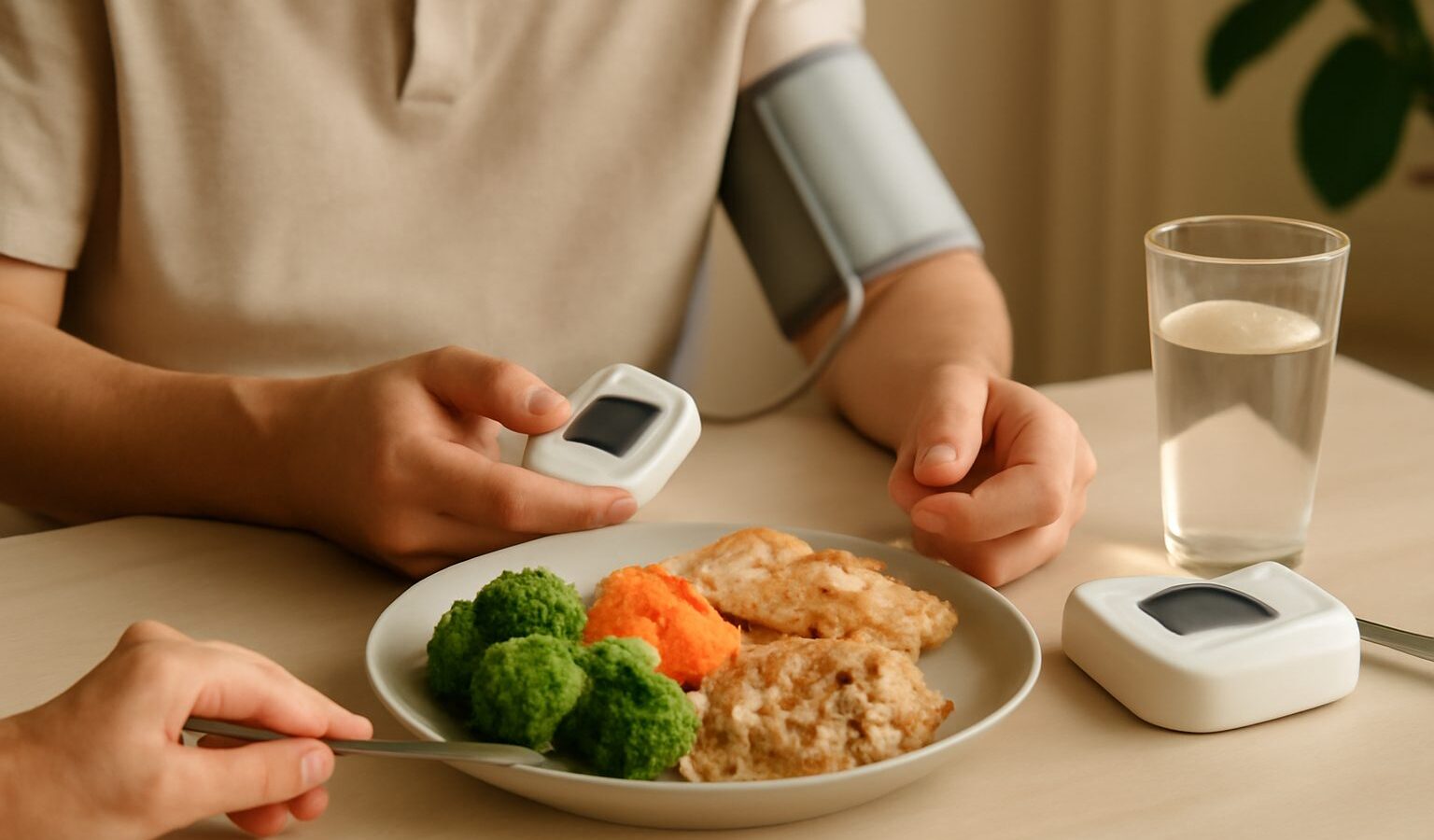
Many families in Singapore discover the same problem at the same time: a parent comes home from a polyclinic review with a diabetes diagnosis, a high blood pressure reading, or both, and suddenly every meal feels like a decision. A good senior meal plan in Singapore does not need special recipes or expensive products. It needs a simple weekly structure that controls sugar and salt together, fits the food your parent already enjoys, and works on the days nobody has time to cook.
This guide is general information, not medical advice. Your parent’s doctor, polyclinic care team or a dietitian should set any specific targets, especially if your parent takes medicines for blood sugar or blood pressure, since food changes can affect how those medicines work.
Why Diabetes and Hypertension Need One Plan, Not Two
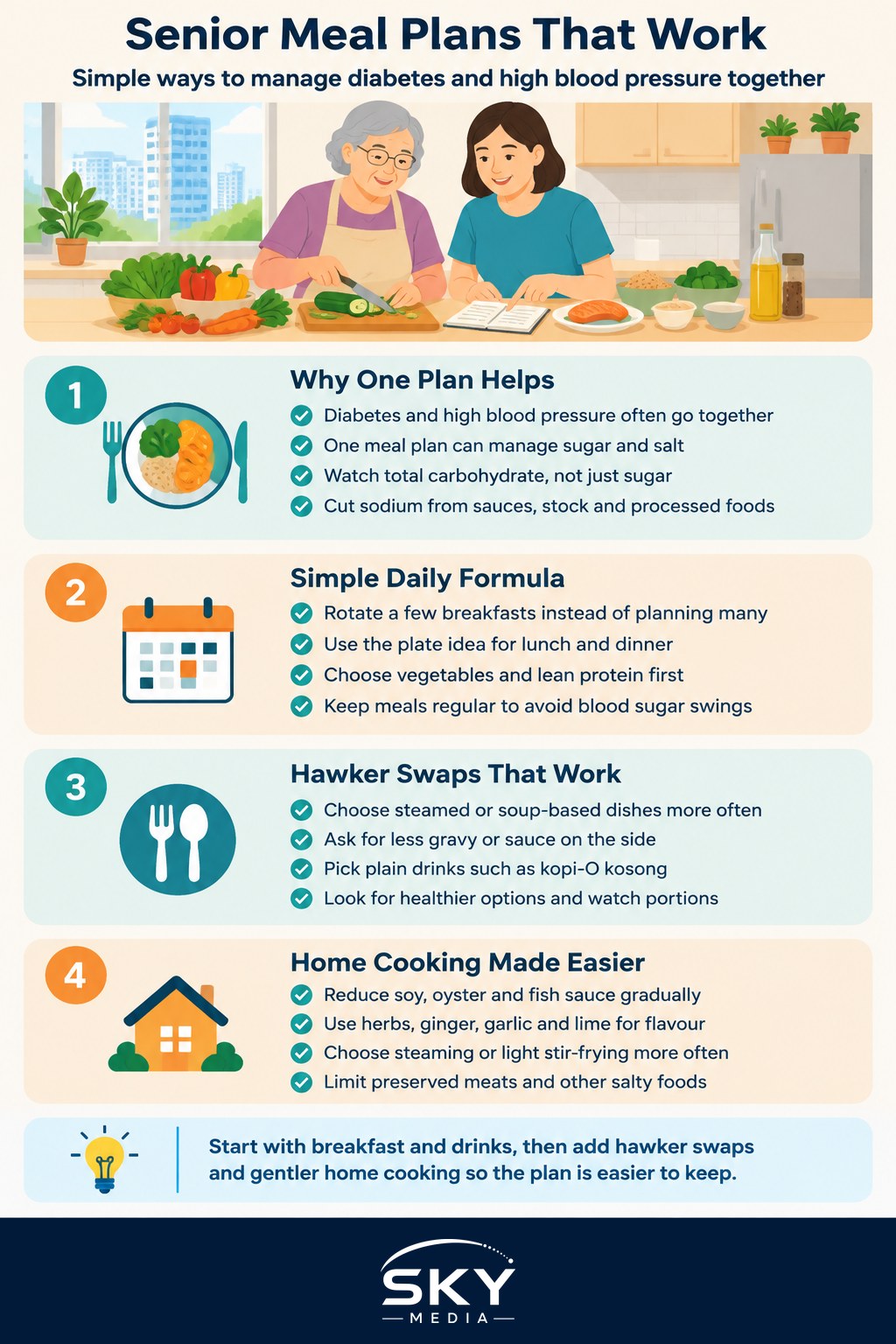
Diabetes and high blood pressure often appear together in older adults, and the advice for each can seem to pull in different directions if you treat them separately. Swapping rice for salted fish and braised meat helps blood sugar but raises sodium, while adding sweet sauces to replace salt does the reverse.
A combined plan works from a few shared principles:
- Watch total carbohydrate, not just sugar. White rice, noodles, bread, kueh and sweet drinks all raise blood sugar. Portion size matters as much as the type.
- Cut sodium at the source. Most salt in a Singapore diet comes from sauces, stock, gravy, preserved foods and processed meats rather than the salt shaker.
- Fill up with vegetables and lean protein. These keep a meal satisfying without adding much sugar or salt.
- Keep meals regular. Skipping breakfast then eating a large dinner makes blood sugar swing more, and is harder on seniors who take medication.
The Health Promotion Board’s My Healthy Plate model is a useful starting point that most polyclinics already use: half the plate vegetables and fruit, a quarter whole grains, and a quarter protein. For a parent managing both conditions, the main adjustment is choosing lower-salt versions of each part.
Building a Simple Weekly Senior Meal Plan
You do not need to plan 21 different meals. Most families do better with a rotating set of breakfasts, a short list of safe hawker orders, and four or five home dinners that repeat.
Breakfast (pick two or three and rotate):
– Unsweetened oats cooked with low-fat milk, topped with a little fruit
– Wholemeal bread with egg and sliced tomato or cucumber
– Plain porridge with a boiled egg and vegetables instead of salted egg, century egg or fried dough sticks
– Kopi or teh “kosong” (no sugar) or “siew dai” (less sugar), moving towards kosong over time
Lunch and dinner (the plate formula):
– A fist-sized portion of brown rice, mixed rice or whole grain noodles
– A palm-sized portion of fish, chicken without skin, tofu or eggs
– At least two portions of vegetables, ideally one leafy and one other
– Clear soup without extra stock cubes, or plain water
Snacks, only if your parent’s doctor suggests them:
– A small fruit such as an apple, guava or orange
– A handful of unsalted nuts
– Plain yoghurt without added sugar
Keep a short written plan on the fridge so everyone who cooks serves the same kind of meal.
Hawker and Kopitiam Swaps That Work for Both Conditions
Many seniors eat at the same coffee shop daily. Banning hawker food rarely lasts, but teaching a few standard orders does. The table below shows common swaps.
| Usual order | Better swap | Why it helps both conditions |
|---|---|---|
| Chicken rice with chilli and dark soy | Steamed chicken (no skin) with plain or half rice, extra vegetables, sauce on the side | Less fat and refined carbohydrate, and the diner controls how much salty sauce goes on |
| Laksa or curry noodles | Fish soup with bee hoon, ask for less soup base | Removes coconut milk and much of the salty gravy |
| Economic rice with three meat dishes and gravy | One lean protein, two vegetable dishes, no gravy, brown rice if available | Shifts the plate towards vegetables and cuts sodium from gravy |
| Fried carrot cake or char kway teow | Thunder tea rice or yong tau foo in clear soup with non-fried items | Less oil and sweet sauce, more vegetables |
| Kopi or teh with condensed milk | Kopi-O kosong or teh-C kosong | Cuts added sugar sharply |
Two habits make most hawker meals better: ask for “less gravy” or “sauce on the side”, and do not drink all of the soup, since much of the salt sits there. Look for the Healthier Choice Symbol on packaged foods and the healthier options some stalls display, such as wholegrain or lower-sugar choices, but still check portion size.
Making Home Cooking Lower in Salt and Sugar
Home cooking gives you the most control, and small, steady changes are easier for an older palate to accept than a sudden switch.
- Reduce sauces gradually. Cut soy sauce, oyster sauce and fish sauce by a little each week. Taste adapts over several weeks.
- Use lower-sodium versions. Many supermarkets carry reduced-sodium soy sauce and salt alternatives. Ask your parent’s doctor before using potassium-based salt substitutes, as they are not suitable for everyone, particularly people with kidney problems or on certain medicines.
- Build flavour without salt. Ginger, garlic, spring onion, lemongrass, pepper, lime and herbs add taste with no sodium.
- Change cooking methods. Steaming, stir-frying with a little oil, and braising with fresh ingredients instead of preserved ones all help.
- Limit preserved and processed foods. Salted fish, preserved vegetables, luncheon meat, sausages and fish balls are often high in sodium.
- Be careful with “healthy” sweet foods. Some herbal drinks, packaged soya bean milk and cereal drinks contain added sugar. Read the label or choose unsweetened.
If your parent has trouble chewing or swallowing, adapt textures rather than abandoning the plan. Our guide on making family meals easier for seniors with dysphagia covers soft and minced options that can still follow the same plate formula.
Practical Routines When You Are Not the One Cooking
Many adult children plan meals for parents who live alone, eat with a helper, or rely on delivered food. The plan still works if others can follow it.
- Write down the rules simply. One page: plate formula, the five standard hawker orders, drinks without sugar, sauces on the side.
- Brief whoever cooks. Show the helper or relative how much rice to serve and which sauces to reduce.
- Set up deliveries thoughtfully. If you use tingkat or meal delivery services, ask whether they offer lower-sodium or diabetic-friendly options and check the actual menus. Our overview of meal delivery and grocery help for seniors explains the types of services available.
- Keep safe snacks visible. Put fruit and unsalted nuts where biscuits used to be.
- Check in after reviews. When your parent’s medication or targets change at a polyclinic or specialist visit, update the plan.
When to Get Professional Help
A meal plan supports medical care but does not replace it. Speak to your parent’s doctor or ask for a dietitian referral through the polyclinic if:
- Your parent has frequent dizziness, shakiness or confusion, which can signal low blood sugar in people on certain medicines
- Home blood pressure or blood sugar readings stay outside the range their doctor gave
- Your parent is losing weight without trying or has a poor appetite
- There are other conditions to consider, such as kidney disease, which changes advice on protein, potassium and salt
For a deeper look at how diabetes care changes with age, read our guide on managing diabetes in older age. HealthHub and the Health Promotion Board also publish current guidance on salt and sugar intake, and recommended figures can be updated, so check their websites rather than relying on old leaflets.
The most effective senior meal plan is the one your parent actually follows. Start with breakfast and drinks, add the hawker swaps, then work on home cooking. Steady, familiar changes usually last longer than a perfect plan that feels like a punishment.
Frequently Asked Questions
Is brown rice always better than white rice for a diabetic senior? Brown rice generally has more fibre, which many people find helps with fullness, but portion size still matters most. Rice of any type raises blood sugar, so keep to a fist-sized serving and ask the doctor or dietitian for targets.
How can a senior with diabetes eat out at a hawker centre without spiking sugar? Pick a lean protein, extra vegetables and a smaller carbohydrate portion, and ask for sauce or gravy on the side. Choose kosong drinks, and avoid finishing all the soup, since much of the salt sits there.
Can my parent use salt substitutes to cut sodium? Ask the doctor first. Many salt substitutes use potassium, which is unsuitable for people with kidney problems or on certain medicines. Ginger, garlic, lime, pepper and herbs are safer ways to add flavour without sodium.
What snacks are safe between meals for an elderly person with diabetes? Small portions of fruit, a handful of unsalted nuts or plain unsweetened yoghurt are common choices, but only if the doctor suggests snacking. Keep biscuits and sweet drinks out of sight and the safer options easy to reach.
Does my parent need a dietitian even with a meal plan at home? A dietitian is worth seeing if readings stay out of range, weight drops unintentionally, appetite is poor or there are other conditions such as kidney disease. Your parent’s polyclinic doctor can refer you for tailored advice.
Official sources: Health Promotion Board