
The Singapore Biennale is the country’s largest recurring showcase of contemporary art, and it can feel overwhelming the first time. Works are spread across several sites, many pieces are installations or videos rather than paintings on a wall, and the curatorial theme can sound abstract. This guide explains how the Singapore Biennale is usually organised, how to plan a route that does not exhaust you, and a few simple ways to read the art once you are standing in front of it.
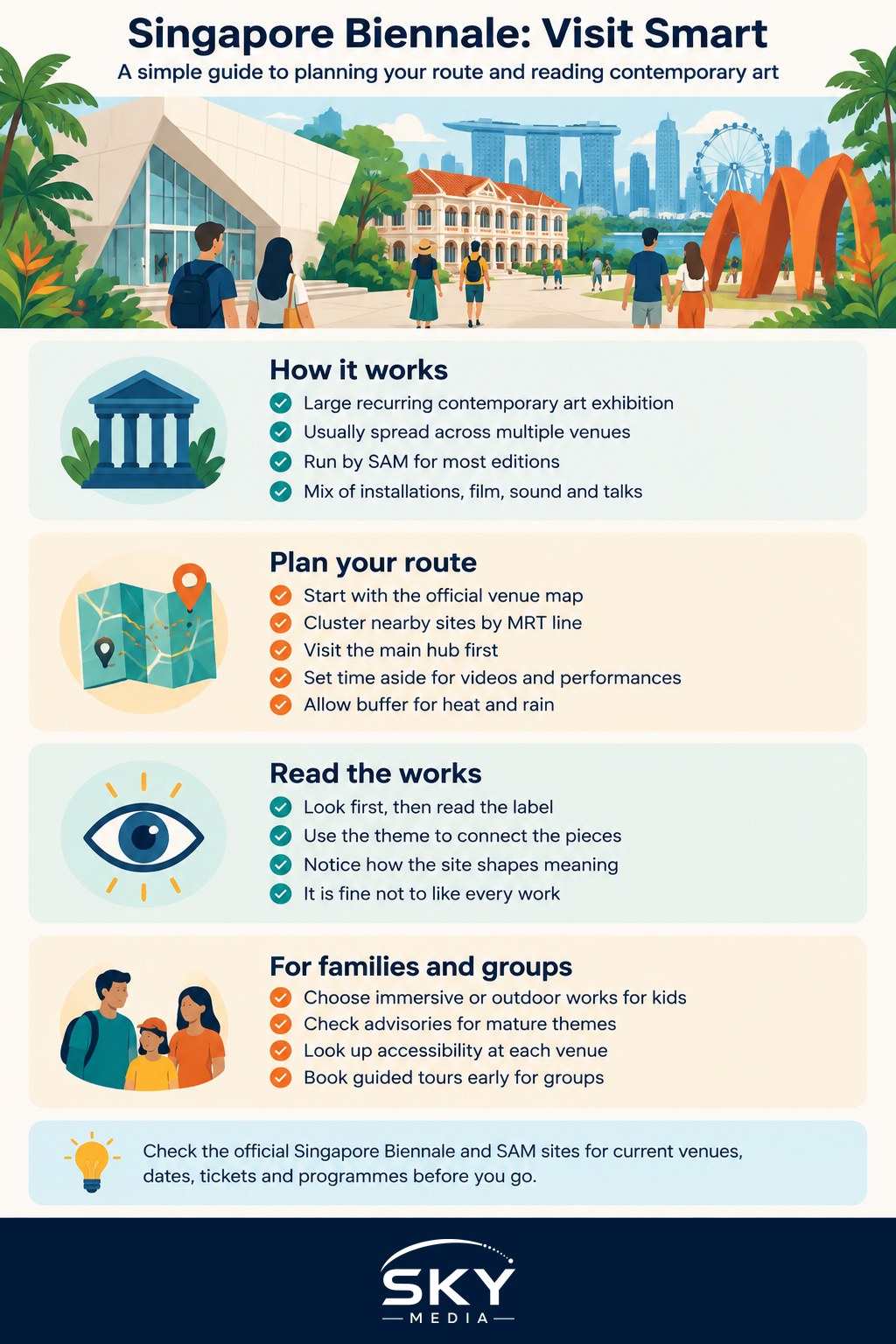
How the Singapore Biennale Is Organised
A biennale is a large exhibition held roughly every two years, though in practice the gap between Singapore editions has varied. The first Singapore Biennale was held in 2006, and the Singapore Art Museum (SAM) has been the organiser for most editions since. Each edition has its own artistic direction, usually a team of curators or an artistic director, who chooses a theme and invites artists from Singapore, Southeast Asia and beyond.
A few features tend to repeat from edition to edition:
- Multiple venues. The exhibition is rarely in one building. Expect a main hub, often at SAM’s own space at Tanjong Pagar Distripark, plus satellite sites that can include heritage buildings, public spaces, parks and neighbourhood locations.
- A long run. Editions typically run for several months, which gives you time to visit in instalments rather than cramming everything into one day.
- A mix of formats. Installations, film and video, sound works, performances, participatory projects and talks all sit alongside more familiar objects.
- Public programmes. Guided tours, artist talks, workshops and school programmes are usually scheduled through the run.
Because venues, dates, ticketing and opening hours change with every edition, always check the official Singapore Biennale and SAM websites before you go. Some sites have been free to enter in past editions while others needed a ticket, so do not assume.
Planning Your Route Across Venues
The biggest mistake first-time visitors make is trying to see everything at once. Treat the Biennale like a small festival and plan in clusters.
- Start with the map. Once the official venue list is out, group sites that sit close together or along one MRT line. A city-centre cluster and a heartland cluster rarely work well on the same afternoon.
- Visit the main hub first. The hub usually holds the largest concentration of works plus wall texts that introduce the theme. Seeing it first gives you a framework for everything else.
- Check timed elements. Performances, screenings with fixed start times and outdoor works that are best seen at dusk need to be slotted into your plan, not stumbled upon.
- Budget time for video. A single video work can run 20 minutes or more. Note durations on the wall label and decide which ones you will sit through in full.
- Leave buffer for heat and rain. Outdoor works and walks between sites can be tiring in Singapore weather. Carry water and an umbrella, and plan indoor stops in between.
If you are visiting from overseas or timing a wider trip, our guide to the best time to visit Singapore helps you weigh weather and crowds against the exhibition dates.
Choosing How Many Visits to Make
| Visit style | Best for | What to expect |
|---|---|---|
| One focused day | Tourists or busy schedules | Main hub plus one nearby satellite; skim long videos |
| Two or three half days | Most locals | Cover the hub, then one cluster per visit at an easy pace |
| Repeat visits through the run | Art lovers, students | See every venue, catch talks and performances, revisit favourites |
| Guided tour plus self-guided return | First-timers who want context | Tour gives the theme; second visit lets you linger |
How to Read Contemporary Art Without Feeling Lost
Contemporary art often asks questions rather than offering a pretty picture, and that is fine. You do not need an art history degree to get something from the Biennale. Try this simple sequence at each work:
- Look first, read second. Spend a minute with the work before reading the label. What materials do you see? Is there sound, movement, smell or text? How does it make you feel in the space?
- Then read the label. Wall texts usually give the artist’s background, the materials and a short note on intent. Ask yourself whether the explanation changes what you saw.
- Connect it to the theme. Each edition’s theme is the thread linking works across venues. Ask how this piece fits, or pushes against, that idea.
- Notice the site. Works placed in heritage buildings or public spaces often respond to the history or use of that place. The location is part of the meaning.
- Allow yourself not to like it. Some works will move you and some will leave you cold. Noting why is part of the experience.
Many works draw on Southeast Asian histories, migration, ecology, labour and belief systems, so a little curiosity about the artist’s country and context goes a long way. Exhibition guides, free audio tours and QR codes beside works, where offered, are worth using.
Visiting With Children, Groups and Older Relatives
The Biennale can be a good family outing if you choose well. Large immersive installations, participatory works and outdoor pieces tend to engage children more than long videos. Some works may deal with mature themes, so read advisories at the entrance of rooms and decide what suits your family.
For older relatives or anyone with mobility needs, check each venue’s accessibility information on the official site. Heritage buildings may have stairs, uneven floors or limited seating. Plan shorter visits with rest stops, and use taxis or ride-hailing between scattered sites instead of long walks.
Groups such as schools, community clubs and corporate teams can often book guided tours through the organiser. Booking slots fill up, so arrange early in the run.
Making the Most of Your Biennale Visit
A few practical habits make the experience smoother:
- Photography rules vary by work. Look for signs. Flash is often not allowed, and some videos cannot be filmed.
- Do not touch unless invited. Participatory works will say so clearly. Everything else is fragile, even if it looks like everyday material.
- Keep bags small. Some venues may ask you to deposit large bags.
- Follow official channels. Programme changes, extended hours and special events are announced on the Biennale’s website and social media.
- Pair it with other galleries. If the Biennale sparks your interest, the permanent collection and regular shows at SAM are worth a return trip. See our Singapore Art Museum guide for what to expect between editions.
If you are planning a low-cost day out around a Biennale visit, combine free venues with other free indoor places to visit in Singapore nearby.
Why the Biennale Is Worth Your Time
The Singapore Biennale is one of the few chances to see a large body of new regional art in one season, often in spaces that are not normally open as galleries. Even a single well-planned visit gives a sense of what artists in the region are thinking about right now. Plan your route in clusters, give the main hub your freshest energy, take time with the works that grab you and let the rest go. Check the official website for the current edition’s venues, dates and programmes, and treat the whole run as an invitation to come back.
Explore more: How to Visit Singapore on a Budget