
Every country tells a short story about itself through the emblems it chooses, and the Singapore national symbols do exactly that. In a compact set of images, colours and words, they carry ideas about equality, ambition and a young nation finding its place. Whether you grew up singing the anthem at morning assembly or you have just arrived and keep spotting a lion-headed fish on souvenirs, this guide walks through what each symbol is and what it means, clearly and respectfully.
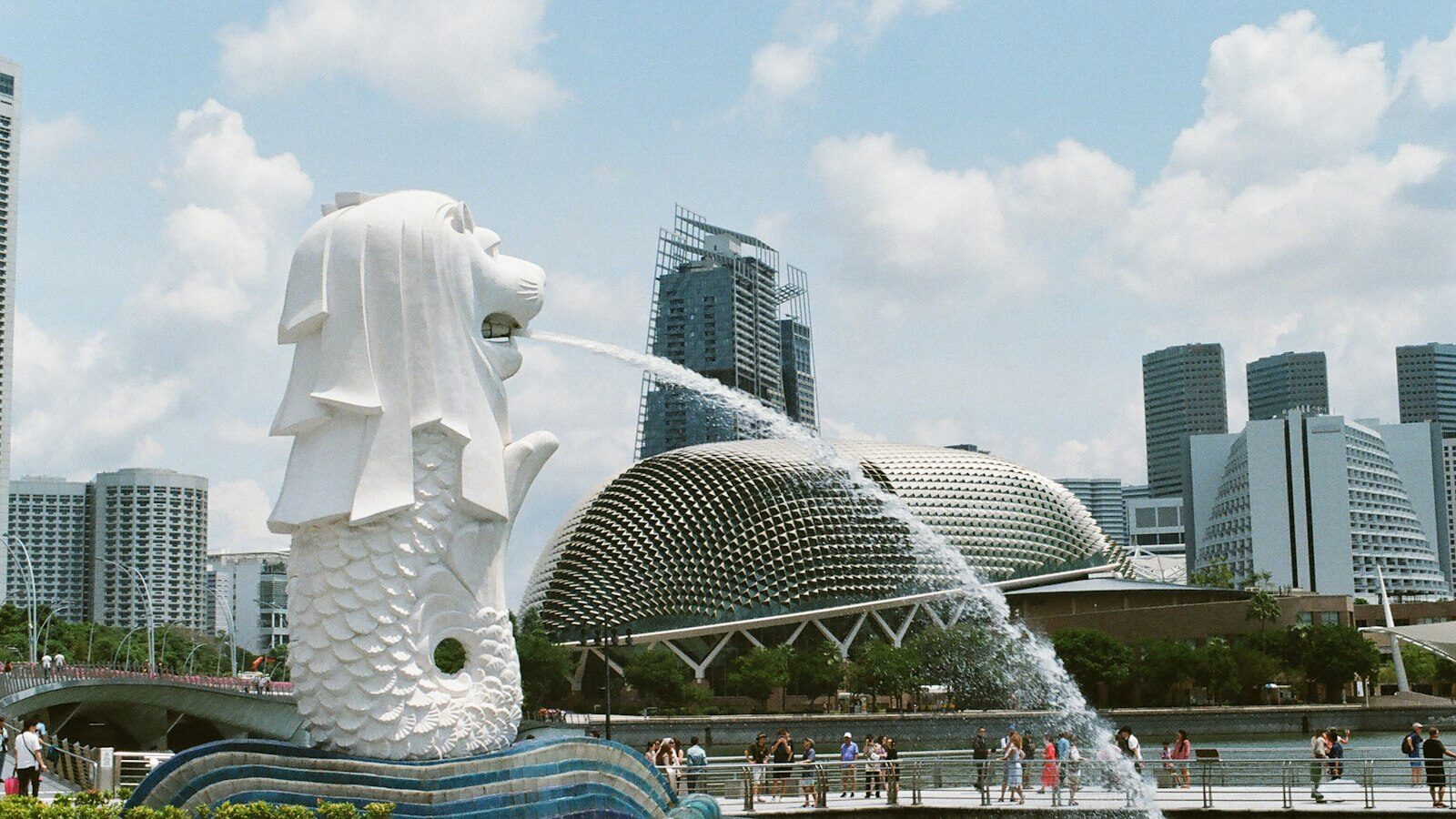
Some of these emblems are official state symbols with rules around their use. Others, like the famous water-spouting statue by the bay, are beloved icons rather than formal state emblems. Knowing the difference is part of understanding the culture.
The National Flag
The national flag is the most visible of all the symbols, flown from flats, schools and public buildings, and especially during the National Day season. It has two equal horizontal bands: red on top, white below. In the upper-left corner sit a white crescent moon and five white stars arranged in a circle.
Each element has meaning:
- Red stands for universal brotherhood and the equality of all people.
- White signifies purity and virtue.
- The crescent moon represents a young nation on the rise.
- The five stars stand for the nation’s ideals: democracy, peace, progress, justice and equality.
There are respectful conventions around the flag. It is typically flown from a proper flagpole or displayed correctly rather than used as everyday decoration, and there is guidance on how and when it may be displayed by the public. If you plan to hang one, it is worth checking the current rules, since the details are set out by the authorities.
The State Crest (Coat of Arms)
The state crest, also called the coat of arms, is the more formal cousin of the flag. You will see it on official documents, government correspondence and the reverse of Singapore coins.
At its centre is a red shield bearing the same white crescent and five stars from the flag. The shield is supported on one side by a lion and on the other by a tiger. The lion represents Singapore itself, echoing the Lion City name, while the tiger nods to the nation’s historical links with the Malayan peninsula. Beneath them, a blue ribbon carries the national motto in Malay, “Majulah Singapura,” which means “Onward Singapore.”
The National Anthem: Majulah Singapura
That same phrase gives the national anthem its name. “Majulah Singapura” was composed by Zubir Said and is sung in Malay, the national language, regardless of the singer’s own mother tongue. This choice reflects the country’s multicultural make-up and its shared heritage in the region.
The anthem is performed at official occasions, in schools and at the start of national celebrations. Its lyrics are a call to unity and progress, urging Singaporeans to move forward together toward happiness and success. Singing it in the original Malay, rather than a translation, is part of the tradition and a small daily act of shared identity across communities.
A useful way to remember the motto: the anthem, the crest and the country’s outlook all point the same direction, onward.
The National Flower: Vanda Miss Joaquim
Singapore’s national flower is the national flower Vanda Miss Joaquim, a hybrid orchid chosen in 1981. Orchids were selected for their hardiness and vibrant colour, qualities the nation likes to see in itself, and this particular bloom stood out for its resilience and its ability to flower freely all year round.
The flower is named after Agnes Joaquim, who is credited with cultivating the hybrid in her garden in the late nineteenth century. It is a natural cross between two orchid species, and its delicate pink and purple petals have since appeared on stamps, currency and countless official gifts. As a symbol, it captures a quiet message: something beautiful and enduring can be grown here, with care, from a mix of origins.
Why an orchid?
Orchids thrive in Singapore’s warm, humid climate, and the country has a long horticultural love affair with them. Choosing a hybrid, rather than a single wild species, also gently reflects a nation built from many roots.
The Lion Head Symbol
The Lion Head is a simpler, more modern emblem, introduced as an alternative national symbol that citizens and organisations could use more freely than the state crest. It shows a stylised red lion’s head, and it is designed to represent courage, strength and excellence.
Its five elements each carry meaning. The mane is often described in terms of the same five ideals found in the flag’s stars, while the lion itself ties back to the Lion City story. Because the rules around using the full coat of arms are strict, the Lion Head gives communities a dignified way to show national pride on merchandise, uniforms and community materials.
The Merlion and the Lion City Legend
Perhaps the most photographed icon of all is the merlion, the half-lion, half-fish creature that pours water into Marina Bay. It is important to be clear: the Merlion is a tourism icon, not an official state symbol like the flag or crest. It was designed in the 1960s as an emblem for the country’s tourism board and has since become a friendly, unofficial mascot.
Its design tells two stories at once. The fish body recalls Singapore’s origins as a humble fishing village, “Temasek,” meaning sea town. The lion head refers to the Lion City legend.
According to that legend, a prince from the Srivijayan world landed on the island long ago and reportedly saw a creature he took to be a lion. He named the place “Singapura,” from Sanskrit words meaning Lion City. Historians note that lions were not native to the island, so what he actually saw is open to friendly debate, but the name endured, and with it a lasting emblem.
Today the main Merlion statue stands at Merlion Park near the bay, a popular stop for visitors. There are a handful of official Merlion statues around the island, and the figure remains one of the first things newcomers photograph.
The National Pledge
The national pledge is a set of words, not an image, but it belongs firmly among the country’s symbols of identity. Written by S. Rajaratnam in 1966, it is recited daily in schools and at community and National Day events.
The pledge asks citizens to commit, regardless of race, language or religion, to build a democratic society based on justice and equality, so as to achieve happiness, prosperity and progress for the nation. It is customary to recite it with the right fist held over the heart. More than any statue, the pledge distils the country’s founding aspiration: unity across differences.
Other Emblems and Symbols
A few more markers round out the national identity:
- The national colours, red and white, echo the flag and appear everywhere during the National Day season.
- The Vanda Miss Joaquim and other orchids feature heavily in official diplomatic gifts and in the practice of naming new orchid hybrids after visiting dignitaries.
- The state animals and flora of local significance, from the native fauna of the nature reserves to the roadside rain trees, are often cited as informal emblems of a “City in Nature.”
Quick reference: official versus iconic
- Official state symbols include the national flag, the state crest, the national anthem, the national flower, the Lion Head and the national pledge.
- The Merlion, though world famous, is best understood as a cherished tourism icon rather than a formal state symbol.
Bringing It Together
Look at the Singapore national symbols side by side and a single theme keeps surfacing: a young, mixed, ambitious nation choosing images of unity and forward motion. The crescent rising, the stars of shared ideals, the hardy orchid, the courageous lion, and the pledge’s promise of equality all say the same thing in different languages. The Merlion adds a playful, human touch, reminding everyone that even a serious young country can enjoy a good story about a legendary lion.
For the exact, current rules on displaying the flag or using the state emblems, it is always best to check the official government guidance, since these details are set by the authorities and can be updated over time.
Explore more: Singapore history timeline and National Day Singapore guide