
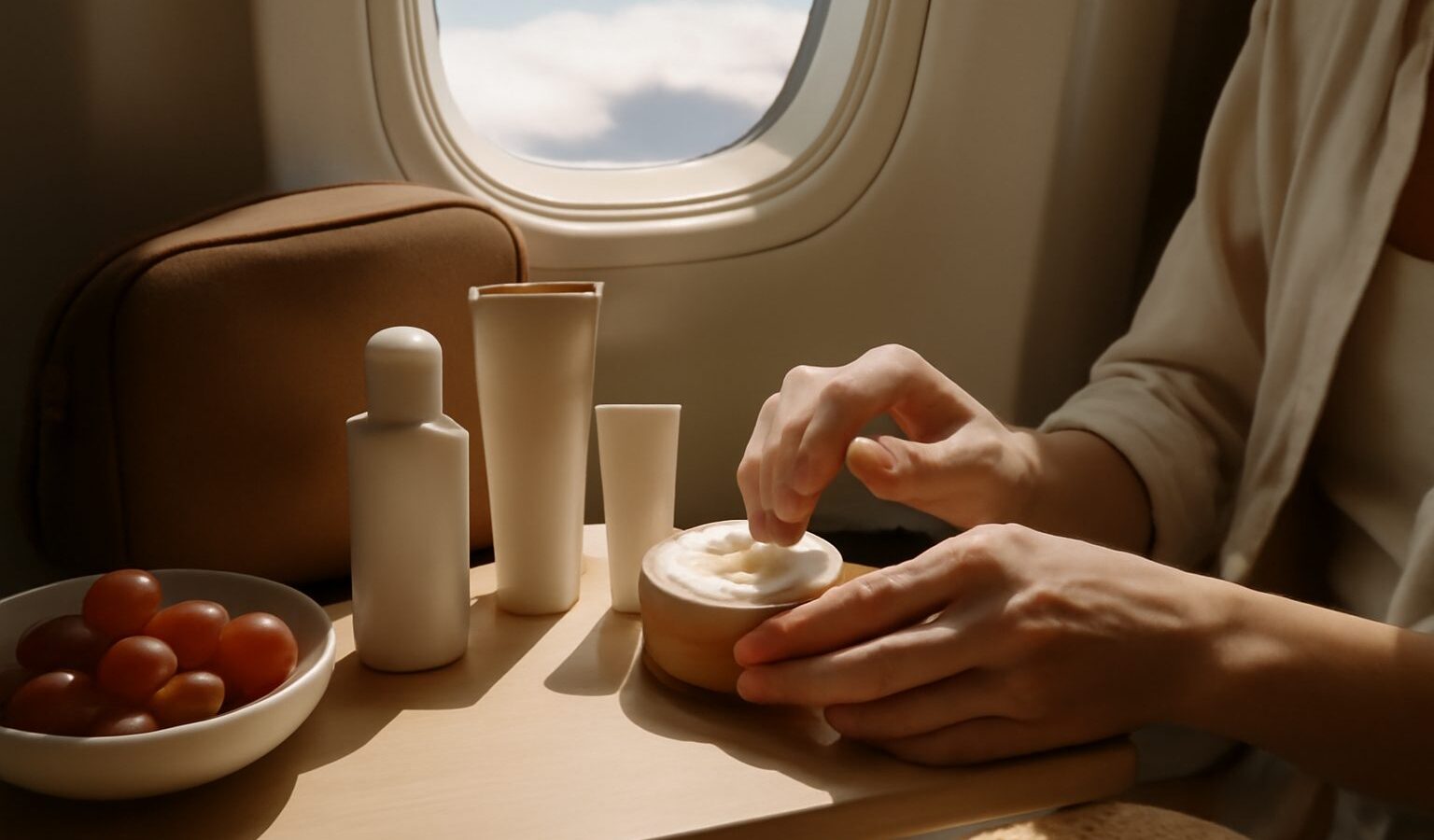
Whether you are jetting off for a short getaway or a long-haul adventure, your skin comes along for the ride, and it does not always cope gracefully. Dry cabin air, disrupted sleep, new water and unfamiliar weather can all throw off even a settled routine. A little travel skincare singapore planning goes a long way, and the good news is that travelling well is mostly about simplifying, not packing your entire bathroom shelf. This guide covers what to bring, how to survive the flight, and how to keep your skin happy at your destination.
Packing Smart: Simplify, Do Not Duplicate
The biggest travel skincare mistake is trying to bring everything. Cabin baggage limits liquids to small containers in a clear bag, and a bulging wash bag is a hassle. The trick is to pare back to a reliable core and leave the experiments at home.
A sensible minimalist kit looks like this:
- A gentle cleanser that suits your skin.
- A hydrating serum or essence, ideally something with humectants.
- A moisturiser matched to where you are going.
- Sunscreen, which is non-negotiable no matter the destination.
- One or two targeted extras only if you truly need them.
A few practical tips make packing easier. Decant products into small travel bottles to meet liquid rules and save space. Solid formats like cleansing balms and bar cleansers, along with sachets and single-use masks, sidestep the liquid limit entirely. Keep anything you cannot bear to lose in your hand luggage in case checked bags go astray.
Crucially, travel is not the time to try brand-new actives. Starting a fresh retinoid or acid in an unfamiliar climate is asking for irritation far from your usual routine. Stick to what your skin already knows, and if you do want to introduce something new, do it well before you fly and always patch-test it first. Assembling a small, reliable everyday line-up before you travel helps you decide what genuinely earns a spot in your bag.
Surviving The Flight Itself
Aeroplane cabins are famously dry, often with very low humidity, which can leave skin feeling tight, flaky or oddly oily as it overcompensates. You cannot change the cabin, but you can support your skin through it.
Before boarding, travel with a clean face rather than a full face of makeup, so your skin can breathe and you can layer hydration freely. On board:
- Apply a good moisturiser before you take off, and reapply a light layer on long flights.
- Lean on humectants like hyaluronic acid to draw in moisture, then seal them with a moisturiser so the water does not simply evaporate. Our explainer on hyaluronic acid covers how to use it well, including the importance of layering something on top.
- Drink water regularly and go easy on alcohol and excess coffee, which are drying.
- Keep a hydrating lip balm and hand cream within reach.
- If you are on a daytime or window-seat flight, remember sun exposure at altitude is real, so keep sunscreen on for those legs.
Resist the urge to overdo it with heavy occlusives if your skin is not used to them, as that can feel greasy in a confined space. A little, reapplied, tends to beat a thick single layer.
Arriving And Adjusting To A New Climate
Once you land, your skin has to adjust to whatever weather you have flown into, and that adjustment is where breakouts or dryness often appear.
If you are heading somewhere cold and dry, expect to want richer moisture than you use at home, so a heavier cream or an added facial oil can help. If you are travelling from our humidity to somewhere equally warm and sticky, keep things lightweight to avoid feeling congested. Our guide to choosing a moisturiser for humid weather is handy for tropical destinations, and it also helps you recalibrate when you come home to Singapore’s mugginess.
Wherever you go, two rules travel with you:
- Sun protection matters everywhere. Sun, snow glare and high altitude all increase UV exposure, so apply broad-spectrum sunscreen, reapply it through the day, and remember it is only one layer alongside shade, a hat and sunglasses. Our overview of sunscreen and sun protection covers the essentials.
- Water and environment can affect your skin. Hard water, air-conditioning, pollution or a different climate can all cause temporary breakouts or sensitivity. This is usually short-lived, so avoid the temptation to pile on new products in a panic. Keep it simple and let your skin settle.
Handling The Small Stuff Sensibly
A few final habits keep trips smooth. Keep hands clean before touching your face, especially after airports and public transport. If jet lag and poor sleep leave you looking tired, focus on hydration, and a chilled sheet mask or eye product can be a nice pick-me-up rather than a fix. Do not expect skincare to undo a rough travel schedule.
And listen to your skin. If a spot flares, treat it gently with what you already trust rather than reaching for something aggressive mid-trip. If you develop a persistent rash, a reaction that will not settle, or any worrying skin change while travelling, see a pharmacist or doctor rather than guessing.
The heart of good travel skincare is restraint. Bring a small, familiar core, hydrate through the flight, protect against the sun wherever you land, and let your skin adjust without overwhelming it. Do that, and your routine will keep up with you from take-off to touchdown and all the way home.