
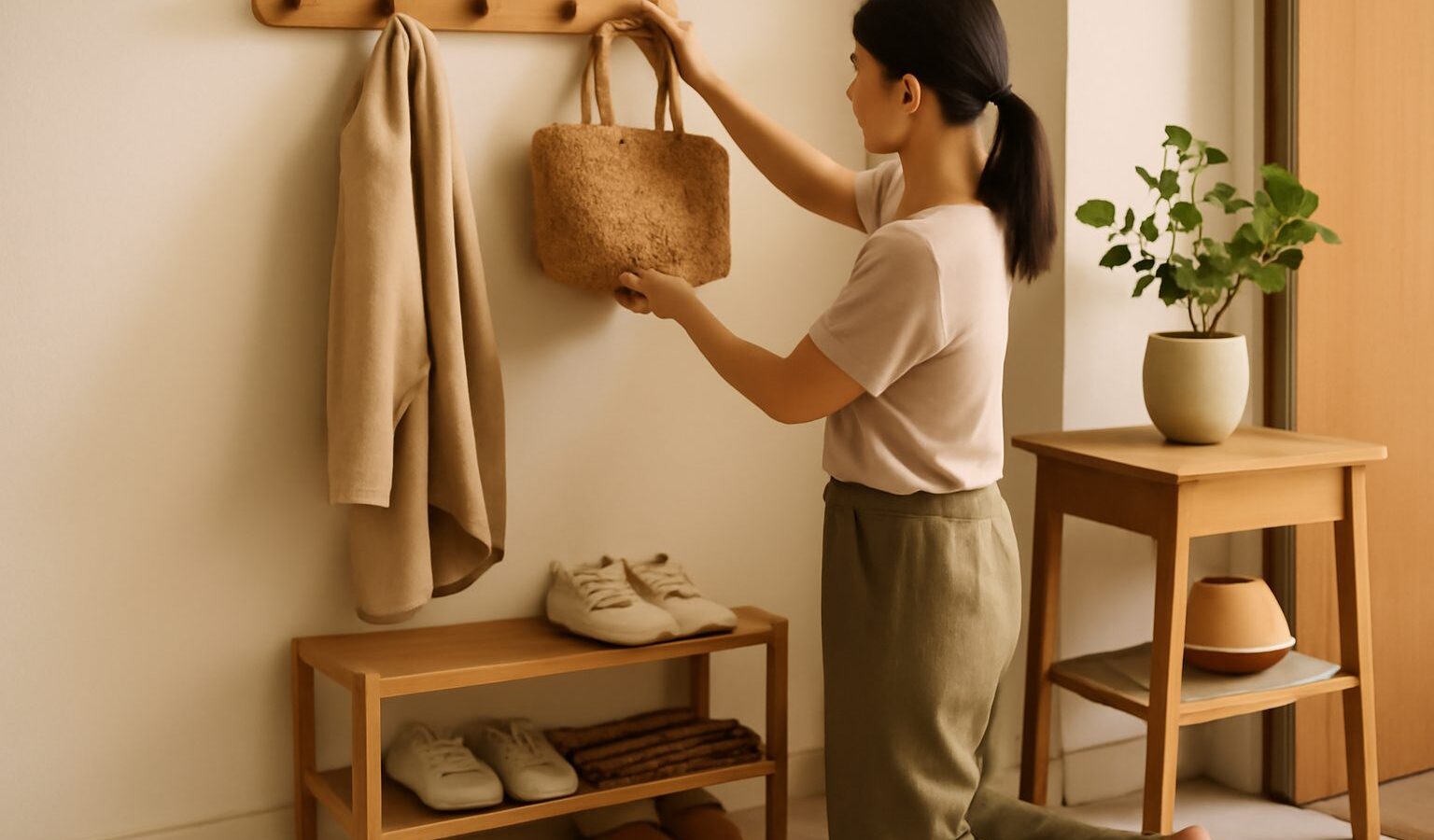
Most homes here do not have a proper foyer. You open the door of an HDB flat or condo unit and you are already in the living room, so everything you carry in lands on the nearest flat surface. Keys go missing, parcels pile up by the sofa, and wet umbrellas drip onto the floor. A small entryway in Singapore needs a plan for what happens in those first two steps inside the door.
This guide is about the whole entrance zone: keys, bags, mail, parcels, umbrellas, masks and the things you grab on the way out. Shoe storage is one piece of it, and if that is your main headache, our guide on how to choose a shoe cabinet for a small entryway covers it in depth. Here we focus on everything else that makes an entrance work.
Start by Watching How Your Household Comes and Goes
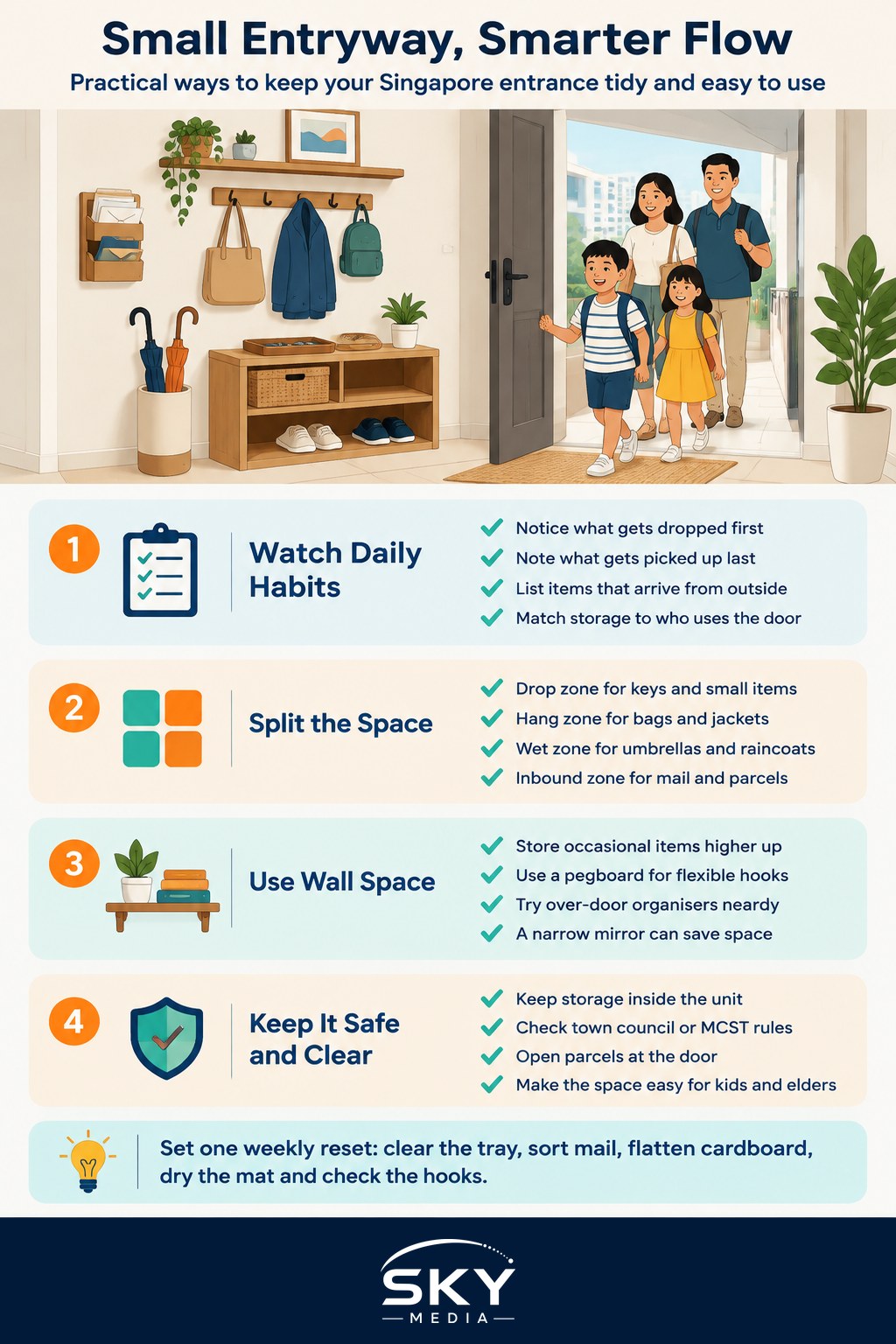
Before you buy a single hook, spend three or four days noticing what actually happens at your door. Most entryway clutter comes from a handful of predictable habits.
- What gets dropped first. Keys, phone, wallet, office lanyard, school bag, grocery bags.
- What gets picked up last. Umbrella, sunglasses, reusable bags, a water bottle, the car or bicycle key.
- What arrives from outside. Letters, delivery parcels, food delivery bags, flyers slipped under the gate.
- Who uses the door. A couple with one routine needs less than a family with children, a helper and a grandparent who goes to the market daily.
Write the list down. Every item on it needs a fixed spot within arm’s reach of the door, otherwise it will migrate to the dining table or the sofa.
Map Your Entrance Into Four Small Zones
Even a strip of wall less than a metre wide can be split into zones. Thinking in zones stops one cabinet from becoming a mixed drawer of everything.
- Drop zone. A small tray, bowl or wall shelf at hand height for keys, wallets and earbuds. One per adult works better than one shared tray.
- Hang zone. Hooks for bags, lanyards, a light jacket and reusable shopping bags. Put a lower row of hooks at a child’s height if you have kids.
- Wet zone. A slim umbrella holder with a drip tray, placed on a mat so water does not reach the floor.
- Inbound zone. A wall file or letter rack for mail and a clear spot on the floor, or a small bin, for parcels waiting to be opened.
The table below shows what each zone holds and the kind of storage that suits a tight space.
| Zone | What it holds | Storage that fits a small entryway | Common mistake |
|---|---|---|---|
| Drop zone | Keys, wallet, phone, earbuds | Wall shelf or tray on top of a cabinet | Using a deep drawer where things vanish |
| Hang zone | Bags, lanyards, jackets, tote bags | Row of hooks or a slim pegboard | Overloading one hook so bags fall |
| Wet zone | Umbrellas, raincoats | Narrow holder with a drip tray on a mat | Leaving umbrellas open on the floor |
| Inbound zone | Letters, parcels, flyers | Wall file plus a small bin near the door | Letting parcels sit unopened for days |
Go Vertical Instead of Wide
Floor space by the door is precious, especially where the door swings open against a wall or where the kitchen entrance sits right next to the main door. Use height instead. Our roundup of vertical storage ideas for small homes has more options, but these work particularly well at the entrance.
- Wall shelves above head height for items you only need occasionally, such as spare umbrellas, a torch or a box of masks.
- A pegboard panel lets you rearrange hooks and small baskets as your needs change, which suits renters who cannot build in.
- Over the door organisers on the inside of a nearby storeroom or utility door can hold reusable bags and small items.
- A narrow mirror with a ledge gives you a last check before leaving and a shelf for keys at the same time.
If you rent or live in a new BTO flat and are unsure about drilling, adhesive hooks rated for the weight you need are a reasonable starting point. Check the weight rating on the packaging and avoid hanging heavy bags on them. For anything structural, ask your landlord first, and in HDB flats check the HDB guidelines before drilling into walls that may carry concealed pipes or wiring.
Keep the Corridor Outside Clear
In HDB blocks the corridor outside your door is common property. Town councils and the Singapore Civil Defence Force (SCDF), the agency in charge of fire safety, have rules against items that obstruct escape routes in common corridors. That means a shoe rack, bicycle or pile of boxes outside your gate can be an issue, depending on the space and your town council’s rules. Condos have similar rules set by the MCST (Management Corporation Strata Title, the body that manages a condo’s common areas).
The practical takeaway is to plan your entryway storage so it fits inside the unit. If you currently rely on the corridor, check your town council or MCST rules before buying anything, and design your indoor drop zone as if the corridor were not available.
Handle Parcels, Mail and Paper Before They Pile Up
Online shopping means most households receive several parcels a week, and boxes pile up fast in a small home. Set a simple rule.
- Open parcels at the door. Keep a pair of scissors or a box cutter in the drop zone so you can open, sort and flatten boxes on the spot.
- Flatten cardboard straight away and store it upright behind a door or cabinet until you bring it down to the recycling bin.
- Sort mail daily into three piles: action, file and recycle. Bills and letters that need a reply go into the wall file; flyers go straight to recycling.
- Digitise what you can. Many letters only need to be kept as a record, so scan them on your phone and recycle the paper.
Plan for Rain, Heat and Daily Errands
Singapore weather shapes what you need at the door more than you might think. Sudden afternoon showers mean umbrellas come home wet almost every week, and heat means you will want a water bottle, cap or small towel within reach.
- Keep a compact umbrella for each person near the door so nobody has to search for one when it starts to pour.
- Use a washable mat in the wet zone and dry it in the sun regularly to avoid a musty smell.
- Store a few reusable bags in the hang zone. Larger supermarkets charge for disposable carrier bags, so having bags by the door saves money and hassle.
- Keep a small pouch with masks, hand sanitiser and tissues for clinic visits or crowded places.
Make It Work for Children and Older Family Members
An entryway that works for one adult often fails a family. Lower hooks for school bags and water bottles let children put their things away themselves. A labelled basket for each child, holding items like their EZ-Link card or concession card, keeps mornings calmer. For more household systems built around kids, see how to organise your home when you have kids.
For older parents, a sturdy stool or bench near the door makes putting on shoes safer. Keep the floor clear of loose mats that can slip, and make sure the area is well lit, especially if the light switch is a few steps away from the door. A small motion sensor light is a simple fix.
A Ten Minute Weekly Reset
Even a well planned entryway drifts back into clutter. A short weekly reset keeps it under control.
- Empty the drop zone trays and return anything that does not belong.
- Clear out the mail file, paying or filing anything urgent.
- Bring flattened cardboard and recycling down to the chute or bin.
- Wipe the umbrella tray and shake out or wash the mat.
- Check the hooks: if one is permanently overloaded, add another or move items elsewhere.
Done consistently, this keeps the first few steps into your home calm and functional, which makes the whole flat feel bigger.
Explore more: Entryway and Shoe Storage Ideas in Singapore
Frequently Asked Questions
How do I create an entryway when the door opens into the living room? Use furniture and floor treatments to mark the area. A low console or shelf, a mat and a hanging row of hooks can suggest a foyer without blocking light or airflow. Avoid tall solid dividers in a small flat, which can make the room feel smaller.
Can I drill into my HDB wall for entryway hooks and shelves? Be careful, as walls can hide pipes and wiring. Check HDB’s guidelines on what works are allowed before drilling, and consider adhesive hooks or a freestanding unit for light items. If you rent, ask your landlord for permission first.
How do I stop wet umbrellas from making the entrance smell musty? Let umbrellas drip and dry fully, open or hanging, before folding them into the holder. Put a drip tray under the stand, and dry or wash the mat regularly in the sun. A well-ventilated spot helps the area dry faster.
How do I get everyone at home to use the drop zone consistently? Make it easier than the alternative. Put the tray or hooks right by the door at the height each person can reach, give each person their own spot, and keep it uncluttered. A quick weekly reset helps the habit stick.
What should I keep out of sight at the entrance? Spare keys, important documents and valuables are better stored inside a drawer or cabinet, not left in plain view near the gate or door. Items visible from the corridor can tempt opportunists, and clutter makes it harder to spot if something is missing.
Further reading: What to Check Before Buying a Shoe Bench for Small Entryways