
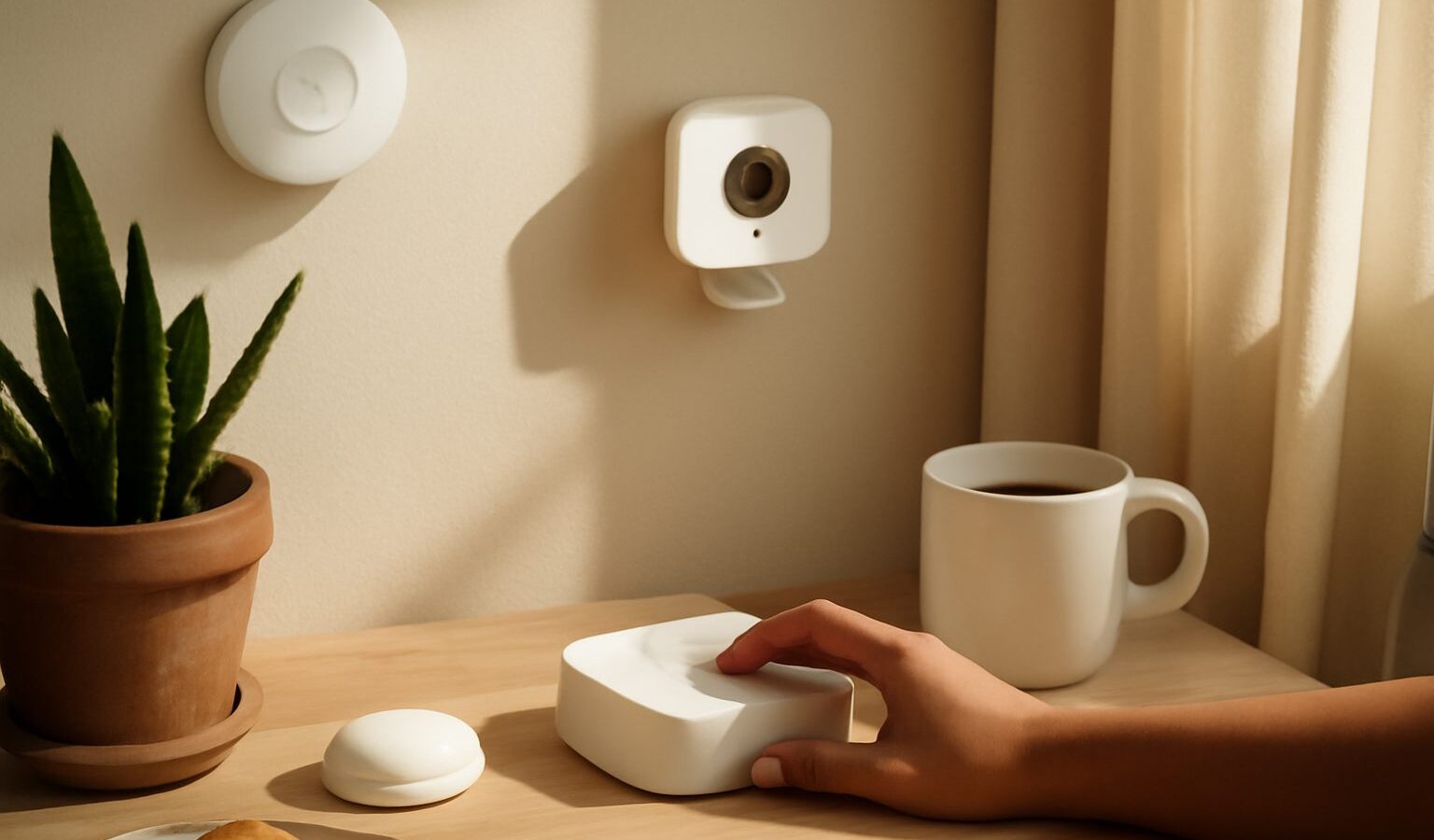
Smart sensors are the quiet workers of a connected home. They do not stream music or dim the lights, they simply watch for something going wrong and alert you the moment it does, wherever you are. For a Singapore home that matters, because our monsoon rains find leaky windows, our kitchens produce plenty of smoke, and dense estates make door and window security worth thinking about. The value of smart home sensors singapore households install is that they turn problems you would normally discover too late, a soaked floor, an open window in a downpour, into a phone alert you can act on straight away.
This guide covers the main types of sensor, how they connect and install, and the safety and privacy points that matter, because sensors add to your protection but must never replace proper detectors and good habits.
Types of sensor and how they work
Leak or water sensors are among the most useful in our climate. A small battery-powered puck sits on the floor where water would gather, under the kitchen sink, behind the washing machine, near the water heater, by a window that leaks in heavy rain, and sends an alert the moment its contacts detect moisture. In a monsoon country where a blocked balcony drain or a burst hose can flood a room, catching it in the first minutes rather than hours later saves flooring, furniture and your downstairs neighbour’s ceiling. Place them low, where water pools first.
Smoke and heat sensors watch for fire. A smart smoke sensor works like a normal one but also pushes an alert to your phone, so you learn about a problem even when you are out, which matters if a fire starts while the flat is empty or while everyone is asleep. Some combine smoke with carbon monoxide detection. This is the area to be most careful about, and we come back to it below, because a smart smoke sensor complements but does not replace a proper, working smoke detector.
Contact sensors for security are two small magnets, one on a door or window and one on the frame, that report whenever the two separate. Fitted to your main door, windows and the balcony sliding door, they tell you if something opens when it should not, and can trigger other actions such as switching on lights. Motion sensors do a similar job by detecting movement in a room or hallway. Together they form the backbone of a simple home security setup, alerting you to entry while you are out.
Other sensors round out the picture. Temperature and humidity sensors help you watch damp-prone rooms and can trigger a dehumidifier, and door or drawer sensors can watch anywhere you want to know has been opened. Most sensors are small, battery-powered and stick on with adhesive, which makes them ideal for renters, since they need no wiring and leave no damage when you move.
Connectivity, setup and getting alerts
Sensors connect to your home in one of a few ways. Wi-Fi sensors talk directly to your router and app, simple to set up but heavier on battery and dependent on signal reaching every corner. Zigbee, Z-Wave and similar low power sensors talk to a hub, which then connects to your network, and this is the common choice for anyone running many sensors, because the low power protocol gives long battery life and a robust mesh. Bluetooth sensors work at short range and usually need a bridge for remote alerts. If the choice between hub and hubless is new to you, our guide to smart home basics for beginners lays out the trade-offs, and a strong network underpins all of it, as our guide to home wifi and mesh networks explains.
Setup is usually straightforward. Most sensors pair through an app by scanning a code or holding a button, then you place them and name each one so alerts are meaningful, such as kitchen leak or balcony door. The real power comes from automation, where a leak sensor can turn off a smart-plug-connected appliance, a contact sensor can switch on lights when a door opens at night, and any sensor can send a phone notification. Our guide to smart plugs and home automation routines shows how to wire these responses together, and pairing sensors with smart lighting ideas for your home lets your home react as well as alert.
Battery life is the practical catch. Sensors run for months to a couple of years on small batteries, but a flat battery means a silent sensor, so choose devices that warn you of low battery and check them periodically. A sensor you have forgotten about is no protection at all.
Safety, fire protection and privacy
The most important point is about fire. A smart smoke sensor is a helpful extra layer because it reaches you when you are away, but it complements rather than replaces proper smoke detection and good fire habits. Keep working smoke detectors, test them regularly, do not rely on an app alert as your only warning, and follow sound fire safety practice throughout the home. Never disable a real detector because you have a smart one. Our guide to home fire safety covers detectors, extinguishers, escape planning and the everyday habits that prevent fires in the first place, and those habits matter more than any gadget.
The same complement-not-replace thinking applies across the board. A leak sensor warns you, but good maintenance, checking hoses and clearing drains before the monsoon, prevents the leak. A contact sensor alerts you, but a solid lock keeps the door shut, and our guides to smart door locks and home security cameras cover the layers that work alongside sensors. Sensors are an early warning system, not a substitute for the basics.
On wiring, most sensors are battery-powered and need no electrical work, which is what makes them renter-friendly. If you ever choose a mains-powered device or want a smart smoke detector wired into the home’s supply, that hardwired work on our 230V mains must be done by a licensed electrician, never as a DIY job.
Privacy matters because sensors are connected devices that reveal patterns about your life, when you come and go, which rooms you use. Secure your home Wi-Fi with a strong, unique password, change any default passwords on the devices and hub, and keep firmware updated so known vulnerabilities are patched. Prefer reputable brands and understand where any data is stored. Most leak, contact and smoke sensors carry no camera or microphone, so they are relatively low risk, but if you add cameras or a video doorbell, treat those with extra care, as our guide to video doorbells for your home sets out.
Used well, smart sensors give a Singapore home a quiet layer of protection against the leaks, smoke and intrusions that our climate and dense living throw up. Fit battery sensors freely as a renter, leave any mains work to a licensed electrician, secure your network, and always keep your real smoke detectors and good habits as the foundation the smart layer sits on top of.