
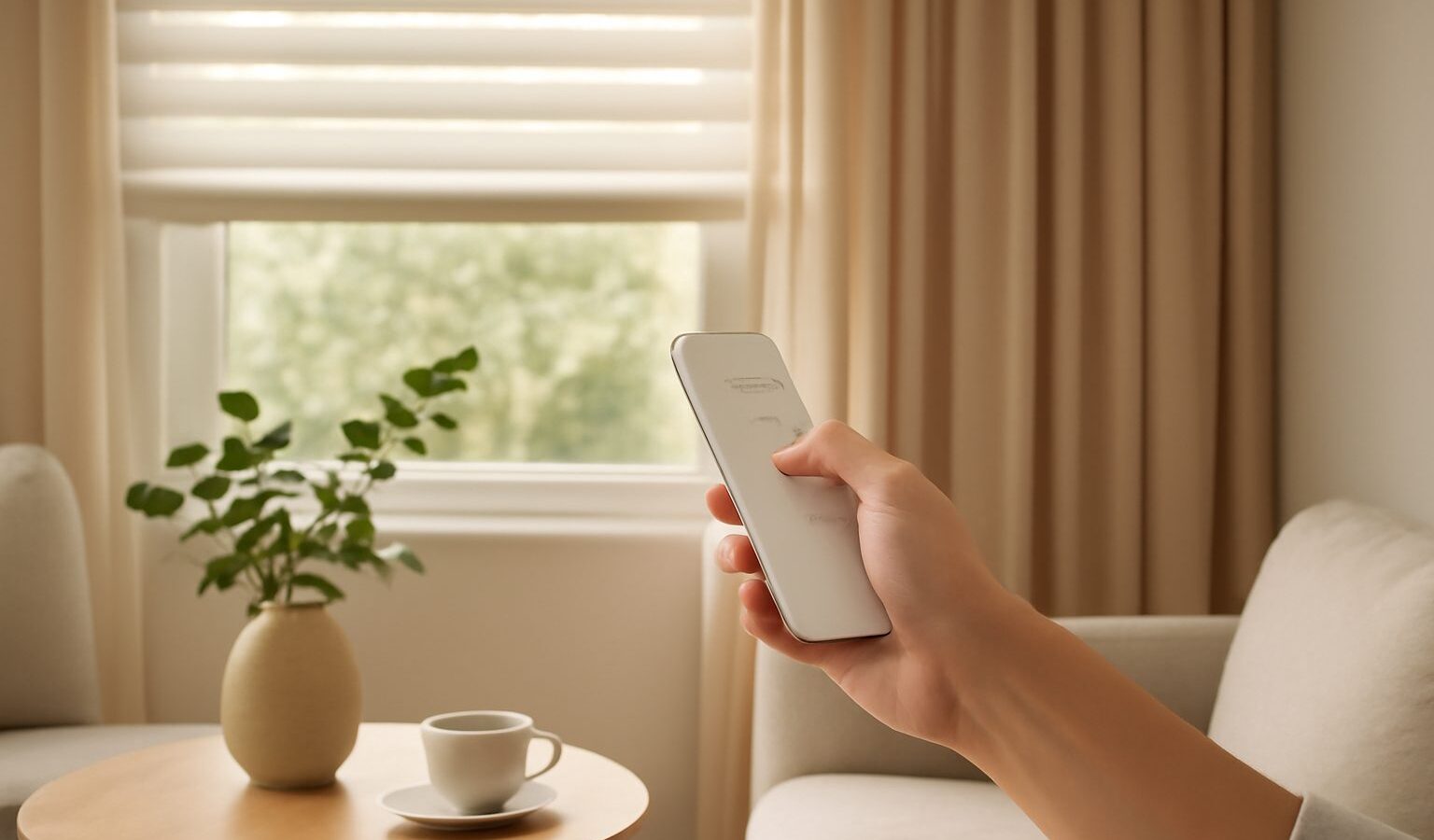
Motorised window coverings used to be a luxury reserved for landed homes and hotel suites. Today, smart blinds and curtains are within reach of ordinary HDB and condo households, and they make real sense in our climate. In Singapore, blinds do more than block light. They manage the fierce afternoon sun that heats a west facing flat, they add privacy in dense estates where the next block looks straight into your living room, and they cut the glare on the television. Being able to schedule or voice control smart blinds singapore homes install means the sun is managed automatically, the room stays cooler before you get home, and you are not wrestling a stuck curtain cord every evening.
This guide explains the types available, how they connect, what a renter can install without drilling or rewiring, and the safety and privacy points worth knowing before you buy.
Types of smart blinds and how they connect
There are two broad routes to motorised window coverings. The first is a fully motorised blind or curtain track, where the motor is built into the roller tube or the curtain rail and the whole unit is designed as a smart product from the start. The second is a retrofit motor, a small battery or plug-in device that clips onto your existing roller blind chain or curtain track and turns it, so you keep the curtains you already own. Retrofit devices are the friendlier option for renters and for anyone who does not want to replace their window coverings.
Power is the first decision. Motorised blinds run on one of three supplies. Rechargeable battery motors need no wiring at all, and you simply recharge them every few weeks or months, which makes them ideal for renters. Plug-in motors run from a nearby wall socket, tidy if a socket is close but a trailing cable if it is not. Hardwired motors draw from the mains and give the cleanest finish with no batteries to recharge, but any hardwired installation must be carried out by a licensed electrician, since mains wiring on Singapore’s 230V supply is dangerous and regulated work. Do not attempt mains wiring yourself.
Connectivity is the next decision, and it mirrors the rest of the smart home. Many smart blinds connect over Wi-Fi directly to your home network and their app, which is simple but leans on a strong signal at the window. Others use Zigbee or a similar low power protocol and talk to a hub, which is more robust across many devices and uses less power, at the cost of needing that hub. Bluetooth models control from your phone at close range but usually need a bridge for remote or scheduled control. If you are new to all this, our guide to smart home basics for beginners explains hubs, Wi-Fi and protocols in plain terms, and a solid network helps, as our guide to home wifi and mesh networks covers.
Once connected, the appeal is in the automation. You can schedule blinds to close during the hottest part of the afternoon to keep a room cooler, open gently in the morning as a natural alarm, and close at dusk for privacy. Voice control through the major ecosystems lets you raise the blinds without getting up, and you can fold blinds into wider routines, closing them as part of a leaving-home or movie-night scene. Our guide to smart plugs and home automation routines shows how to build these multi-device scenes, and pairing blinds with smart lighting ideas for your home makes the whole room respond together.
Installation, renting, climate and privacy
For renters, the retrofit motor is the answer. A chain-driven device that clips onto an existing roller blind, or a small robot that runs along a curtain track, installs with no drilling and comes off cleanly when you move, taking your deposit worries with it. Battery power keeps it fully wire free. Renters get most of the convenience of motorised coverings without touching the wall or the wiring, which is exactly what a tenancy needs.
For owners fitting fully motorised tracks or hardwired blinds, plan the power early. If you want a hardwired motor with no visible cable, the wiring should be run before or during a renovation, and it must be done by a licensed electrician. Retrofitting mains power to an existing window after the fact is disruptive, so many owners simply choose a rechargeable or plug-in motor instead and skip the wiring altogether. There is no shame in the simpler route, and it is often the sensible one.
Our climate shapes a couple of choices. Heat and direct sun are the whole point of smart blinds here, so scheduling them to block the afternoon sun genuinely reduces how hard your air conditioning works. Humidity is the flip side, since motors and batteries sit at the window where condensation and the occasional splash of monsoon rain reach. Keep windows able to close during heavy rain, choose blinds rated for the spot, and wipe down tracks now and then. For fabric curtains, the same damp that troubles the rest of the home applies, and our guide to curtains and blinds covers choosing coverings that suit our weather.
Privacy and security deserve a thought, because a smart blind is a connected device on your network. Set a strong, unique password on the app account, change any default device password, and keep the app and firmware updated so known flaws are patched. Secure your home Wi-Fi with a strong password, since every smart device is only as safe as the network it sits on. Blinds do not carry cameras or microphones, so they are among the more benign smart devices, but the scheduling data still says when your home is likely empty, so treat the account as you would any other. If you extend into cameras later, our guide to home security cameras covers the extra privacy care those need.
Smart blinds are one of the more satisfying upgrades in a Singapore home, taming the sun and adding effortless privacy. Choose battery or plug-in retrofits if you rent, leave any mains wiring to a licensed electrician if you own, pick the connectivity that suits your setup, and secure the app, and you will have coverings that manage the tropical sun so you do not have to.