
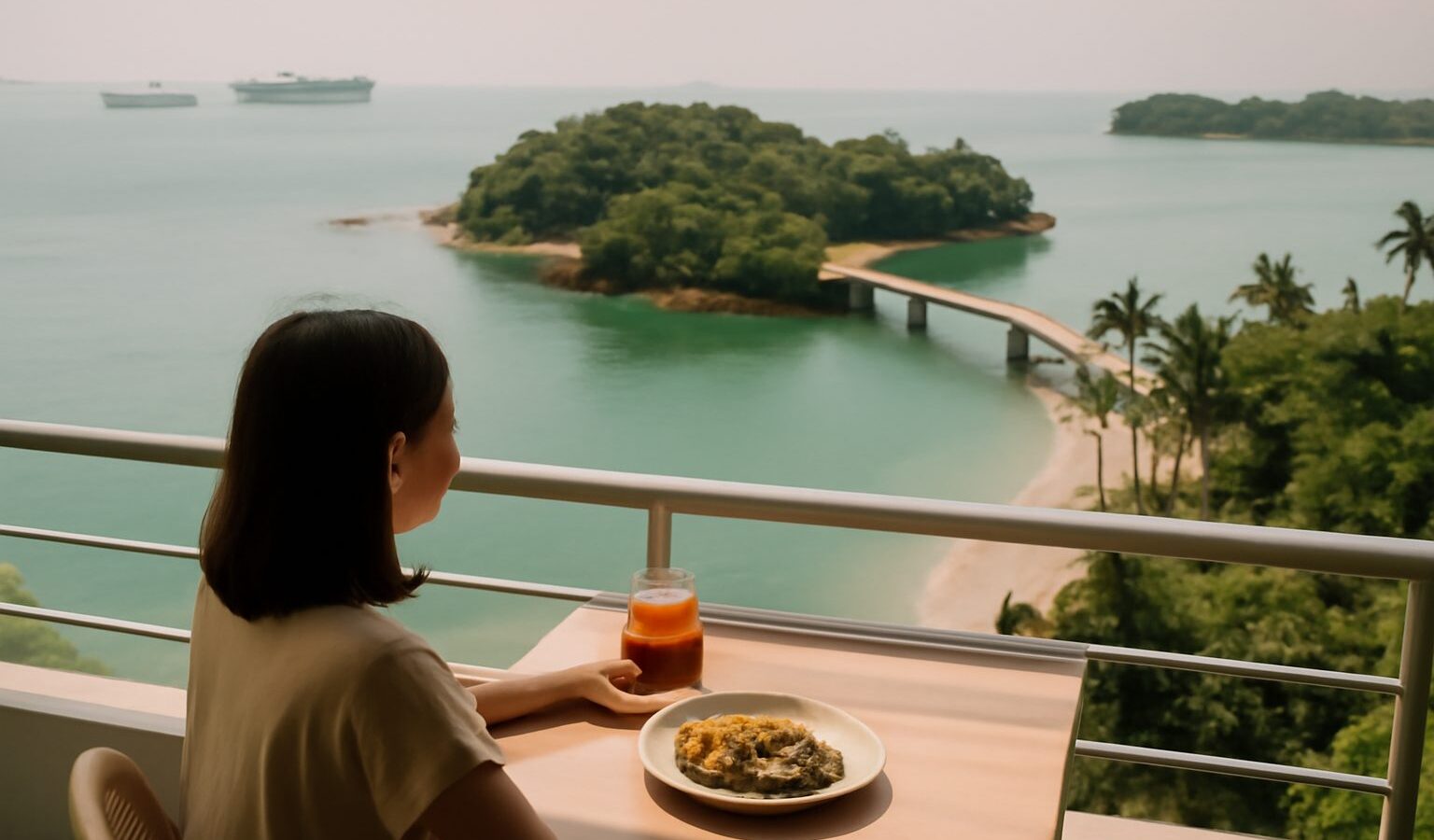
Just a short boat ride from the mainland, the Southern Islands of Singapore feel like a different pace of life. This cluster of small islands off the southern coast holds quiet beaches, old shrines, marine habitats and layers of history that most day trippers never slow down to notice. If you have only ever seen Singapore as a city of towers and expressways, a trip out here reframes the whole picture. This guide walks through the main islands, their heritage, the well known Kusu pilgrimage in general terms, and what to keep in mind before you go.
Where the Southern Islands Are
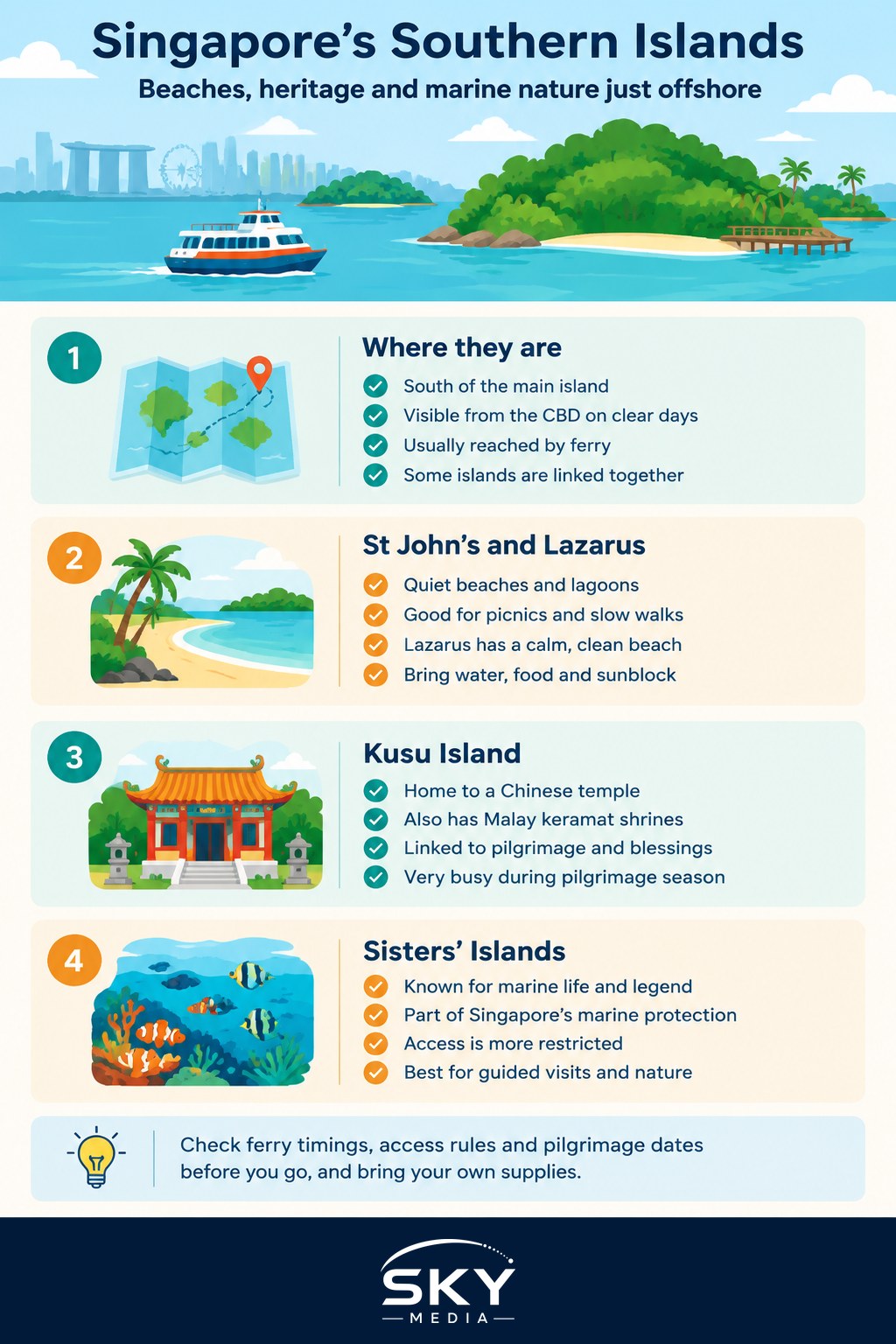
The Southern Islands sit in the waters south of the main island, within sight of the central business district on a clear day. They are a loose grouping rather than a single destination, and the ones most visitors reach are St John’s Island, Lazarus Island, Kusu Island and the Sisters’ Islands. Some of the islands are linked to one another, which lets you combine a visit rather than treating each as a separate trip.
For generations these islands played practical roles for the port and the wider settlement. Their uses have shifted over time, and today the emphasis is on recreation, nature and heritage rather than the working functions of the past. What remains is a set of places where you can swim, walk, picnic and take in the sea air without the crowds of the mainland parks.
Getting there usually means a ferry from the southern jetty area, with services that also connect some of the islands to each other. Because timings, operators and landing points change, always check the current ferry schedule and the latest access rules before setting out, and plan your return trip so you are not stranded when the last boat leaves.
St John’s and Lazarus: Beaches and Quiet Trails
St John’s Island is one of the larger and better known of the Southern Islands, and over the years it has served several purposes connected to the port and to public health and holding functions. Those roles have long since changed, and visitors now come for the beaches, lagoons, grassy fields and walking paths. It is a comfortable base for a slow day out, with space to lay down a mat and let children roam.
Lazarus Island is connected to St John’s by a link that lets you walk across, and it is prized for one of the calmest, cleanest looking stretches of sand in the area. The gentle curve of beach and shallow water make it a favourite for people who want to swim or simply sit and watch the horizon. Because these islands are deliberately low key, facilities are limited, so treat them as you would any nature spot.
A few practical points help a visit here go smoothly:
- Bring your own water, food and sun protection, since shops and stalls are minimal or absent.
- Carry your trash back with you and leave the beaches as clean as you found them.
- Check whether swimming is advisable on the day and heed any posted notices.
- Wear covered footwear for the walking links and rockier edges.
Kusu Island and the Kusu Pilgrimage
Kusu Island is the most storied of the Southern Islands in the popular imagination, largely because of the pilgrimage associated with it. The island is home to a Chinese temple and to keramat, Malay holy shrines, and it draws devotees who come to pray for blessings such as health, harmony and good fortune. The name and legends of the island are tied to stories of a tortoise that is said to have saved shipwrecked sailors, which is why you will see tortoise imagery linked to the place.
Each year there is a pilgrimage season when large numbers of worshippers travel to Kusu to make offerings and prayers at the temple and the shrines. During this period the island becomes far busier than usual, ferry services are stepped up, and the atmosphere shifts from quiet retreat to active devotion. Practices, timings and the exact customs observed vary between families and communities, and the specifics of the season shift from year to year, so check the current dates and arrangements before planning a pilgrimage visit.
If you go as a respectful visitor rather than a devotee, a few courtesies matter. Dress modestly, keep your voice down near the places of worship, ask before photographing people at prayer, and follow any guidance from those managing the site. These are living religious spaces, so treat them the way you would any temple or shrine on the mainland.
Sisters’ Islands and the Marine Life
The Sisters’ Islands are a pair of islets whose name comes from a well known legend about two sisters, a story with several retellings that speak to devotion and loss. Beyond the folklore, the surrounding waters are ecologically important and form part of Singapore’s efforts to protect its marine environment. The area is associated with a marine park that showcases reefs and the creatures that live among them.
Access here is more restricted and conservation focused than on the beach islands, so this is a destination for those interested in nature and marine heritage rather than a casual swim. Guided activities and public programmes are sometimes offered, and these are the best way to experience the reefs responsibly. As always, confirm current access, permits and programme availability before you plan a trip, since arrangements change with conservation needs.
Comparing the Main Southern Islands
The islands differ in character, so it helps to know what each is best for before you choose where to spend your day.
| Island | Best known for | Good for | Keep in mind |
|---|---|---|---|
| St John’s Island | Beaches, lagoons, open fields | Families, picnics, a full day out | Limited facilities, bring supplies |
| Lazarus Island | Calm, clean beach | Swimming and quiet relaxing | Linked to St John’s, minimal amenities |
| Kusu Island | Temple, keramat, pilgrimage | Heritage and religious visits | Very busy during pilgrimage season |
| Sisters’ Islands | Marine life and legend | Nature lovers, guided programmes | Access is restricted and conservation focused |
Planning a Respectful, Low Impact Visit
A trip to the Southern Islands rewards a little preparation. Because these are small places with few facilities, you are largely self reliant once you land. Pack light but sensibly, keep an eye on the time so you catch your return ferry, and be ready for sun, sea breeze and uneven ground.
Just as important is the spirit in which you visit. These islands carry heritage, living religious practice and fragile marine habitats all at once. Take your litter home, stay on marked paths where they exist, respect worshippers and their spaces, and avoid disturbing wildlife or reefs. Details such as ferry timings, pilgrimage dates and access rules change often, so verify the current specifics before you go and let the islands keep the quiet, layered character that makes them worth the journey.
Explore more
To place these islands in a wider story, read our Singapore history timeline and see how heritage is cared for in our guide to the national monuments of Singapore. For more island and coastal heritage on the eastern side, our Changi heritage and history guide makes a natural next stop.