
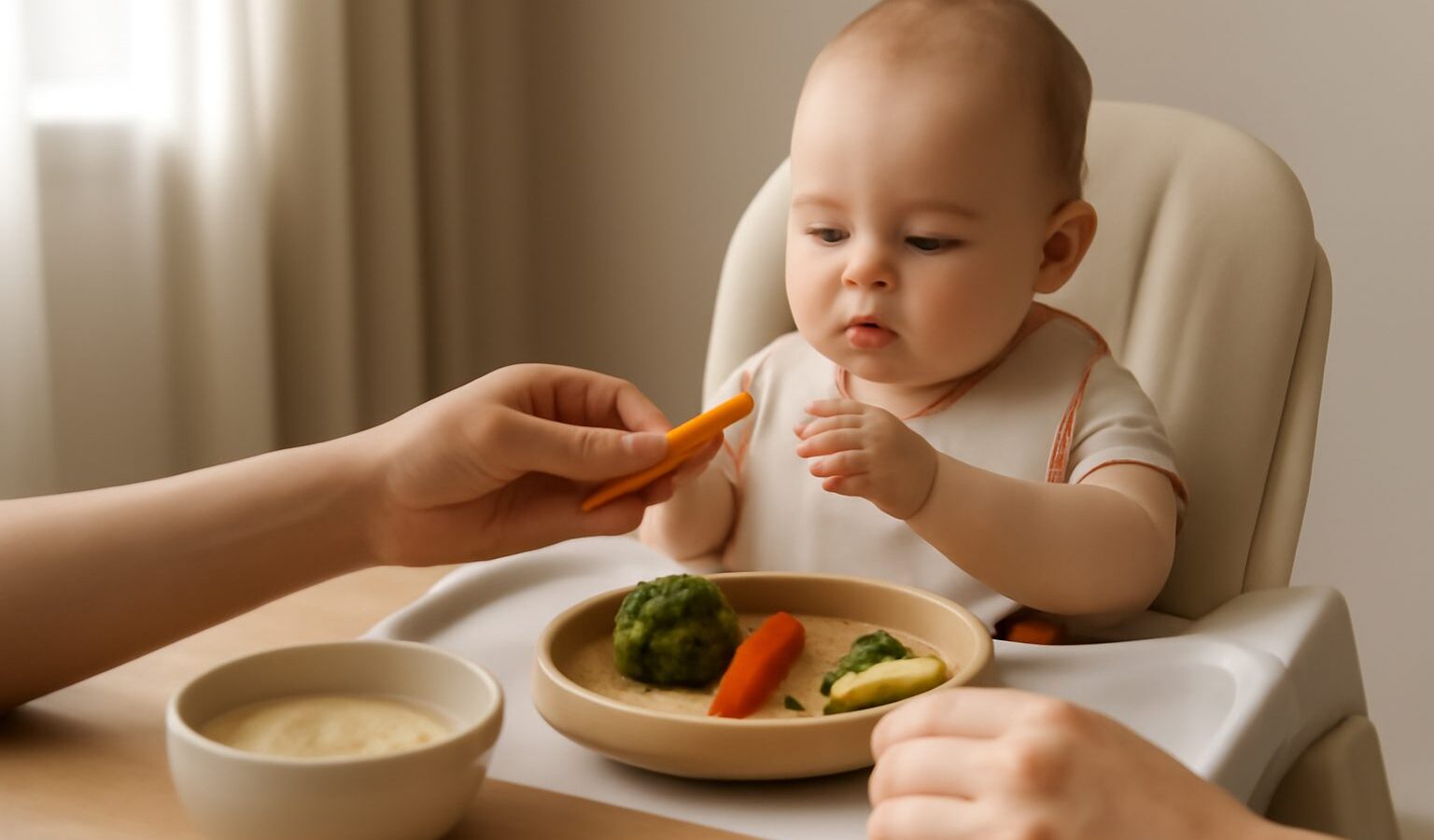
Watching your baby eye your plate with sudden interest is one of the small joys of the first year. Starting solids is a milestone that excites and unnerves many parents in equal measure, and there is a lot of conflicting advice out there. This guide keeps things calm and practical: how to tell your baby is ready, the two most common approaches, first foods that suit a Singapore kitchen, and how to keep mealtimes safe and happy.
This is general information, not medical advice. Every baby is different, so follow your own doctor, paediatrician or the guidance on HealthHub from the Health Promotion Board, and ask for advice if you have any concerns about your baby’s growth, feeding or health.
Knowing When Your Baby Is Ready
Age is only part of the picture. Current guidance points to around the middle of the first year, but readiness is really about development, not a date on the calendar. Milk, whether breast or formula, stays your baby’s main source of nutrition for a good while yet, so there is no rush and no prize for being early.
Look for these signs coming together, rather than any single one:
- Your baby can sit up with little or no support and hold their head steady.
- They have lost the early reflex that pushes food back out with the tongue.
- They show real interest in food, watching you eat, reaching or leaning in.
- They can bring things to their mouth with some coordination.
Waking more at night or chewing fists on their own do not mean a baby is ready for solids, even though they are often read that way. If you are unsure, or your baby was premature or has any health condition, check with your doctor before you begin. Starting solids too early can be unsafe for some babies, so when in doubt, ask.
Two Common Approaches to Starting Solids
There are two popular routes, and plenty of families happily mix them. One is traditional spoon feeding of smooth purees that gradually thicken and coarsen. The other is baby-led weaning, where your baby feeds themselves suitable soft finger foods from the start and you skip the puree stage. Neither is a magic method, and a blended approach, offering both a loaded spoon and finger foods, is completely normal.
| Approach | What it looks like | Points to consider |
|---|---|---|
| Spoon-fed purees | You offer smooth food on a spoon, thickening over time | Easy to gauge intake, but more prep and a texture step later |
| Baby-led weaning | Baby self-feeds soft finger foods from the start | Encourages independence and texture, expect more mess early on |
| Blended approach | A mix of loaded spoons and safe finger foods | Flexible and low pressure, follows your baby’s cues day to day |
Whichever you choose, let your baby set the pace. Their job is to explore, learn and eventually eat; your job is to offer safe, suitable food in a calm setting. Pushing a reluctant baby rarely helps.
First Foods and Building Up Textures
You do not need special or expensive baby products. Simple, home-cooked foods from your own kitchen work beautifully, and it is a lovely way to introduce your baby to the flavours your family already loves.
Good early options include:
- Soft cooked vegetables such as carrot, pumpkin, sweet potato and spinach.
- Mashed or soft fruit such as banana, papaya, avocado and steamed apple or pear.
- Well-cooked rice porridge, oats or soft-cooked noodles.
- Iron-rich foods such as well-cooked, soft meat, fish with every bone removed, dhal, tofu and egg.
Offer one simple food at a time in the early days so you can watch how your baby responds, then build up variety and texture as they gain confidence. Move from smooth to lumpy to soft finger foods over the weeks. Keep salt, sugar and honey out; honey in particular should be avoided in the first year. Serve water in an open or free-flow cup with meals rather than sweet drinks.
Expect mess, refusals and the odd dramatic face. Repetition matters, as a baby may need to meet a new food many times before accepting it. Staying relaxed teaches your child that eating is a pleasant, unpressured part of family life. Our guide to building healthy family mealtimes has more on making meals calm and social as your child grows.
Introducing Allergens Safely
Common allergenic foods, such as egg, peanut in a smooth form, dairy, wheat, fish, shellfish, soy and sesame, are usually introduced during this period rather than delayed, but do this thoughtfully. Current guidance generally supports introducing these foods once solids are under way, and there is evidence that early, ongoing exposure may help, but your own doctor’s advice comes first, especially if your baby has eczema, an existing allergy or a strong family history.
A few sensible principles:
- Introduce one new allergen at a time, at home, earlier in the day rather than at night.
- Start with a small amount, and if all is well, keep including it regularly in the diet.
- Watch for signs of a reaction such as hives, a rash, swelling, vomiting or unusual fussiness.
A severe allergic reaction is a medical emergency. If your baby has trouble breathing, swelling of the face or lips, becomes pale or floppy, or seems seriously unwell, call 995 immediately. For anything that worries you but is less severe, contact your doctor promptly. Our companion guide on introducing allergenic foods safely goes into this in more detail, and your paediatrician can tailor advice to your baby.
Keeping Mealtimes Safe
Safety underpins everything, and a little care prevents most problems. The biggest thing to guard against is choking.
- Always supervise. Stay with your baby for every meal and snack, and never leave them alone with food.
- Sit upright. Feed your baby sitting up in a high chair, never lying back, propped or in a moving pram or car seat.
- Suit the shape. Avoid hard, small, round or sticky foods. Cut round foods lengthways, remove all bones, pips and skins, and soften anything firm by cooking.
- Learn the difference. Gagging is a normal, noisy part of learning to eat and usually resolves itself; choking is silent and needs immediate help. It is worth knowing basic infant first aid.
- No distractions or pressure. Turn off screens, and never force a spoon or urge a mouthful, which raises the risk.
If your baby ever seems to be genuinely choking and cannot cry, cough or breathe, act at once and call 995. Knowing what to do in advance turns panic into action.
Making It Work in a Singapore Kitchen
The good news is that starting solids fits naturally into local family life. Steamed fish, soft rice porridge, mashed sweet potato and well-cooked vegetables are easy to prepare in small portions, and you can set aside a plain, unsalted serving of the family meal before adding seasoning. Batch cooking and freezing small portions saves time on busy weeks, and grandparents or a helper can be shown the same safe approach so everyone feeds your baby consistently.
Try to keep expectations realistic. Some days your baby eats with gusto, other days almost nothing, and both are normal while milk still leads. If your baby is generally growing, weeing, pooing and thriving, feeding is usually on track. If you have persistent worries about intake, weight, reflux, allergies or a strong dislike of textures, speak to your doctor, a polyclinic or your paediatrician rather than sitting with the worry alone.
Above all, enjoy it. This messy, giggly, food-on-the-ceiling stage passes quickly. A relaxed parent, safe food and a bit of patience are the real ingredients for a happy eater. Sharing these early meals is also a lovely way of building a strong bond with your baby as they discover the world one mouthful at a time.