
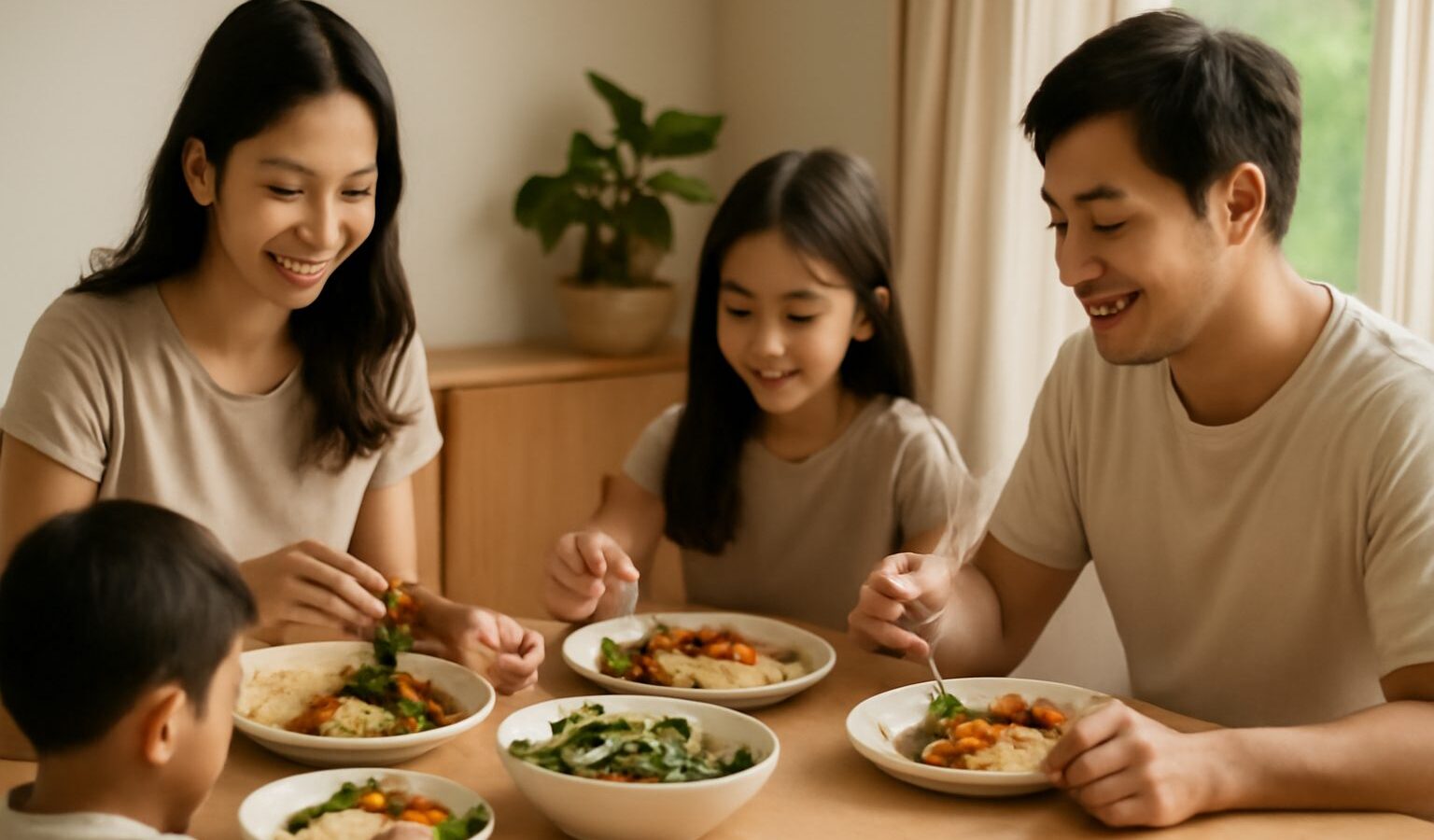
Somewhere between the toddler who throws rice on the floor, the P3 child with tuition after school and the parent who gets home at seven, the idea of a calm shared meal can feel like a fantasy. Yet healthy family mealtimes are one of the quietest, most powerful things you can offer your children, and they matter far more for connection and habits than for producing a perfect plate. The good news is that “healthy” here has little to do with elaborate cooking and everything to do with warmth, rhythm and low pressure.
This is general guidance for Singapore families, not dietary or medical advice. If you have specific concerns about your child’s growth, weight, allergies or eating, please speak to your paediatrician, polyclinic doctor or a qualified dietitian who knows your child.
Why eating together matters more than the menu
When people picture a healthy meal, they often think first about nutrition. That matters, but the shared ritual around the table does something just as valuable. Sitting down together, even briefly, gives children a predictable moment of attention and calm in a busy day. It is where they hear the family chat, learn to wait their turn, and slowly absorb what everyday eating looks like.
In practical terms, regular family meals tend to help children feel settled and build a gentle familiarity with a wider range of foods. A child who repeatedly sees stir-fried vegetables, fish and rice on the table, without being nagged to eat them, is far more likely to try them eventually than one who never encounters them. The table becomes a low-key classroom for food, manners and belonging, without a single lesson being taught.
None of this requires a nightly sit-down feast. A shared breakfast of kaya toast and eggs, a weekend lunch at the hawker centre with everyone at one table, or a simple porridge dinner all count. Consistency and atmosphere matter more than grandeur.
Making it realistic for busy Singapore homes
Most families here are juggling long working hours, commutes, homework and grandparents or a helper who may do much of the cooking. Perfection is not the goal, and chasing it only adds guilt. A few realistic anchors help far more:
- Pick your moment. If weekday dinners are chaotic, protect one unhurried meal instead, perhaps a weekend breakfast or Sunday lunch. Even two or three shared meals a week make a difference.
- Keep it simple. A one-pot soup, rice with a vegetable and a protein, or a tapau meal shared at home all work. Home cooking is lovely when you have the energy, but a shared hawker meal is still a family meal.
- Involve the whole household. If grandparents or a helper cook, include them in the idea, so everyone is working towards the same calm, screen-light table.
- Lower the bar on tidiness. Toddlers are messy. Spread a mat under the high chair, breathe, and let some chaos be part of learning.
- Ease off screens. Putting phones and the television aside, even for fifteen minutes, changes the whole feel of the meal. If evenings are hard, our guide on encouraging screen-free play at home offers gentle ways to shift the habit.
The aim is a table you can actually sustain, not a Pinterest scene that leaves you exhausted.
Handling picky eating without a battle
Almost every parent meets a fussy phase, and it is one of the most stressful parts of feeding a family. It helps to remember that some pickiness is a normal stage of development, especially in toddlers and preschoolers who are learning independence by saying no. Turning meals into a battleground usually makes things worse, because pressure and eating rarely mix well.
A helpful way to think about roles at the table: you decide what food is offered and when, and your child decides whether and how much to eat from what is there. This gentle division takes a surprising amount of tension out of the room. The table below contrasts approaches many parents find make things harder or easier.
| Situation | What tends to backfire | What often helps |
|---|---|---|
| Child refuses a new vegetable | Insisting they finish it, bargaining with dessert | Serve a little beside familiar foods, no comment, offer again another day |
| Toddler eats very little at dinner | Chasing them with a spoon, expressing alarm | Trust their appetite over the week, keep meals regular, stay relaxed |
| Child says “I don’t like it” before tasting | Lecturing about nutrition | Keep it light, let them see you enjoy it, allow polite refusal |
| Mealtime becomes tearful and tense | Threats or punishment | End the meal calmly, no drama, reset at the next one |
Repeated, pressure-free exposure is the quiet hero here. A food may need to appear on the table many times before a child accepts it, and your calm face is doing more work than any amount of coaxing. If your child’s eating is extremely limited, they are losing weight, or you are genuinely worried about their growth or nutrition, do speak to your doctor, as that is worth a proper look rather than solo guesswork.
Letting children take part
Children who help with food tend to feel more curious about it, and involvement is one of the friendliest routes to less fussiness. This can be beautifully simple: a toddler washing vegetables, a preschooler tearing lettuce, a school-age child stirring a pot or setting out chopsticks. Bringing them along to the wet market or supermarket, letting them choose one vegetable to try, or growing a pot of daun kesum on the corridor all build a sense of ownership.
As they grow, small cooking tasks build real independence and confidence, and our guide on teaching children to cook simple meals offers age-friendly ideas. The point is not to raise a junior chef but to make food something your child feels part of, rather than something done to them.
A few gentle ways to invite participation:
- Give one age-appropriate job per meal, and accept imperfect results.
- Let them serve themselves where practical, so they learn to read their own hunger.
- Talk about food warmly, its colours, where it comes from, family memories tied to a dish, rather than only its health value.
Keeping the mood warm
More than anything, the emotional tone of the table shapes how your children feel about eating for years to come. Meals eaten in a tense, critical atmosphere leave a mark, while relaxed, chatty ones build a lasting sense that food and family go together. You do not need to be cheerful every night, and hard days are part of family life, but a general spirit of calm and connection is the real nutrition on offer.
Some ways to protect the mood:
- Chat about the day, not the plate. Ask about school, a friend, something funny, rather than narrating who ate what.
- Keep corrections light. Save big discussions and discipline for another time; the table is for connection.
- Model the eating you hope to see. Children copy far more than they obey, so let them watch you enjoy a varied, unfussy meal.
- Let good enough be enough. A short, warm meal beats a long, fraught one every time.
Once children are eating a range of foods with less drama, mealtimes become a steadying rhythm the whole family can lean on. If you are still in the early feeding years, our guides on starting solids and baby-led weaning and introducing allergenic foods safely lay the foundations that these family meals build upon.
Building healthy family mealtimes is really a long, gentle project made of small, repeated moments, not a single achievement. Keep it realistic, keep it kind, and let the table be a place your children want to come back to. That, far more than any perfect plate, is what nourishes a family over the years.
Related across Sky Media: Building Healthy Habits in Singapore