
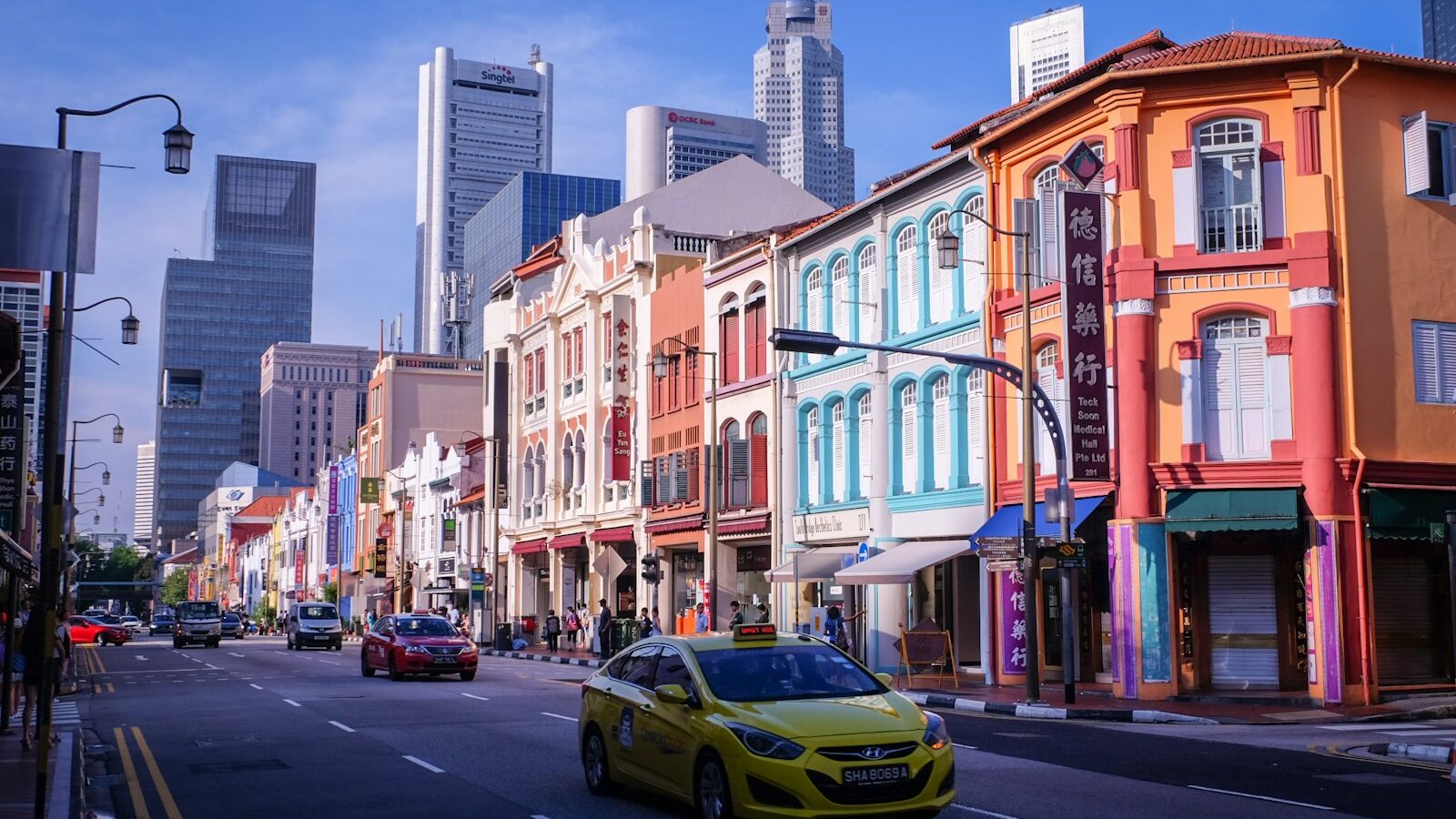
When you first arrive in Singapore, getting from A to B feels easy, and yet the taxi vs Grab singapore question trips up almost every newcomer. You will see cream, blue and other coloured cabs cruising the roads with a lit rooftop sign, and at the same time your friends will tell you to just open an app. Both work well. They simply suit different moments. This guide walks you through how each one is booked, how you pay, how fares behave, and when one clearly beats the other, so you can move around the island with confidence from your first week.
The two ways to get a ride
A metered street taxi is a licensed cab you flag down at the roadside, join a taxi queue for at a mall or hotel, or pick up at a taxi stand. The driver starts the meter, and the fare is calculated by distance and time plus any applicable surcharges. You do not know the exact total until you arrive, because it depends on the route and traffic. Taxi companies in Singapore are well established, drivers are professionally licensed, and the whole system is regulated by the Land Transport Authority (LTA).
Ride-hailing through an app such as Grab (and other licensed platforms) works differently. You enter your pick-up and drop-off points, the app shows you a fare before you confirm, and a nearby private-hire car or taxi is matched to you. The car comes to you, so there is no standing at the kerb hoping one is free. For many new residents from mainland China this feels familiar, because it mirrors the app-first habit you are used to back home.
Both taxis and app rides are legal, safe and common. The difference is mostly about how you book, how the price is shown, and what fits the situation.
Booking, payment and how fares work
The clearest split is in how you get the car and how you settle up.
With a street taxi you can simply raise your hand at the roadside where stopping is allowed, or walk to a taxi stand. That immediacy is the taxi’s biggest strength. You can also book many taxis through their own company apps or hotlines. Payment is flexible: cash, most contactless cards, and common mobile wallets are usually accepted, though it is polite to ask if you are unsure. Because the meter runs live, a longer or slower journey costs more, and there are set surcharges at certain times, from certain locations such as the airport, and for peak periods. LTA publishes how these surcharges and metered fares are structured, so that is the place to check current rules rather than guessing.
With an app ride, you book entirely on your phone, and the price is quoted upfront before you tap to confirm. Payment is typically cashless through a card or wallet you have already linked, though some rides allow cash too. The upfront fare is convenient because you know the cost in advance, but it can rise when demand is high. This is often called surge or dynamic pricing: during heavy rain, late nights, public holidays or the morning and evening rush, the quoted fare goes up because many people want cars at once. A metered taxi, by contrast, keeps charging by the meter regardless of demand, so in a sudden downpour a flagged taxi may sometimes work out cheaper than a surging app fare, if you can find a free one.
Here is a quick side by side to keep the differences straight.
| Point | Metered street taxi | Ride-hailing app (e.g. Grab) |
|---|---|---|
| How you get it | Flag down, taxi stand, or company app | Book in the app, car comes to you |
| Price shown | Meter, total known on arrival | Upfront fare before you confirm |
| Peak pricing | Set surcharges, no surge | Dynamic surge when demand is high |
| Payment | Cash, card, mobile wallet | Usually cashless, linked in app |
| Best for | Instant rides, taxi stands, no signal | Planned trips, luggage, unfamiliar areas |
Safety, comfort and language
Safety is strong on both sides. Every driver, whether a taxi or a private-hire car, must be properly licensed, and rides are trackable. The apps add features that many newcomers appreciate: your route is recorded, you can share your trip with a friend in real time, and the driver and car plate are shown before you get in. Always check that the plate number matches the app before you step into a booked car. In a street taxi, the driver’s identification is displayed inside the cab.
Language is a practical concern in your early months. With an app you type the destination, so you do not need to pronounce an unfamiliar road name, and the driver simply follows the map. This alone makes apps very comfortable for new arrivals still building their English or their sense of local place names. In a flagged taxi you may need to say or show the address, though showing it on your phone screen works perfectly well and drivers are used to it.
For comfort with luggage, heavy shopping, or a trip to Changi Airport, booking ahead through an app means a car arrives at your door at a set time, which removes stress. For a spur of the moment ride when you are already standing outside a mall with a taxi stand, flagging or queuing for a cab is often faster than waiting for a match.
When each one wins
Choose a street taxi when you want a ride right now and there is a taxi stand or free cab nearby, when your phone battery or signal is low, when app surge pricing has spiked in bad weather, or when you simply prefer paying by cash or card without linking an account.
Choose an app ride when you are planning a trip in advance, when you are heading somewhere unfamiliar and want the route handled for you, when you have luggage and want the car to come to you, when you want a fixed price known before you travel, or when you would rather not speak the address aloud. Many residents keep an app installed and still flag the occasional taxi, using whichever is quicker in the moment.
A sensible habit is to compare. If you are near a taxi stand, glance at the app fare; if it is surging, the queue may be the better deal. If no cab is in sight, the app will bring one to you. Over a few weeks you will develop an instinct for which to reach for.
The bottom line
There is no single winner in the taxi vs grab singapore debate, because each shines in its own situation. Street taxis give you instant, meter-based rides with flexible payment and no surge. Apps give you upfront prices, door pick-up, route handling and easy cashless payment, at the cost of occasional surge pricing. For newcomers, apps are often the gentler starting point thanks to the typed destination and known fare, while taxis remain unbeatable for quick, on-the-spot journeys. Keep both options open, always check that a booked car’s plate matches, and defer to LTA for the current rules on fares and surcharges. With both tools in your pocket, Singapore is genuinely easy to get around.