
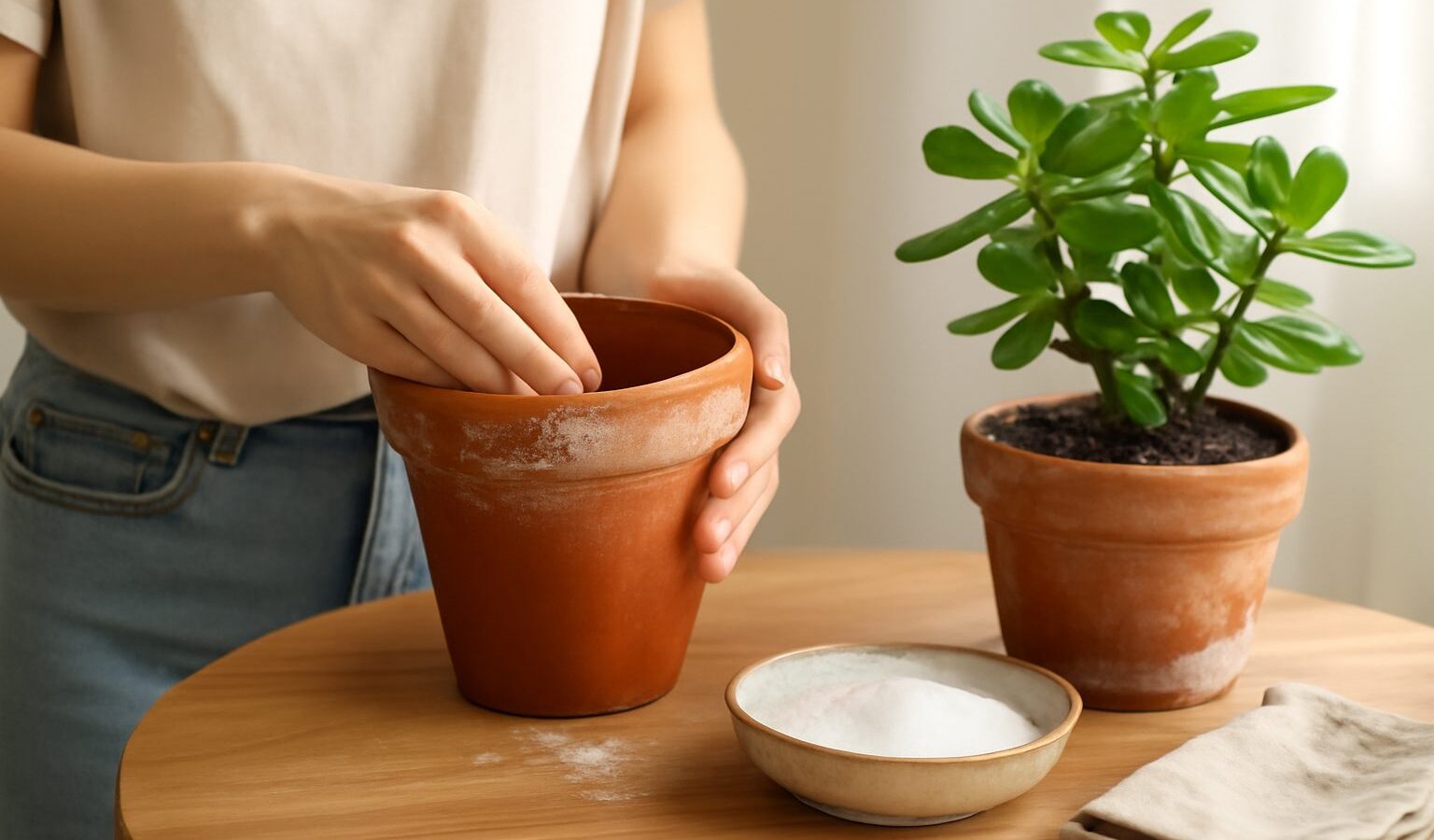
If you have ever noticed a crusty white ring around the rim of a pot or a pale layer on top of the soil, you have met salt buildup. Dealing with salt buildup in pots in Singapore is a common part of container gardening, because pots hold a limited amount of soil and mineral salts slowly gather in them over time. In our hot climate, frequent watering and regular feeding both add to the problem. The fix is simple once you understand what is happening, and your plants will thank you for a little routine care.

What Salt Buildup Is and Why It Happens
The salts we are talking about are mineral salts, not table salt. They come from fertilisers and from the minerals naturally present in tap water. When you feed and water a potted plant, the roots take up water and some nutrients, but leftover minerals stay behind in the soil. Each time the mix dries out, those minerals become more concentrated. Over weeks and months they build into a visible crust and raise the salt level around the roots.
High salt levels make it harder for roots to draw up water, even when the soil is moist. This stress shows up as brown, crispy leaf edges and tips, slow growth, wilting despite watering, and that telltale white residue on the soil surface and pot rim. In a small-space garden where the same pots are used for years, buildup creeps up quietly, so it helps to know the signs. Our guide on why your plant has brown leaf tips covers a related symptom you might be seeing.
Flushing Pots to Wash Salts Away
The main cure is also the simplest: flush the pot with plenty of plain water. This is sometimes called leaching. Take the pot to a spot where water can drain freely, such as over a floor trap or outdoors, and pour water slowly and steadily through the soil. Let it run out of the drainage holes, then keep going. A good rule of thumb is to pass a volume of water through equal to several times the size of the pot, so the excess salts dissolve and wash out the bottom.
Let the pot drain fully afterwards, and never leave it sitting in a saucer of run-off, since that water is now salty and can wick back up. Standing water in a saucer is also a mosquito breeding risk in our climate, so tip it away and scrub the saucer. For plants that are especially sensitive, you can flush every month or two. Doing this in cooler morning or evening hours suits both you and the plant.
Preventing Buildup Before It Starts
Prevention is easier than cure. A few habits keep salt levels low over the long run.
- Water thoroughly, not just a splash. When you water, add enough that a little runs out of the drainage holes each time. That small amount of run-off carries excess salts with it, so light surface watering actually makes buildup worse.
- Feed at the right rate. Over-feeding is the biggest source of salt trouble. Follow the fertiliser label, and if in doubt, feed a little less rather than more. Our guide on how to fertilise plants in Singapore explains sensible feeding for the tropics.
- Mind your water. The minerals in tap water vary, and they add up in pots over time. If you collect rainwater, using some of it can slow buildup. See tap water and water quality for plants for more on this.
- Refresh the top layer. Scrape off any visibly crusty topsoil and replace it with fresh mix once in a while.
Make sure every pot has open drainage holes and a mix that drains well, since trapped water concentrates salts fast.
Keeping Potted Plants Happy
Salt buildup is not a sign that you are doing something wrong. It is simply what happens when plants live in containers, and it is very manageable. Water deeply so a little always drains through, feed at label rates, flush your pots now and then, and empty saucers so nothing stagnates. Repotting into fresh mix every year or two gives a clean start as well. With these small routines built into your gardening, your potted plants will stay green and healthy through Singapore’s long growing year.
Further reading: Mulching and Top-Dressing Your Pots