
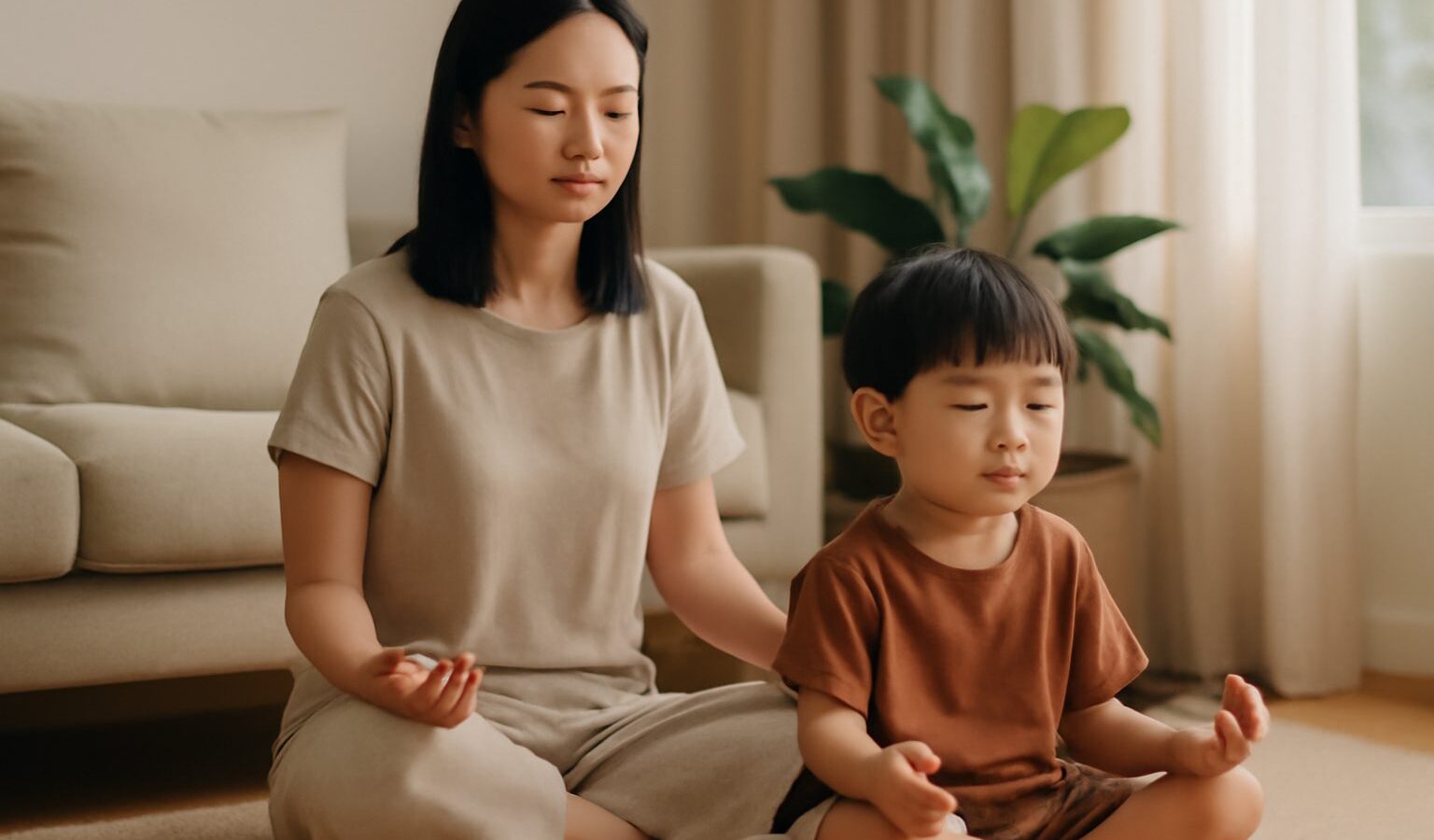
Childhood in Singapore can be busy. Between school, tuition, CCAs and the daily commute through the heartland, even young children can feel wound up and tired. Mindfulness for children in Singapore is not about turning your child into a serene little monk. It is simply about helping them slow down, notice how they feel, and find easy ways to relax. These are gentle life skills that can help a child unwind after a long day and cope a little better with everyday ups and downs.
Every child is different, and there is no single right way to introduce these ideas. Some children take to quiet breathing straight away, while others need movement and play to settle. The suggestions below are simple and age-appropriate, meant to be adapted to your own family.
What Mindfulness Really Means for Children
At its heart, mindfulness just means paying gentle attention to the present moment. For a child, this might be noticing the taste of their food, the feeling of their breath, or the sounds around them, without rushing on to the next thing. It is a way of pressing pause on a busy mind.
It is worth being clear about what mindfulness is not. It is not a cure for any condition, and it is not a treatment. Think of it instead as a simple relaxation habit, rather like brushing teeth for the mind. It will not fix every hard feeling, but it can give your child small, useful tools to calm themselves.
Children often learn best by example. If they see you take a slow breath before responding to a frustration, or pause to enjoy a quiet moment, they absorb the idea naturally. You do not need to be an expert. Practising together, in a light and unhurried way, is often the most effective approach.
Simple Relaxation Activities to Try
Keep things short, playful and pressure-free. If an activity feels like a chore, children switch off. Here are a few gentle ideas suited to different ages.
Balloon breathing works well for younger children. Ask your child to place their hands on their tummy and imagine slowly blowing up a balloon as they breathe in, then letting it deflate as they breathe out. A few slow rounds can ease a wound-up body.
The five senses game is a lovely way to bring a restless mind into the present. Invite your child to name five things they can see, four they can hear, three they can touch, two they can smell and one they can taste. This gently anchors their attention and often calms racing thoughts.
Try a short body relaxation at bedtime. Guide your child to tense and then release each part of the body in turn, from scrunched-up toes to a squeezed-tight face, letting go of the day. Many children find this a soothing way to drift off.
Mindful movement suits children who struggle to sit still. Slow stretching, gentle yoga poses with fun animal names, or a slow walk noticing everything around them all count. Relaxation does not have to mean sitting quietly with eyes closed.
Quiet, focused play can be mindful too. Colouring, building, watering plants or listening carefully to a piece of music all invite a child to settle into one thing at a time. This steadier attention can also support their focus for schoolwork, something explored further in Building Your Child’s Concentration and Focus.
Weaving Calm Into a Singapore Family Routine
You do not need a special room or extra hour in the day. The best results come from small moments woven into your existing routine.
A short calming ritual after school can help your child shift out of go-go-go mode. Even three minutes of slow breathing or quiet chatting before homework can make the rest of the evening smoother. Bedtime is another natural window, when a little relaxation helps signal that the day is winding down.
Keep expectations gentle. Some days your child will happily join in, and other days they will not be in the mood. That is completely fine. Forcing mindfulness turns a calming practice into a battle, which defeats the point. Offer it lightly and let your child come to it in their own time.
Notice and encourage the moments they use these tools on their own, such as taking a breath when frustrated. A little warm acknowledgement helps the habit take root. The way we encourage matters, and Praising Your Child the Right Way offers helpful pointers on this.
Knowing When More Support Is Needed
Mindfulness and relaxation are wonderful everyday tools, but they are not a substitute for proper help when a child is truly struggling. If your child seems persistently sad, very anxious, or overwhelmed in a way that does not ease, gentle breathing exercises are not enough on their own.
In these situations, it is important to reach out. A school counsellor, your family doctor or a psychologist can offer proper support. Involving your child’s school can also help, since teachers often notice patterns you may not see at home. There is no shame in seeking help, and doing so early is a caring, sensible step. For more on this, Children’s Mental Health and Anxiety is a reassuring place to begin.
Teaching your child mindfulness and relaxation is a quiet gift that can last a lifetime. Keep it simple, keep it light, and practise together whenever you can. Over time, these small habits give your child a gentle way to steady themselves in a busy world, and they give your whole family a few more calm moments to share.