
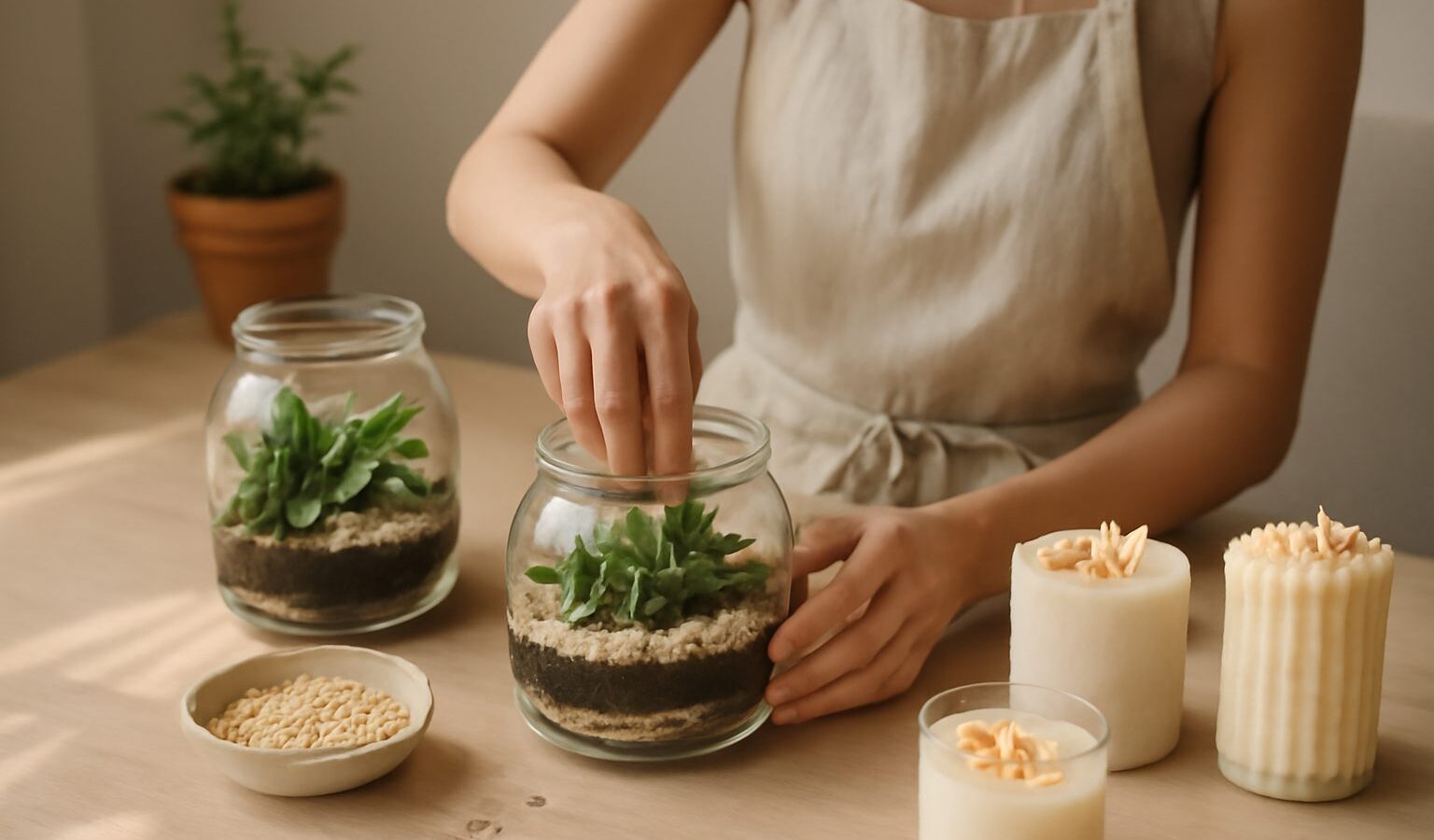
A good terrarium workshop in Singapore sends you home with two things: a tiny living garden under glass, and a couple of hours that felt genuinely restful. Candle making sits right beside it as the other great beginner craft, where you leave with a scented candle you poured yourself and the quiet satisfaction of having made something useful with your hands. Both have grown popular for the same reason. They are calm, they are forgiving, and you do not need any prior skill to end up with a result you are proud of.
These workshops have become a favourite for date nights, small celebrations, team bonding, and solo afternoons when you want to slow down. This guide covers what each craft involves, who tends to enjoy it, what a session looks like, where in Singapore you generally find these classes, and how to choose the one that fits.
What a Terrarium Workshop Involves
A terrarium is a small garden built inside a glass container. The workshop teaches you to layer it correctly so the plants actually survive, which is the part most people get wrong when they try at home. You typically start with a drainage layer of pebbles or clay, add a filtering layer, then soil, and finally the plants and decorative touches like moss, stones, or small figurines.
There are two broad styles you will meet. Closed terrariums use sealed glass and humidity-loving plants such as ferns and moss, creating a self-sustaining little ecosystem that recycles its own moisture. Open terrariums are unsealed and suit succulents and cacti, which prefer drier air and more light. The instructor walks you through the layering, helps you arrange your plants, and explains how to care for the finished piece once you get it home.
The appeal is partly the making and partly the keeping. Unlike many crafts, a terrarium keeps going after the workshop ends. A well-built closed terrarium can thrive for a long time with very little intervention, which makes it feel less like a one-off activity and more like a small ongoing hobby.
What a Candle Making Workshop Involves
Candle making follows a similar rhythm but with a different payoff. Most workshops focus on soy or other plant-based waxes, which burn cleanly and are beginner-friendly. You learn to melt the wax to the right temperature, choose and blend a fragrance, set the wick, and pour into a vessel such as a tin, jar, or ceramic pot.
The fragrance-blending step is where people tend to light up. You will usually be offered a range of scent oils and encouraged to combine them, so your candle ends up smelling exactly the way you want rather than like something off a shelf. Some studios extend the format to other poured or scented goods, so you might find sessions on reed diffusers, wax melts, or aromatherapy blends running under the same roof.
Because hot wax and cooling time are involved, candle sessions have a natural pace to them. There is a stretch where you wait for your candle to set, which studios often fill with the fragrance talk or a drink, so the session never feels like it is dragging.
Who These Workshops Suit
Both crafts share a low barrier to entry, which makes them broadly appealing, though each has its own natural fit.
- Beginners and the craft-shy, since instructors guide every step and it is very hard to fail.
- Couples, because building side by side and comparing results makes for an easy, pressure-free date.
- Groups and colleagues wanting a calm shared activity that still leaves everyone with something to take home.
- Gift makers, since a handmade candle or terrarium is a thoughtful present, and some people book specifically to make one.
- Plant lovers lean toward terrariums, while anyone who enjoys scent and cosy homeware tends to prefer candles.
If you want an activity with a living result you can nurture, choose a terrarium. If you want something sensory and immediately usable, choose candles. Plenty of studios run both, so indecisive groups can sometimes split the difference.
What to Expect and How They Compare
Sessions are unfussy. You arrive, settle at a workspace laid out with materials, and follow the instructor at a gentle pace. Both crafts run in blocks of a couple of hours, and both are messy in only the mildest way, so an apron and sensible clothes are enough. The main practical difference lies in what you carry home and how you handle it.
| Feature | Terrarium workshop | Candle workshop |
|---|---|---|
| What you make | A planted glass garden | A scented poured candle |
| Ongoing care | Yes, light watering and the right spot | No, just burn and enjoy |
| Main appeal | Building a living miniature landscape | Blending your own fragrance |
| Take-home note | Carry the glass upright and steady | Let wax cure fully before lighting |
| Suits | Plant lovers, calm makers | Scent lovers, gift makers |
For terrariums, the instructor will explain how much light and water your particular plants need, since a closed moss terrarium and an open succulent bowl want very different care. Carry the finished piece upright so the layers do not shift. For candles, the wax needs time to set in the studio and then to cure fully at home before you light it, so resist the urge to burn it the same night.
Where to Find Them in Singapore
You will find these workshops dotted across the island rather than concentrated in one district. Many operate out of craft studios and small creative spaces in central and city-fringe neighbourhoods, often in converted shophouses or arts precincts where independent makers set up shop. Others run from heartland locations closer to residential estates, which are handy if you would rather not head downtown. A number of lifestyle cafes and event spaces also host terrarium and candle sessions alongside food and drink, turning the class into a fuller outing.
Studios vary in how they run things. Some offer fixed public sessions you join with strangers, others take private bookings for groups and celebrations. Because operators, session lengths, and pricing change over time, check current details directly before you commit rather than trusting an old listing. As a rough guide, expect a per-person rate that scales with the size of your terrarium or the number and size of candles you make, with private group bookings priced separately. Confirm what is included, since some rates cover all materials while larger vessels, extra plants, or premium fragrances may cost more.
Tips for a Good Session
- Book ahead, particularly for weekend and evening slots, which are the first to go.
- Check the plant or scent options when you book if you have a preference, since ranges differ between studios.
- Wear practical clothes. Soil and wax are forgiving, but an apron and old clothes save any worry.
- Ask about aftercare. For terrariums, note the watering and light advice. For candles, ask how long to cure before lighting and how to trim the wick.
- Plan the trip home. A terrarium needs to travel upright and steady, so a bag with a flat base helps.
- Go in relaxed. These crafts reward a slow, unhurried approach far more than speed.
Treat the afternoon as the point, not just the object you leave with, and you will get the most from it. Prices and session details change, so verify the current offering when you book.
Explore More
If a calm, hands-on outing appeals, there is plenty more in the same spirit. For a livelier creative session, see our guide to art jamming and paint studios in Singapore, or keep this in mind for our list of rainy day activities in Singapore. Families can pair it with the ideas in our guide to exploring Singapore with kids.