

The Cantonese community in Singapore is one of the island’s major Chinese dialect groups, celebrated for its craftsmanship, its vibrant performing arts and its central role in the life of Chinatown. Skilled, industrious and culturally rich, the Cantonese helped shape the trades, entertainment and streetscapes of early Singapore, leaving a heritage that still resonates in the historic quarter they once made their own.
Origins and Migration to Singapore
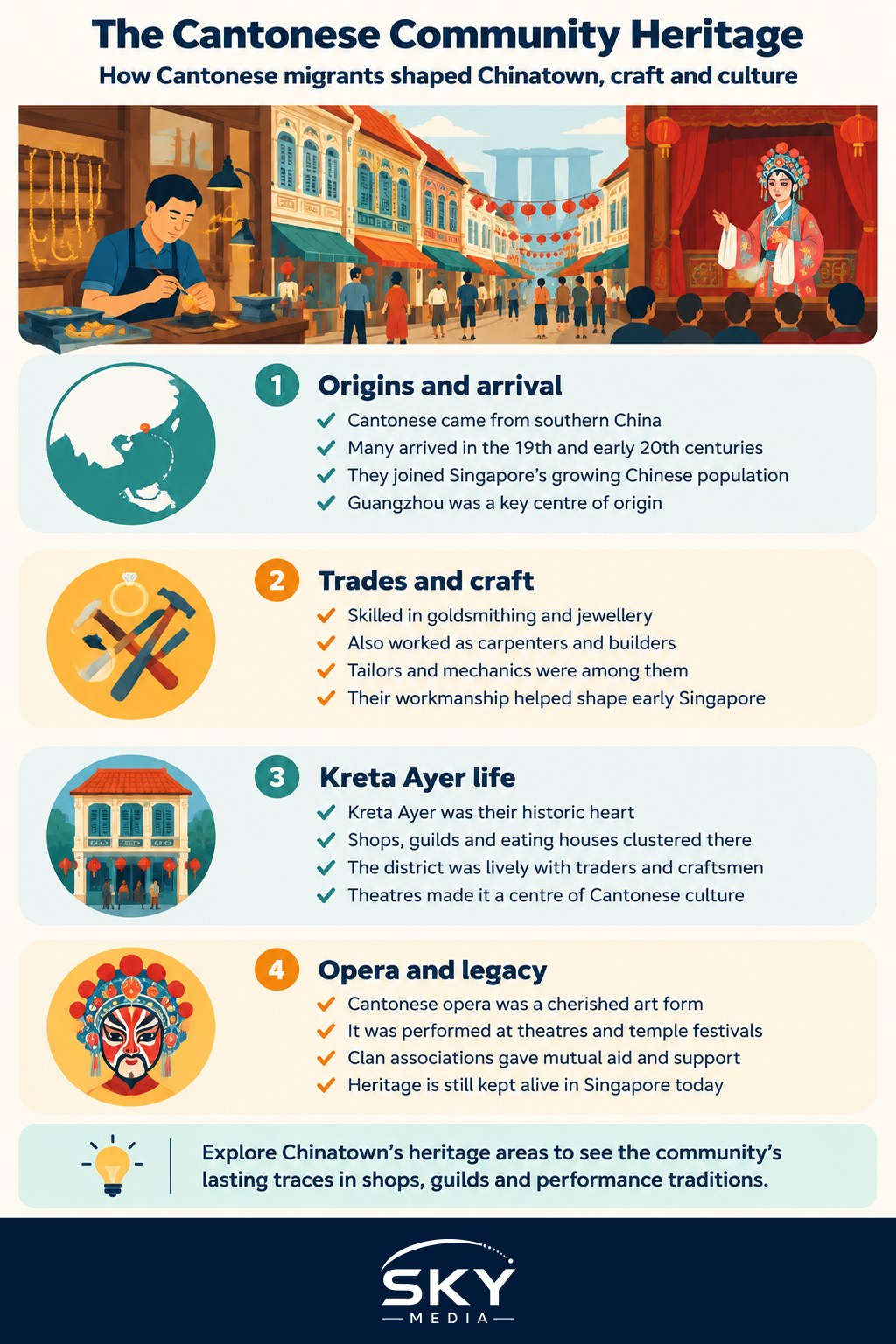
The Cantonese originate from the Guangdong province in southern China, particularly the region around the Pearl River delta and the great port city of Guangzhou, historically known to the West as Canton. This was one of China’s most commercially dynamic and outward looking regions, long connected to overseas trade, and its people migrated in large numbers across Southeast Asia and beyond. Cantonese migrants came to Singapore through the nineteenth and early twentieth centuries, adding to the growing and diverse Chinese population of the port settlement.
The Cantonese were especially known for their skilled trades and crafts. Many worked as goldsmiths, jewellers, carpenters, builders, tailors and mechanics, bringing fine workmanship to a rapidly developing town. Cantonese goldsmiths and jewellers established a strong presence, and their shops became known for artistry in precious metals, a trade the community became closely associated with over the generations. Cantonese labourers and artisans also contributed their skills to construction and the building trades, helping to raise the shophouses and structures of the young settlement. To place these trades in context, readers may explore understanding Singapore’s Chinese dialect groups and the varied livelihoods each pursued.
Kreta Ayer, Chinatown and Settlement
The Cantonese are strongly identified with the Kreta Ayer district, the historic heart of Chinatown. This area became a focal point of Cantonese life, filled with their shops, guilds, eating houses, theatres and clan premises. The streets bustled with goldsmiths, craftsmen and traders, and the district developed a lively character shaped in large part by the community. Kreta Ayer was also known for its entertainment and its theatres, and it became a centre of Cantonese cultural life in Singapore. Those interested in the wider setting will find much to appreciate in a Chinatown heritage guide that traces the area’s layered history.
Within these neighbourhoods, the Cantonese organised themselves through clan and district associations and guilds tied to their particular trades, offering mutual aid, apprenticeship, lodging and a sense of belonging. These bodies helped regulate crafts, support members in hardship and maintain links to ancestral districts in Guangdong. The role of such organisations across the Chinese population is described in accounts of clan associations in Singapore, which were vital to the survival and cohesion of migrant communities.
Cantonese Opera and Cultural Contributions
Among the community’s most cherished contributions is Cantonese opera, a splendid tradition of Chinese theatre known for its elaborate costumes, painted faces, acrobatics, music and singing in the Cantonese dialect. In its heyday, Cantonese opera was hugely popular entertainment, performed in theatres and at temple festivals in and around Kreta Ayer, drawing enthusiastic audiences. The art form carried stories drawn from history and legend, and it played an important part in preserving language, values and communal identity. Today, dedicated troupes and cultural groups continue to keep Cantonese opera alive, sustaining a heritage that once filled the streets of Chinatown with music.
The Cantonese also enriched Singapore through their cuisine, their festivals and their craftsmanship. Cantonese cooking became widely loved and forms part of the shared culinary heritage of the island, though this article celebrates community heritage rather than serving as a food guide. The community’s artistry in goldsmithing, carving and construction left a tangible mark on the built environment and the decorative arts, reflecting a tradition of skill and precision.
Heritage and Identity Today
Today the Cantonese community continues to honour its heritage through its clan associations, opera preservation efforts and the enduring cultural memory of Chinatown. While fewer young people speak the dialect fluently, Cantonese remains widely recognised through popular culture, film and music from the wider Cantonese speaking world, and many in Singapore still take pride in their Cantonese roots. The community’s legacy forms part of the broader Nanyang Chinese identity in Singapore.
From the glint of a goldsmith’s window to the drums and melodies of an opera stage, the Cantonese heritage remains a vivid thread in Singapore’s cultural fabric. It stands as a tribute to a community of artisans and performers whose skill and spirit helped give Chinatown, and the nation, much of its enduring colour and character.
Frequently Asked Questions
Why are Cantonese linked with goldsmiths and jewellers? Cantonese migrants were especially known for skilled trades, and many worked as goldsmiths, jewellers, carpenters, builders, tailors and mechanics. Their goldsmith and jewellery shops became known for artistry in precious metals, a trade the community became closely associated with.
Where in China do the Cantonese come from? From Guangdong province in southern China, particularly the region around the Pearl River delta and the port city of Guangzhou, historically known to the West as Canton. It was a commercially dynamic region long connected to overseas trade.
What is Cantonese opera like? It is a splendid tradition of Chinese theatre with elaborate costumes, painted faces, acrobatics, music and singing in the Cantonese dialect. Once hugely popular in theatres and temple festivals around Kreta Ayer, it is kept alive by dedicated troupes and cultural groups.
What did Cantonese guilds do? Clan and district associations and trade guilds offered mutual aid, apprenticeship, lodging and a sense of belonging. They helped regulate crafts, support members in hardship and maintain links to ancestral districts in Guangdong.
What part did Cantonese labourers play in building early Singapore? Cantonese labourers and artisans contributed their skills to construction and the building trades, helping to raise the shophouses and structures of the young settlement. This left a mark on the built environment and decorative arts.
Further reading: The Hakka Community Heritage · The Teochew Community Heritage · Keong Saik and Bukit Pasoh Heritage Guide