
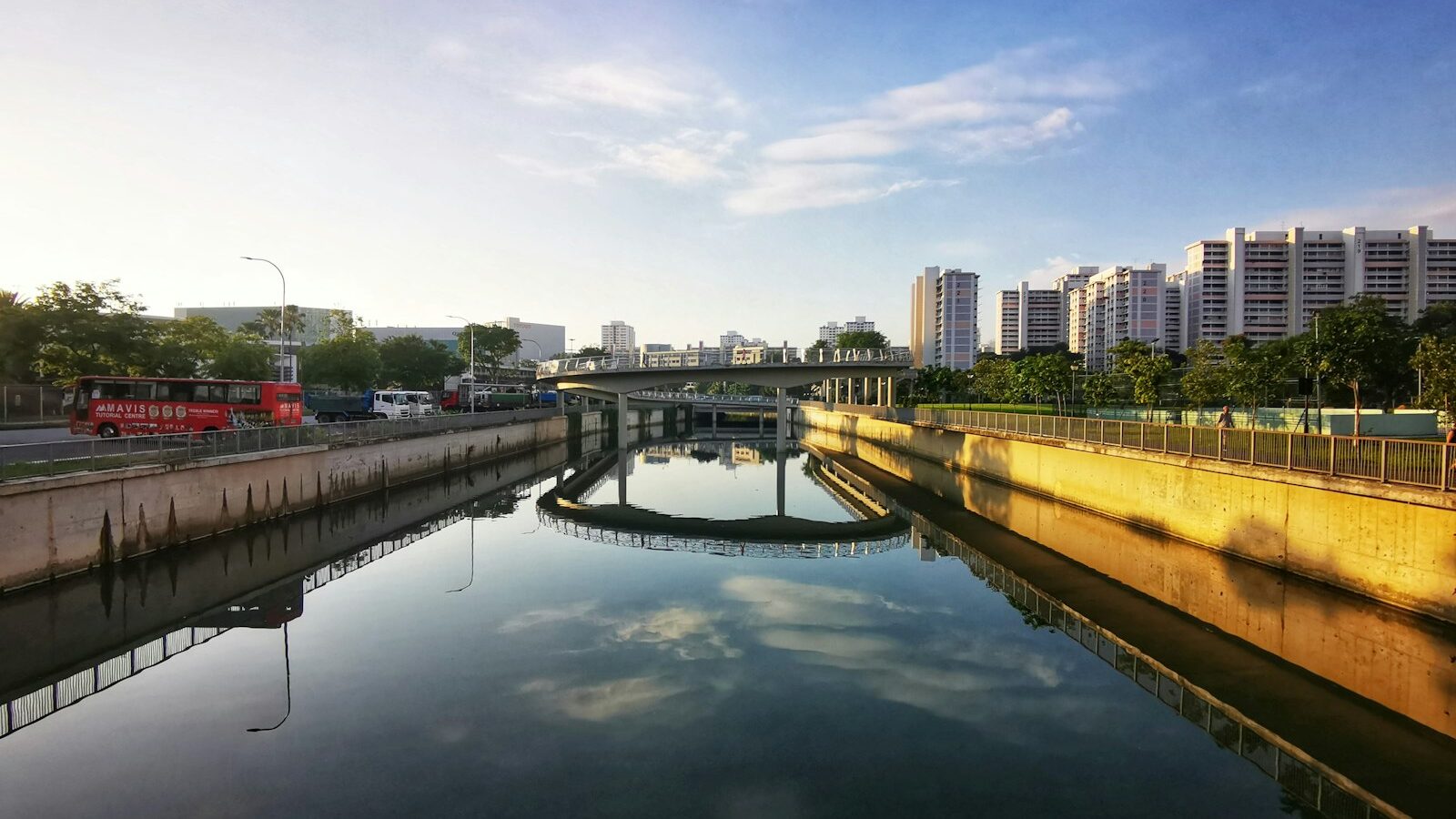
The Deep Tunnel Sewerage System is Singapore’s underground superhighway for used water, a network of deep tunnels that carries wastewater across the island to large reclamation plants. Built and operated by PUB, the national water agency, it is designed to move used water efficiently and to free up land at the surface. This guide explains what the system is, how it works, why Singapore built it, and how it connects to the country’s wider water story. For the latest details on capacity, phases, and locations, PUB is the authoritative source.
What the Deep Tunnel Sewerage System Is
The Deep Tunnel Sewerage System, often shortened to DTSS, is a long-term used-water management network. Instead of relying only on a large number of pumping stations and shallow sewers spread across the island, DTSS uses deep, large-diameter tunnels to convey used water by gravity to centralised water reclamation plants. There it is treated to a high standard before being either purified further into NEWater or discharged safely to the sea.
The system is built in phases. The first phase established a deep tunnel and a large reclamation plant serving the eastern part of the island, along with a link that carries treated water out to sea. A later phase extends the network to the west, adding another deep tunnel and reclamation facility so that the whole island is served over time. Because the project is delivered in stages, the specific extent completed at any moment should be checked with PUB rather than assumed.
How the System Works
The core idea behind DTSS is to let gravity do the heavy lifting. Used water from homes, businesses, and industry flows into the existing sewer network, then into link sewers that feed the deep tunnels. Because the tunnels are set deep underground and slope gently downhill, the used water flows along them without needing a long chain of pumping stations along the way. At the end of each tunnel, the water is lifted and treated at a centralised water reclamation plant.
In simple terms, the journey looks like this:
- Used water leaves homes and premises through household plumbing into public sewers.
- It collects into larger link sewers that feed the deep tunnels.
- Gravity carries it along the deep tunnels to a centralised reclamation plant.
- The plant treats the used water to a high standard.
- Treated water is either purified further into NEWater or released to the sea through an outfall.
This design reduces the number of intermediate pumping stations and treatment works needed across the island, which is part of why the system is described as more land-efficient than the older, more dispersed approach.
Why Singapore Built It
Singapore is a small and densely built island, so land is one of its scarcest resources. The older used-water infrastructure relied on several water reclamation plants and many pumping stations distributed around the country, each taking up space and needing buffer zones. Consolidating treatment into fewer, larger centralised plants and moving the water through deep tunnels frees up surface land that can be used for other purposes.
There are other stated reasons for the approach. A deep, gravity-based network is designed to be reliable and to have fewer points that need active pumping. Centralising treatment also supports water reuse, because a large reclamation plant can be paired with facilities that turn treated used water into NEWater, one of Singapore’s key water sources. In this way, DTSS is not only about disposing of waste but about closing the water loop, collecting every drop of used water so it can be treated and much of it recycled.
| Feature | Older dispersed approach | Deep Tunnel Sewerage System |
|---|---|---|
| Movement of used water | Many pumping stations and shallow sewers | Deep tunnels using gravity flow |
| Treatment sites | Several smaller plants around the island | Fewer, larger centralised reclamation plants |
| Land footprint | More surface land and buffer zones | Less surface land freed for other uses |
| Link to reuse | Reuse handled plant by plant | Designed to feed large-scale NEWater production |
How It Fits the Four National Taps
Singapore describes its water supply using the idea of the Four National Taps: water from local catchments, imported water, NEWater, and desalinated water. DTSS is central to the NEWater tap because it collects used water reliably and delivers it to reclamation plants where a portion can be purified into NEWater. In other words, an efficient used-water network is what makes large-scale water recycling practical.
This is why used water is often described in official material not as waste but as a resource. The more completely used water is collected and treated, the more can be recovered and reused, which strengthens water security for an island with limited natural sources. The technology and standards behind NEWater and the other taps are covered in a companion guide, and DTSS is the collection backbone that supports them.
Following the Project and Its Details
DTSS is a decades-long undertaking, and its tunnels, plants, and links are commissioned in stages. Specific facts such as tunnel lengths, plant capacities, exact locations, and completion dates are set by PUB and can change as the project progresses, so those details should be confirmed against PUB’s own information rather than taken from any single summary. What stays constant is the underlying logic: use deep tunnels and gravity to collect used water island-wide, treat it centrally, recover as much as possible, and save land at the surface.
Understood this way, the Deep Tunnel Sewerage System is a quiet but important piece of national infrastructure. Most people never see it, yet it underpins both sanitation and water recycling for a growing city.
Explore More
To see how the collected used water becomes drinking-quality supply, read the guide to NEWater and desalination, two of Singapore’s Four National Taps. It also connects to how the island uses scarce land, explained in the overview of land reclamation in Singapore, since freeing up surface land is one reason the deep tunnel approach was chosen.