

Few nail looks have lasted as long as the classic white-tipped design. It suits weddings and job interviews, dressed-up nights and ordinary Mondays, and it flatters just about every skin tone and nail shape. The french manicure singapore nail lovers keep coming back to is popular for a reason: it looks clean, polished, and quietly expensive, yet the idea behind it is simple enough to do at home once you know the steps.
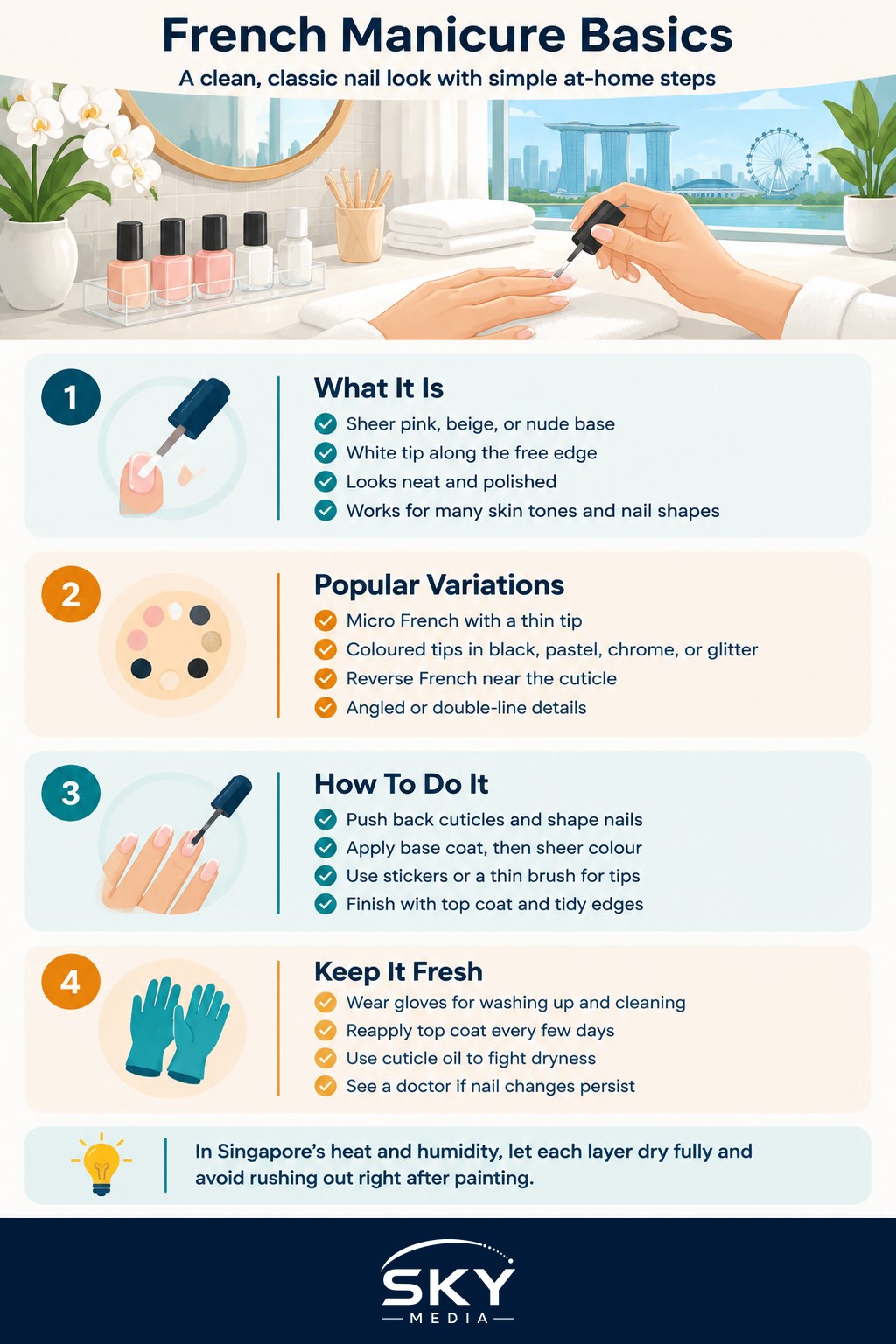
At its heart, a French manicure is a natural-looking base, usually a sheer pink, beige, or nude, finished with a defined white tip along the free edge of the nail. That combination mimics a healthy, well-groomed nail, which is why it reads as tidy rather than flashy. From that base, endless variations have grown.
The Classic Look And Its Modern Twists
The traditional version is a soft, translucent pink or nude across the nail with a crisp white line at the tip. It is understated and timeless, which is exactly the appeal. But the style has evolved, and there is plenty of room to make it your own.
Popular variations include:
- The micro or baby French, with a very thin, delicate tip for a subtle, modern feel.
- Coloured tips, swapping white for black, pastel, chrome, or glitter.
- The reverse French, where the colour sits at the base near the cuticle instead of the tip.
- Angled or slanted tips for a fashion-forward twist.
- Double lines, pairing two thin stripes for a little extra detail.
You can do a French finish over natural nails with regular polish, or as part of a gel or builder-gel set for longer wear. If you are weighing up longevity against your natural nails, it is worth reading up on gel, acrylic, and the gentler builder-gel overlays that many people now prefer for a durable French that still lets nails breathe.
Nail shape changes the whole vibe. A French tip on a short, square nail looks crisp and professional, while the same design on a long almond or oval nail looks softer and more elegant. If you are unsure what suits your hands, choosing a nail shape can help you decide before you commit to a look.
Doing A French Manicure At Home
You do not need a salon to get a neat French, though it does take a steady hand and a little patience. Here is a reliable approach with regular polish.
First, prep your nails. Gently push back cuticles, shape the free edge, and lightly buff the surface so polish grips. Clean, well-prepped nails are the real secret to a tidy finish. Our at-home manicure guide covers this prep in full.
Then build the look:
- Apply a base coat and let it dry. This protects the nail and helps colour last.
- Paint one or two thin coats of your sheer nude or pink base, drying between coats.
- Create the white tips. For a clean line, you can use guide stickers across the smile line, or freehand with a thin brush if you are confident. Keep the white sheer and thin rather than thick.
- Tidy any wobbly edges with a small brush dipped in remover before it sets.
- Seal everything with a good top coat, and swipe a little along the very tip to lock the white in place and add shine.
In Singapore, heat and humidity mean polish can take longer to fully harden and is easy to smudge, so give each layer real drying time and avoid doing your nails right before rushing out. A quick-dry top coat helps. If you are working with gel and a lamp instead, do read up on curing safely first, and our guide to nail lamp and UV safety explains how to protect the skin on your hands during curing.
Keeping It Looking Fresh
A French manicure shows tip wear more obviously than a solid colour, because the white line is what draws the eye. To keep it looking sharp, a few habits help. Wear gloves for washing up and cleaning, since detergents and hot water dull polish and dry out nails. Reapply a thin layer of top coat every couple of days to refresh the shine and protect the tip. Keep a little cuticle oil handy, as our aircon and frequent hand-washing can leave nails and skin dry, and healthy cuticles make the whole manicure look better.
Look after the nail underneath, too. Polish is cosmetic and does not strengthen the nail itself, so ongoing nail health comes from care, not colour. Our guide to cuticle care and healthy nails is worth bookmarking, alongside your usual nail-care basics. And if you notice persistent changes to your nails, such as new discolouration, pain, lifting, or ridges that appear suddenly, that is a reason to see a doctor rather than simply painting over it.
The French manicure endures because it is flexible and forgiving. Keep the classic if you love it, or play with tips, colours, and placements to make it feel current. Either way, good prep, thin layers, and a little upkeep are what turn a nice idea into nails you are happy to show off.
Frequently Asked Questions
How long does a french manicure last on natural nails? It depends on your nails, your hands’ daily workload and the products used, so there is no fixed number. Regular polish chips sooner than a gel or builder-gel set. Wear gloves for washing up and refresh the top coat every couple of days.
What is the difference between a baby french and a classic french? A baby or micro french uses a very thin, delicate tip for a subtle, modern feel, while the classic has a more defined white line at the free edge. Both sit on a sheer pink or nude base, so choose by how bold you want the tip.
Which nail shape suits a french manicure best? Both work, with a different mood. On a short, square nail the tip looks crisp and professional, while on a long almond or oval nail it looks softer and more elegant. Pick the shape you can comfortably maintain with your daily routine.
How do I get a straight white tip without a steady hand? Use guide stickers across the smile line and keep the white thin and sheer rather than thick. Tidy wobbly edges with a small brush dipped in remover before it sets. Prep matters too, since clean, well-shaped nails make a neat line much easier.
Why does my french tip smudge or stay tacky in humid weather? Heat and humidity can slow polish hardening, so layers smudge easily. Allow real drying time between thin coats and avoid painting nails just before rushing out. A quick-dry top coat, swiped along the very tip, helps lock the white in.