
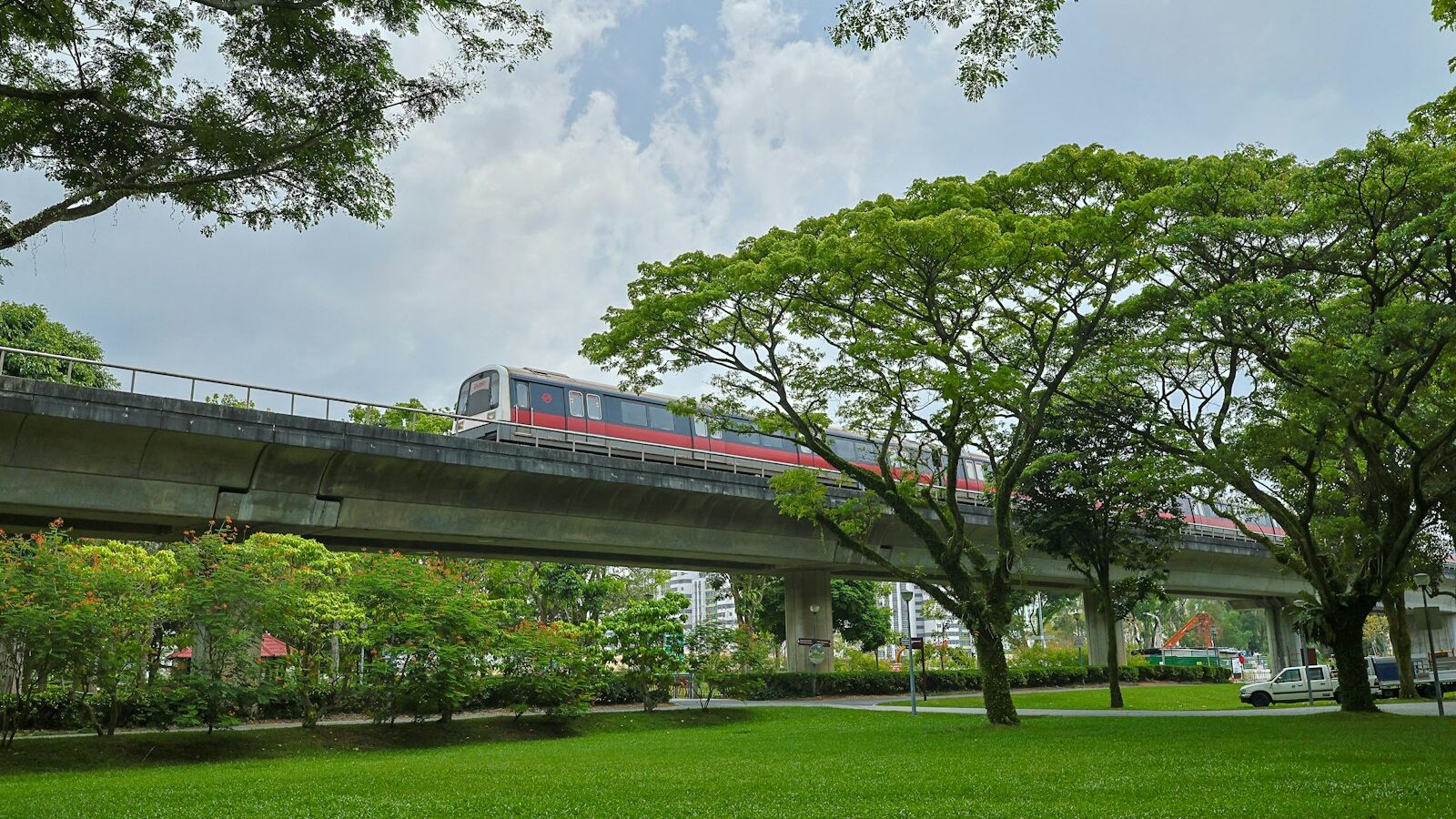
Running like a green seam down the length of the island, the Rail Corridor in Singapore is one of the country’s most unusual heritage sites: a continuous strip of land that once carried trains between Singapore and Malaya, now returned to walkers, cyclists and nature. When the railway ceased running through the island and the land was handed back, Singapore chose not to build over it but to keep it as a public green corridor, preserving both a wildlife route and a living memory of the age of rail. Along its length stand the old stations and structures that anchor the story.
This guide traces the line’s origins, the handover that changed everything, the heritage buildings to look for, and how to walk the corridor today.
The old Malayan railway line
The railway that once threaded through Singapore was part of the wider network operated by the Malayan Railway, known as Keretapi Tanah Melayu or KTM, linking the island to peninsular Malaya and beyond. For much of the twentieth century, trains ran across Singapore on a line that connected the grand southern terminus with the causeway to Johor in the north, carrying passengers and goods between the island and the mainland.
The line was more than transport; it was a physical link binding Singapore to the region in the decades before and after independence. Its route cut through plantations, forests and growing towns, and the land it occupied remained railway property under long-standing agreements between Singapore and Malaysia. For the precise history of the line, its agreements and its dates, the National Heritage Board and official records are the sources to consult, as the arrangements were complex and often renegotiated.
The handover and the birth of the green corridor
The turning point came when Singapore and Malaysia reached an agreement to move the railway operations, and train services through the island were discontinued, with the southern terminus closing to rail traffic. The land along the former line reverted to Singapore, opening a rare question: what to do with a long, thin ribbon of green running through a dense city.
Rather than parcel it out for development, the authorities decided to keep the corridor largely intact as a continuous public space, a decision widely welcomed by nature lovers and heritage advocates alike. Over time it has been progressively enhanced by the National Parks Board and partners, with paths, restored structures and connections to neighbouring parks and neighbourhoods, while preserving the sense of an open, natural passage. The tracks themselves were lifted, but the route lives on as the Rail Corridor, a place where you can walk for kilometres along the old alignment.
Railway heritage buildings to look for
Two stations bookend the railway story and remain its most important landmarks.
The former Tanjong Pagar Railway Station in the south was the grand terminus of the line, a dignified building whose main hall and facade made it a landmark of arrival and departure. Conserved as a national monument, it stands as the ceremonial heart of Singapore’s railway heritage and has featured in plans to integrate it into the wider corridor.
The former Bukit Timah Railway Station, further along the line, is a smaller, charming station that once served as a passing point on the single-track route. Restored and reopened as part of the corridor, it gives visitors a tangible sense of the working railway, complete with its platform and setting among the greenery.
Along the way, other structures survive, including old railway bridges such as the truss bridges that carry the route over roads, and signalling and boundary relics for the sharp-eyed. Here is a quick guide to the key heritage points.
| Landmark | What it is | Note |
|---|---|---|
| Tanjong Pagar Railway Station | Former grand southern terminus | Conserved national monument |
| Bukit Timah Railway Station | Small restored wayside station | Reopened within the corridor |
| Railway truss bridges | Steel bridges over roads | Popular photo and crossing points |
| The green corridor itself | Continuous former rail route | Walking and cycling trail |
Why the Rail Corridor matters
The Rail Corridor is heritage of a special kind, layering three stories in one place. It preserves the memory of the railway age and Singapore’s regional ties; it protects a continuous green route that lets wildlife and plants move through a built-up island; and it gives people a long, uninterrupted space to walk, run and cycle away from traffic. Few cities have the chance to keep such a corridor whole, and the decision to do so reflects a maturing sense of what heritage and green space are worth.
For residents it has become a beloved everyday escape, and for the heritage-minded it is a reminder that infrastructure can have an afterlife. The old stations, conserved and cared for, ensure the human story of the line is not lost even though the trains no longer run.
Visiting the Rail Corridor
The corridor runs much of the length of the island, so you can join it at many points near neighbourhoods along the former line, several of which are close to the rail network and bus routes. The Bukit Timah stretch, near the restored station, is a popular and scenic entry point, while the southern end connects towards the Tanjong Pagar area. Because the corridor is long, plan a manageable section rather than trying to walk it all at once.
Wear proper shoes, bring water and sun protection, and be prepared for stretches with little shade. Some parts may be closed for works or enhancement from time to time, so check the National Parks Board website for the latest access details, trail conditions and any events before you set out. Keep to the paths, take your litter home, and enjoy this quiet green thread through the heart of Singapore.
Explore more
The Rail Corridor links naturally to the island’s other green heritage, so continue to the old-forest boardwalks and reservoir views of MacRitchie Reservoir. For more of Singapore’s wartime and coastal past, visit the sea-facing batteries at Labrador Park, or take in harbour views and the cable car at Mount Faber.