
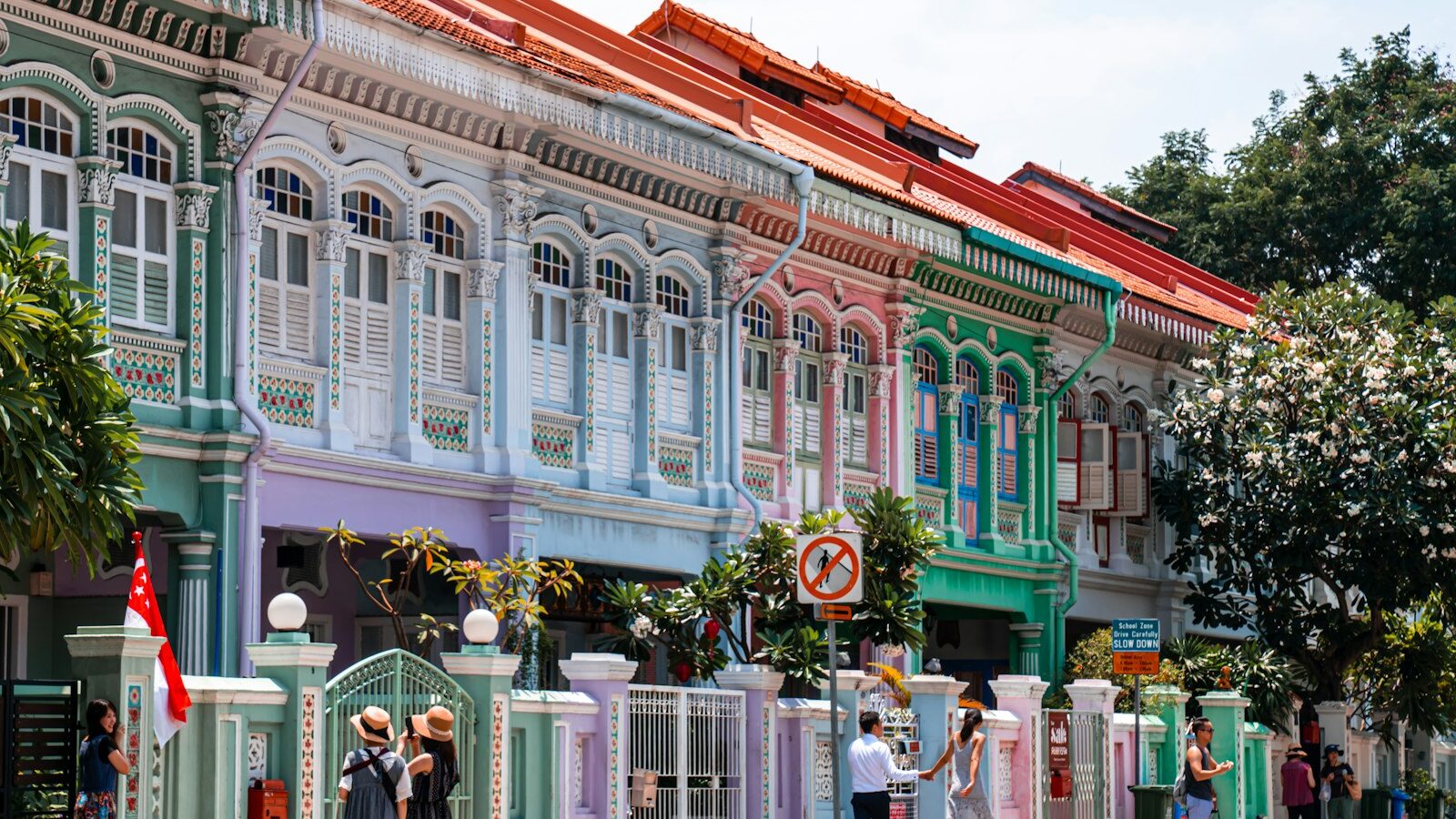
Tanjong Pagar sits on the southern edge of the city, where restored shophouses meet gleaming towers and the old port once defined daily life. This Tanjong Pagar heritage guide traces the district from its fishing-village and plantation beginnings, through its years as a bustling dockland and immigrant quarter, to the conserved, cosmopolitan neighbourhood of today. The name is Malay, often understood to mean a cape of stakes, hinting at the fishing traps and the shoreline that shaped its earliest identity.
Fishing Village and Plantation Roots
Before the modern city, the area around Tanjong Pagar was a coastal stretch of fishing settlements and, later, plantations. In the nineteenth century, nutmeg and other crops were grown on the slopes nearby before disease and changing fortunes ended the plantation era. The sea came much closer then than it does now, and the district’s fate was tied to the water.
Everything changed when the harbour developed. As Singapore grew into a major port, wharves and docks rose along this southern coast, and Tanjong Pagar became a centre of maritime trade and labour. The docks drew workers, many of them Chinese immigrants, and the district filled with the shophouses, lodging houses, and businesses that served a hardworking port community. For the detailed history of the harbour and its companies, the National Heritage Board and National Archives hold the fuller record.
An Immigrant and Hokkien Story
Like much of the historic town, Tanjong Pagar was shaped by immigrants who arrived seeking work and a new start. Many were Hokkien and other southern Chinese who found employment around the docks and in the trades that clustered nearby. They built clan associations, temples, and shophouse businesses that anchored community life, and their descendants remain part of the neighbourhood’s fabric.
This heritage survives in the temples and shrines dotted through the area, where residents still worship and mark festivals. Places of worship here should be treated with dignity: keep your voice low, dress modestly, and follow any posted etiquette when you step inside. The district’s immigrant history is not a single story but a layering of dialect groups, trades, and faiths that together made it one of the most characterful parts of old Singapore.
Shophouses and the Conservation Story
Tanjong Pagar holds a special place in Singapore’s conservation history. The rows of two- and three-storey shophouses along streets such as Duxton Road, Neil Road, and Tanjong Pagar Road were among the early areas the Urban Redevelopment Authority gazetted for conservation, helping to launch the wider movement to save the city’s shophouse heritage rather than clear it for redevelopment.
These shophouses show a range of architectural styles, from plainer early forms to the ornate, eclectic facades of later periods, with decorative tiles, carved timber, and five-foot-ways, the sheltered walkways that run along the ground floor. Restored and repurposed, many now house restaurants, bars, offices, and design studios, giving the district a lively evening scene layered over its historic bones.
The following overview gives a sense of how the district has evolved.
| Era | Character of Tanjong Pagar | Traces you can still see |
|---|---|---|
| Early 1800s | Fishing settlements and plantations | Coastal Malay place names |
| Later 1800s | Booming docks and immigrant labour | Old streets, clan and temple sites |
| Twentieth century | Dense shophouse quarter | Conserved shophouse rows and trades |
| Recent decades | Conserved district and new towers | Restored shophouses beside skyscrapers |
Landmarks to See Today
The most striking landmark is the former Tanjong Pagar Railway Station, the grand terminus that for many years was the southern end of the railway line from Malaysia. Its dignified facade and airy main hall are admired for their architecture, and the site has taken on new life as a heritage landmark; check official channels for current access and any events.
Elsewhere, wander Duxton Hill and Duxton Road for some of the most photogenic restored shophouses, then explore the public housing landmark at Duxton, where tall residential blocks rise where port workers once lived, a vivid symbol of how the neighbourhood reinvented itself. Along the way, look for old shrines, provision shops, and traditional businesses that persist among the newer establishments. The contrast of low heritage streetscapes against the towers of the central business district just north is the essential Tanjong Pagar view.
Cultural Significance
Tanjong Pagar matters as a place where Singapore’s port history, immigrant heritage, and conservation movement all meet. It reminds us that the city’s prosperity was built at the waterfront by working communities, many of them newly arrived, and that their shophouses and temples are worth keeping. As one of the pioneering conservation areas, it also helped set the pattern for how the whole island treats its built heritage.
Today the district embodies a very Singaporean balance: history preserved not as a static exhibit but as a living, working part of the city, where you can dine in a century-old shophouse in the shadow of modern skyscrapers. That coexistence of old and new is the heart of its appeal.
Visiting Tanjong Pagar
Getting there is simple. Tanjong Pagar MRT station on the East West Line, along with nearby stations on other lines, puts you within easy walking distance of the shophouse streets, and many buses serve the area. From the station, the conserved streets and Duxton area are a short stroll.
Allow a couple of hours, ideally beginning in the late afternoon so you can enjoy the shophouse streets by day and the dining scene as evening falls. Wear comfortable shoes and dress for the heat, carry water, and if you visit a temple be quiet and respectful. Remember that opening hours and access to landmarks can change, so check official sources before planning around any specific site.
Explore More
Tanjong Pagar connects naturally with the city’s other historic quarters. Continue the early immigrant and temple story just north in our Telok Ayer Street heritage guide, admire more conserved homes in the Tiong Bahru heritage guide, or trace the river trade in our Boat Quay and Clarke Quay history.