
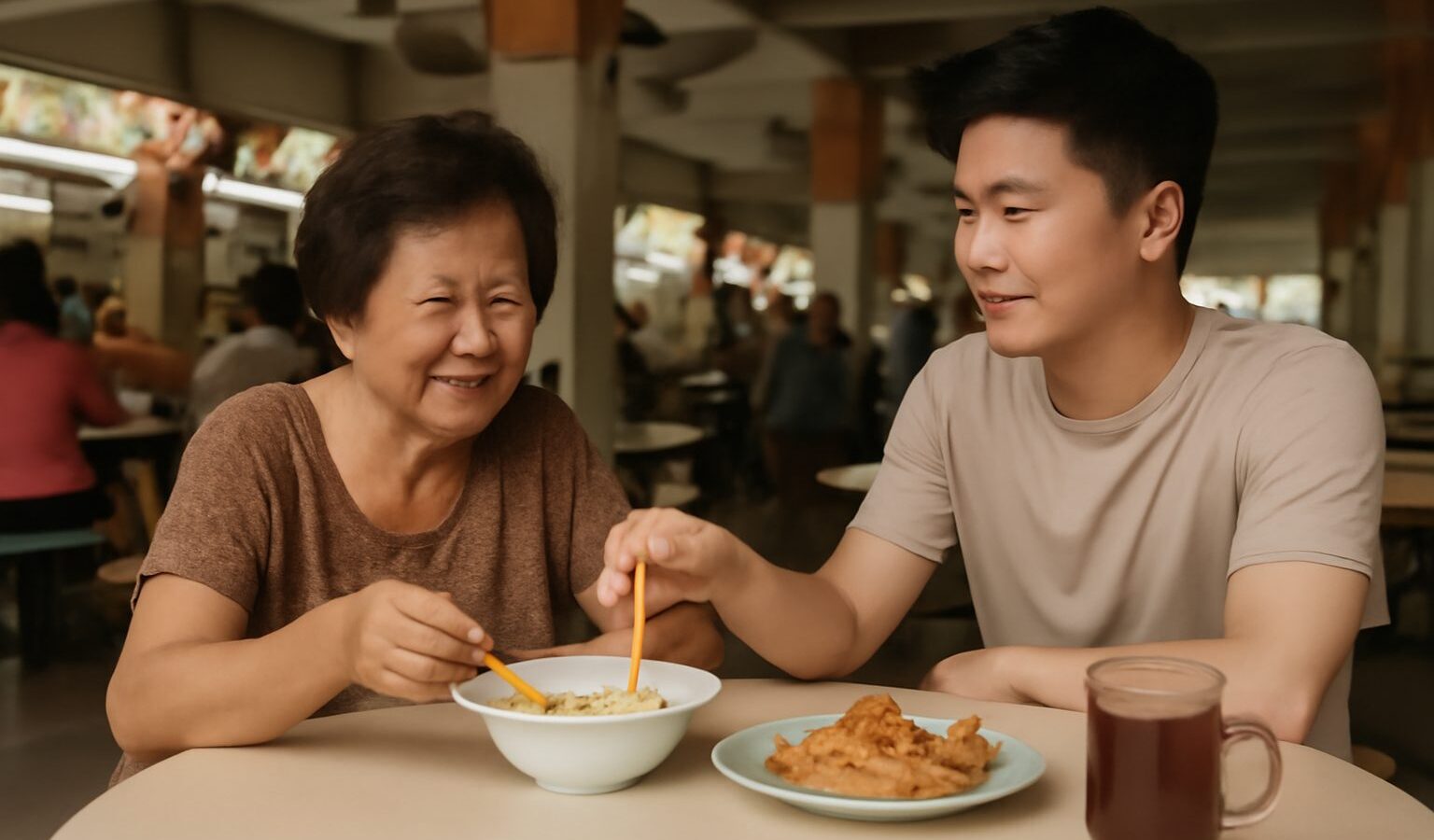
Most writing about hawker centre heritage Singapore focuses on the big story: street hawkers moved into purpose-built centres, the food became a national symbol, and hawker culture gained international recognition. That history matters, but it skips something smaller and more personal. Each individual hawker centre is also a neighbourhood archive. It holds the habits of the people who eat there, the stories of the families who cook there, and the memory of what the area used to be.
This guide looks at hawker centres at that local scale. It explains how a single centre carries neighbourhood identity, why routines matter as much as recipes, and how you can notice, record and respect that memory when you visit.
Why a Single Hawker Centre Becomes a Neighbourhood Landmark
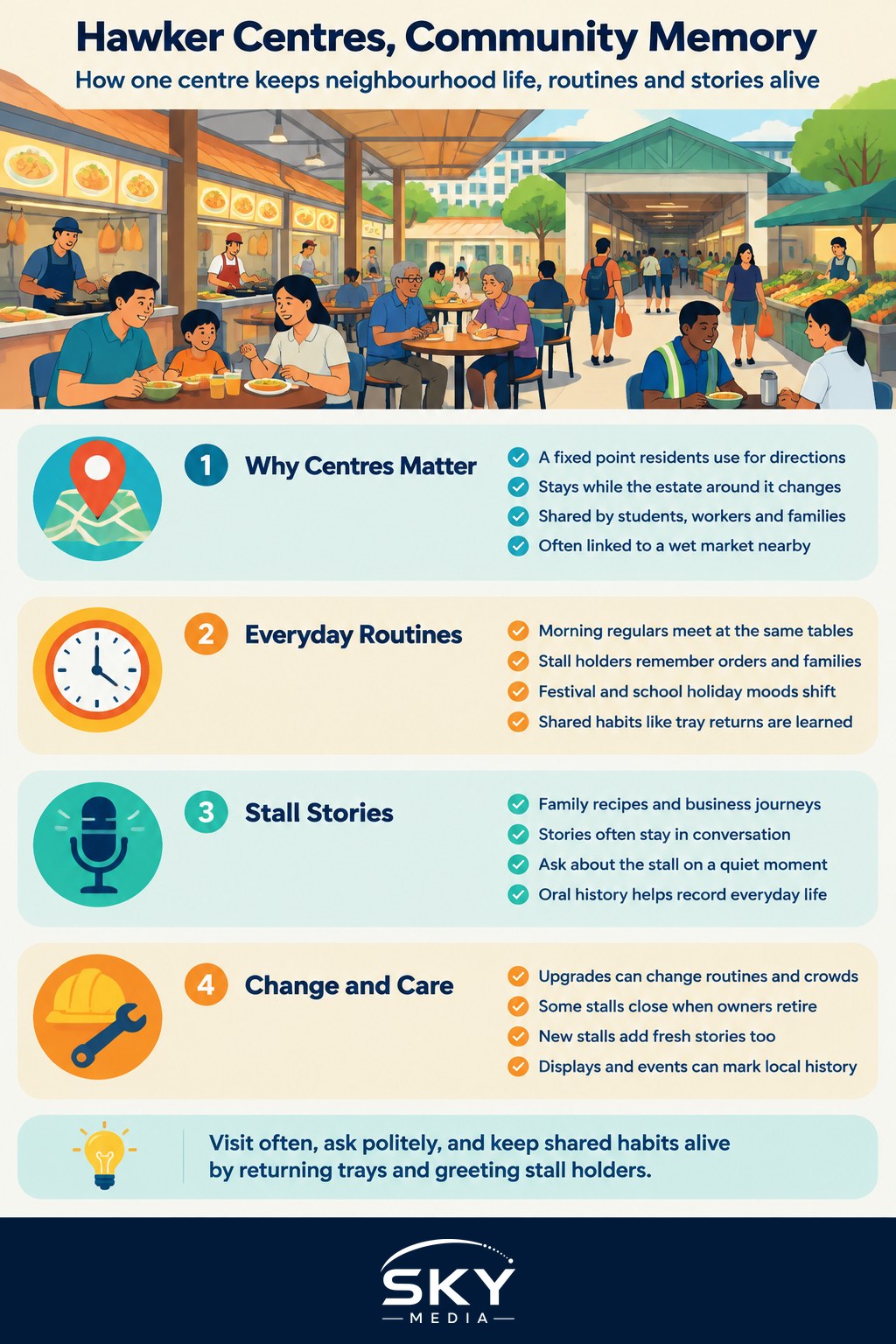
A hawker centre is rarely just a place to buy lunch. For many residents it is the fixed point of the estate, the place people give directions from and the place they meet without needing to plan. Several things make that happen:
- It outlasts other changes. Shops close, blocks are upgraded and residents move, but the centre often stays in the same spot for decades, so it becomes a reference point across generations.
- It is shared by everyone. Students, office workers, retirees, construction workers and families all eat at the same tables, which makes the centre one of the few truly mixed spaces in a neighbourhood.
- It carries the local name. Many centres are known by the road, market or estate they sit in, and residents often use older informal names long after official ones change.
- It sits next to daily needs. Many centres share a building with a wet market, which ties them to morning shopping routines and to the older rhythm of the estate.
When people say “meet at the market” or “the kopi place downstairs”, they are drawing on that shared memory.
Routines: The Living Memory of a Hawker Centre
Heritage is often imagined as old buildings and artefacts. At a hawker centre, much of it is behaviour that repeats every day. Watch any busy centre for an hour and you will see patterns that have been running for years.
Morning regulars. Groups of older residents often gather at the same tables at the same time for coffee and conversation. Their table is informally “theirs”, and their talk is where local news, old stories and neighbourhood gossip get passed on.
Stall-holder recognition. Long-running stall holders often remember regular customers’ orders, ask after their families and notice when someone has not appeared for a while. That quiet attention is a form of community care.
Seasonal and festival rhythms. Some stalls adjust what they sell around festivals, and the mood of the centre changes during festive periods, school holidays and the weeks around major events.
Table customs. Practices like reserving seats with a packet of tissues, sharing tables with strangers and returning trays are learned habits. If you are new to them, our guide to hawker centre etiquette for newcomers explains the basics.
These routines are fragile in a way buildings are not. When a group of regulars stops meeting, or a stall closes, the routine can disappear without any record. That is why many people now see everyday behaviour as part of hawker heritage.
Stall Stories and Oral History
Behind many stalls is a family story: a recipe brought from a home village, a business that started from a pushcart, a son or daughter who left an office job to take over, or a hawker who has cooked the same dish at the same stall for most of their working life. These stories are rarely written down. They live in conversation.
Oral history is the practice of recording people’s spoken memories, and in Singapore it has long been used to capture everyday life alongside official records. The National Archives of Singapore maintains an oral history collection, and heritage bodies such as the National Heritage Board have documented food and community life through exhibitions, trails and publications. Some town councils, community groups and schools also run their own projects about local centres.
If you are curious about a particular stall, simple, respectful questions often open up these stories:
- How long has the stall been here?
- Who started it, and has the dish changed over the years?
- What was the area like when the stall first opened?
- Which customers have been coming the longest?
Ask at a quiet moment, not during the lunch rush.
What Different Parts of the Centre Remember
Different corners of a hawker centre hold different kinds of memory. The table below is a simple way to see where to look.
| Part of the centre | What it tends to preserve | How to notice it |
|---|---|---|
| Long-running stalls | Family recipes, trade skills, succession stories | Old signboards, faded photos, family members working together |
| Drinks stall | Daily social rituals and local ordering slang | Regulars ordering without words, distinctive kopi terms |
| Communal tables | Friendships, gossip networks, informal meeting spots | The same faces at the same tables each morning |
| Attached wet market | Older shopping routines and seasonal produce | Early morning crowds, traditional goods and festive items |
| Notice boards and walls | Community events, past renovations, local announcements | Posters, plaques and commemorative displays where present |
Not every centre has all of these, and that variety is part of what makes each one different.
How Change and Renewal Affect Hawker Memory
Hawker centres are maintained and upgraded over time, and older estates go through renewal. These changes can improve ventilation, hygiene and seating, but they also raise questions for the community about what stays the same.
Common pressures on local hawker memory include:
- Succession. Many hawkers have no family member ready to continue, so a well-known stall may close when its owner retires.
- Renovation periods. When a centre closes for upgrading, regulars scatter to other centres and not all routines return afterwards.
- Changing populations. As an estate’s residents change, the centre’s crowd and food offerings shift with them.
- Faster eating habits. Takeaway and delivery mean fewer people linger at tables, which reduces the casual conversation that carries stories.
None of this means hawker memory is disappearing. New stalls bring new stories, younger hawkers often blend tradition with new ideas, and some centres actively mark their history through displays and community events.
How You Can Notice and Help Preserve Hawker Centre Heritage
You do not need to be a historian to take part. Ordinary diners shape a centre’s memory more than anyone.
- Become a regular somewhere. Pick one centre near your home or workplace and return often. Familiarity is how you start to see the routines.
- Learn the dishes and how to order them. Knowing local terms helps conversations happen naturally. Our guide on how to order at a hawker centre covers the essentials.
- Record with permission. If you take photos or notes, ask hawkers first and avoid photographing people eating without consent. See how to photograph markets and hawker centres for respectful tips.
- Talk to older family members. Ask parents or grandparents which centres they grew up with and what has changed. Many family stories are tied to particular stalls.
- Support heritage programmes. Look out for exhibitions, heritage trails and community projects run by the National Heritage Board, the National Archives, community centres and local groups, and check their current listings for details.
- Keep the shared habits alive. Returning trays, sharing tables and greeting stall holders all help maintain the social fabric that makes a centre more than a food court.
Hawker Centres as Everyday Archives
The big history of hawker culture explains how Singapore’s food scene came to be. The local history, written in routines, regulars and stall stories, explains why a particular hawker centre feels like home to the people around it. Paying attention to that smaller story makes every meal a little richer, and it helps keep neighbourhood memory alive for the next generation of diners.
Explore more: A Guide to Hawker Centres
Frequently Asked Questions
Is Singapore’s hawker culture recognised by UNESCO? Yes, Singapore’s hawker culture was inscribed on UNESCO’s Representative List of the Intangible Cultural Heritage of Humanity. The recognition covers the shared practices around hawker centres, not only the food. It reflects how these places work as community dining rooms where people from different backgrounds meet.
How can I research the history of my neighbourhood hawker centre? Start by asking older residents and long-running stallholders, then look at the National Archives of Singapore and the National Heritage Board for photographs, oral histories and trails. Local libraries and town council or community club notices may also have material about the estate and its past.
Can students interview hawkers for a school project? Many hawkers are happy to share if you ask politely, but choose a quiet time rather than the lunch rush and explain what the project is for. Ask permission before recording or photographing. Prepare simple questions, and thank them afterwards, perhaps by buying a meal.
How can I support hawkers whose stalls may close when they retire? Be a regular customer, and buy from stalls whose owners are older or have no clear successor. Share their stories respectfully, and look out for heritage programmes that document recipes and trades. Even small, consistent support helps stalls stay viable.
Where can I donate old photos or stories about a hawker centre? Contact heritage bodies such as the National Archives of Singapore or the National Heritage Board to ask whether they collect such material, and check their current submission guidelines. Community centres and local history projects may also welcome copies. Keep originals safe and label photos with dates and names.